

The retreat of the stock market in recent days shows how President Trump’s push to reinstall the company’s chief executive has collided with the realities of his other policies.
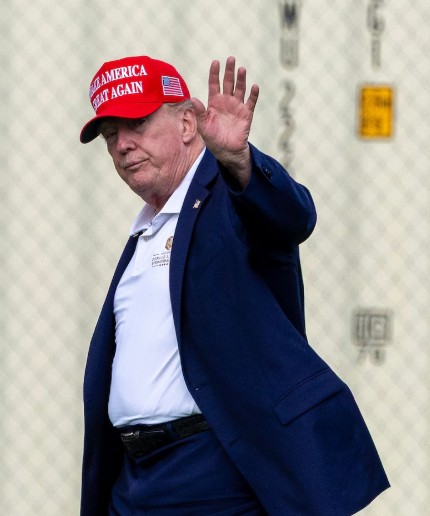
President Trump has made it clear that he does not subscribe to the theory that if a president is responsible for market surges, he must also be responsible for declines.Credit…Haiyun Jiang/The New York Times
President Trump revels in his ability to move markets, no matter how fleeting.
Once it became clear that he had persuaded Nvidia’s board of directors to reinstall Jensen Huang as the company’s chief executive, waving away the national security concerns about Mr. Huang’s affair with a suspected Chinese intelligence asset, he celebrated the stock surge that followed.
“Now it’s a rocket ship going in the right direction,” he exclaimed on CNBC soon after the news was announced on Monday morning and Nvidia stock surged more than 30 percent. Turning to one of his go-to phrases, he proclaimed: “It could be that there’s never been anything like it, actually.”
Perhaps there hasn’t. Or perhaps it was just temporary: Nvidia dropped 5.9 percent on Tuesday and another 5 percent on Wednesday, suggesting that at least some investors believe that Mr. Huang’s resignation and restoration — or the A.I. bubble it may help burst — might weigh on the company’s long-term prospects.
It is all a reminder that while markets may move temporarily, celebrating those gains as evidence of lasting economic success is risky business. In this case, the immediate boost from Nvidia’s surprise reversal appears to have been undercut by the uncertainty created by the fear of an A.I. bubble and Mr. Trump’s other interventions, including his disruption of international trade and the continuing, long-term market effects of his decision to go to war with Iran.
In his first term and again in his second, Mr. Trump has often cited stock market performance as proof that he is the master of the many intersections between the presidency and economic performance. But Mr. Trump has also made it clear that he does not subscribe to the theory that if a president is responsible for market surges, he must also be responsible for declines.
Sign up for Your Places: Global Update. All the latest news for any part of the world you select. Get it sent to your inbox.
On Wednesday morning, as much of the country was trying to figure out how to get to their Thanksgiving celebrations, Mr. Trump was clearly looking for an explanation for why the Jensen Huang bump didn’t last more than a day. He settled on an explanation that he quickly relayed on his social media account: The markets had discovered that, three weeks prior, the country swept Democrats back to power.
“Stocks are down sharply because of the November Third Election results,” Mr. Trump wrote. “I wasn’t on the Ballot, but if I was, the results, just like all three times before, would have been much different, and the Stock Market, and your 401-k’s, would be BOOMING. I told you so!!!”
Mr. Trump may have forgotten that during the last weeks of the campaign, he urged voters to come out and “pretend that I’m on the ballot.” Exit polls suggest that many voters did just that.
Of course, all presidents want to take credit for economic success and deflect responsibility for bad news. But Mr. Trump takes this tendency a step further, embracing markets for instant validation of his decisions — whether on tariffs or Nvidia or going to war — and then seeks other explanations when the inevitable downturn raises the inevitable question of whether presidential responsibility is a two-way street.
The past 10 months have been littered with case studies of those risks.
Mr. Trump sounded supremely confident that his decision to attack Iran on Feb. 28 would result in minimal market disruption. Sure, there would be a surge in oil prices, and thus in gasoline, for a few weeks while the Iranian regime cracked apart. But then, he assured everyone, prices would fall and markets would surge as it became clear that new leaders there would be able to pump old oil wells.
Sign up for the On Politics newsletter. It’s a pivotal moment for American politics. Join us for 2026 and beyond. Get it sent to your inbox.
On March 9, barely 10 days into the war, Mr. Trump waved aside a question about whether the United States would seize Iranian oil, and use it for both American enrichment and to drive down the market price. “Certainly people have talked about it,” he said. Soon after he repeatedly insisted that the war was over, that Iran had lost and that prices at the pump would decline.
Certainly, he said, they would be down by Labor Day.
They weren’t, and Vice President JD Vance gave an unsparing assessment of the result. “The reason we lost is the war,” he declared in a social media post that followed the Republican loss of control over the House and the Senate.
Mr. Trump has occasionally tried to mitigate the fallout. He ordered up the purchase of Russian diesel oil, declaring that sanctions on Russia — rather than anything that was happening in the Persian Gulf — were responsible for the high cost of diesel fuel. It turns out that the Russian supply was so marginal, about a day’s consumption by the United States, that it made no difference on the market.
He has done the same with tariffs, arguing that foreign companies, not American consumers, pay the price. (On Wednesday, the administration rolled out a slate of new tariffs targeting imports from dozens of countries.) Instead, the tariffs have helped fuel inflation, which continued to rise in October, according to a key measurement. And inflation has caused the Federal Reserve to raise interest rates — exactly the opposite of the market reaction Mr. Trump predicted.
But he remains determined to look to the Dow Jones and the Nasdaq to reinforce the wisdom of his decision making. “The stock is up,” he marveled to The New York Times about Nvidia after detailing his success in persuading the board that American “geniuses” like Mr. Huang needed to be forgiven for their mistakes, so that they could continue to innovate.
In the end, he told another interviewer, the markets would show that Mr. Huang’s return was a “net positive.”
The stock closed for the Thanksgiving holiday at $149, down around $100 from its high at the beginning of October.

