

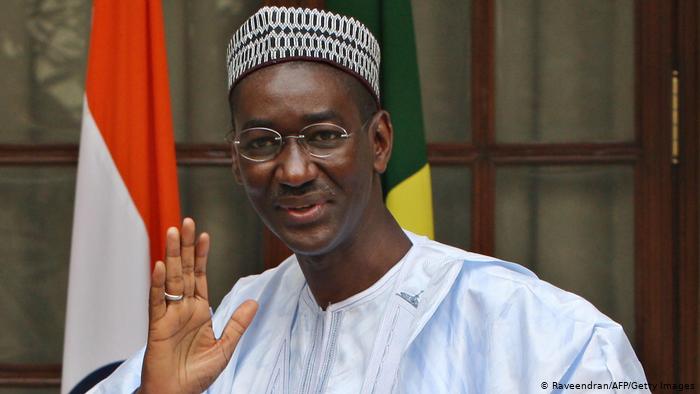
The Prime Minister of Mali, Moctar Ouane, has presented to the so-called National Transitional Council (CNT), a legislative body made up of 121 political personalities, representatives of civil society, trade unions and the military, his plan to guide the country until next year’s elections after the coup of last August 18, which includes the reinforcement of the Armed Forces and dialogue with the jihadist groups that plague the country.
Among the main lines of the plan are the incorporation of 25,000 soldiers and the revision of the Algiers peace agreement, signed in 2015, between the government and the former rebel groups.
“This coherent set of actions aims to achieve, within a specific horizon, defined objectives, with the identified means, respecting the time allotted and the macroeconomic and financial balances,” the prime minister has indicated during his presentation, in statements picked up by Malijet.
The Prime Minister also announced his intention to engage in dialogue with the terrorist groups that plague the country, “as a second axis related to the adoption of the social stability pact that aims at dialogue with the Malian radical organizations”, together with a series of economic reforms that will involve, he said, a cut in the spending of the administrations.
“There will be no recovery of the country without a considerable effort to rationalize the way of life of the State”, added Ouane, who will appear again this Monday in front of the CNT for a question and answer session on the transitional government.
DICKO REAPPEARS
At the same time, Imam Mahmud Dicko, considered as one of the major driving forces who contributed to the overthrow of former President Ibrahim Boubacar Keita last summer, reappeared in an interview with France 24 published Saturday in which he calls for new talks to promote national unity and also gives his support to the possibility of dialogue with the country’s terrorist groups.
In this regard, the imam has called for stability and social dialogue. “It is true that we are not on the brink of the abyss but our situation is undesirable,” he said, before calling for a new round of dialogue between all parties to underpin the development of the transition.
“I think the situation deserves that we meet to see what to do before the future elections. I think that if we go to the elections in these conditions, it will be difficult,” the influential imam believes.
He also pointed out that the coup d’état against the former president did not produce the necessary reconciliation between the army and the people.
“The coup should be an opportunity to seal a reconciliation between the army and the people of Mali. But, unfortunately, it must be noted that there were many difficulties that have led to the mistrust that still exists between this army and the political class. Today we must restore that trust,” he added.
Imam Dicko has also come out in favor of a possible dialogue with terrorist groups, such as the leader of the Al Qaeda branch Iyad ag Ghali. “If we cannot defeat them by force and neither can we dialogue with them we face an endless war,” he has explained.
“The problems between the different communities are there and they plague us and worry us more than anything else. People who have lived together for millennia are tearing each other apart today. The truth is that the future of the nation is in jeopardy. We have to find a solution and I don’t think it is beyond our means,” the religious man concluded.

