

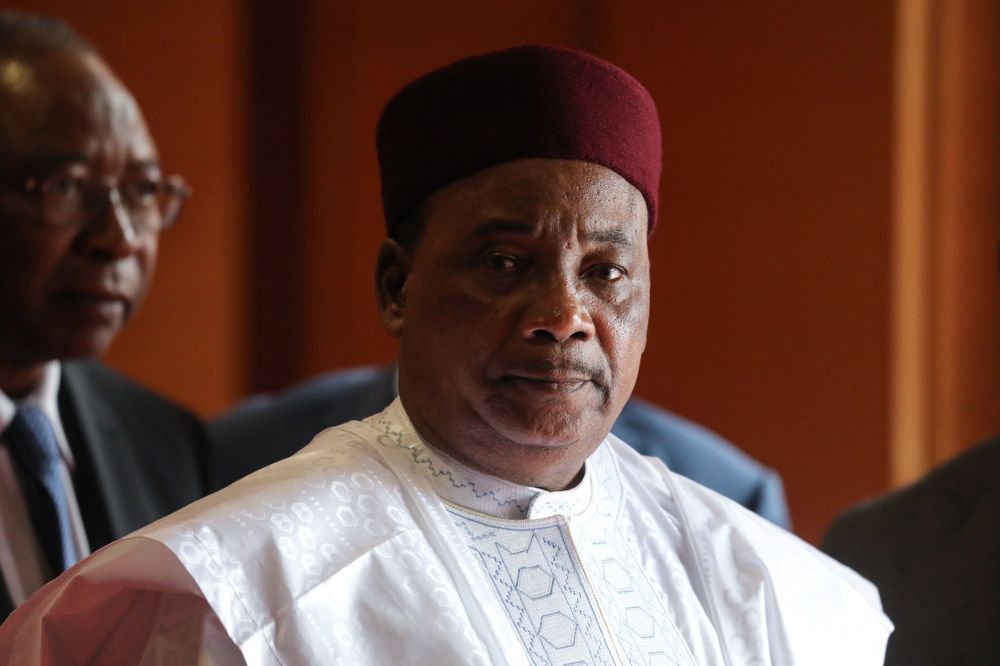
At least seven workers of the electoral commission of Niger were killed on Sunday when a bomb exploded in their vehicle during the second round of the presidential elections in the African country, from which will emerge the successor of Mahamadou Issoufou.
The event took place in the commune of Dargol, located in the region of Tillabéri (west), one of the most shaken by the operations of jihadist groups, among them the affiliates of Al Qaeda and Islamic State, although for the moment there is no claim of responsibility for the attack, which also left three wounded.
Issoufou himself resorted to a message on the social network Twitter to show his “regret and sadness” for the “terrorist attack”. “In these painful circumstances, I convey my condolences to the families of the victims and wish a speedy recovery to the injured,” he said.
The incident was one of the violent events recorded during the second round, in which Mohamed Bazoum, the president’s ‘dauphin’, and former president Mahamane Ousmane, president from 1993 to 1996, will seek to complete what would be the first peaceful transfer of power in the country since its independence from France in 1960.
Thus, armed people have ransacked several polling stations in the departments of Bankilaré and Filingué, which led to a suspension of voting in several centers for security reasons, according to information gathered by the news portal ActuNiger.
The spokesman of the Coalition for Citizen Observation of the Elections in Niger (COCEN), Dambaji Son Allah, stressed that there have been other minor incidents in other parts of the country, including the capital, Niamey, although “most of them were resolved with the intervention of the supervisors of the electoral commission and the situation returned to normal, allowing the vote”.
Issoufou stressed after going to vote that it was “a great day” and acknowledged that the country faces “immense challenges”, including security, demographics, climate, economic and social development, apart from the coronavirus pandemic.
“I am convinced that meeting these challenges requires strong and stable democratic institutions,” he stressed, while defending that he “has dedicated ten years of his life (to them) through the organization of free and transparent elections.”
“I believe that the second round of the presidential runoff will be a free and transparent scrutiny, which implies that alternation is underway. The peaceful alternation that has been lacking in Niger for decades is going to become a reality,” he maintained, which he described as “a great event in the political life of the country.”
For his part, Bazoum expressed his wish that “luck is on his side.” “I have reason to believe that luck will be on my side. I await the future with a lot of serenity and calm,” said Issoufou’s ‘dauphin’, who was the most voted candidate in the first round.
The new president will have to deal with increasing jihadist attacks, widespread poverty and food insecurity. Niger, the world’s fifth largest exporter of uranium, is also the world’s least developed country among the 189 countries ranked by the United Nations Human Development Index.
The country has become a hub in the fight against jihadists and other armed groups in the Sahel region. France has deployed troops, its largest overseas military operation, while the United States has an estimated $110 million drone base in the city of Agadez.

