

Venezuelan doctors talk to DW about the start of vaccination in their crisis-stricken country. They see it with good eyes, although they regret that there are very few doses of the vaccine available.
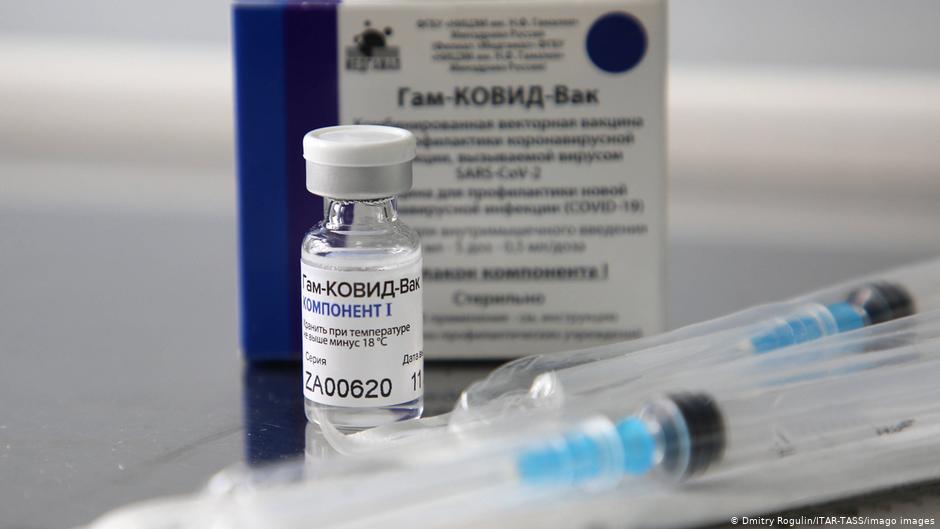
Vaccines from the first batch of 100,000 doses of Sputnik V arrived in Venezuela are already being administered to health and government personnel. Several of the 277 deputies who make up the new National Assembly led by the ruling party received the Russian vaccine against COVID-19. Likewise, at least 10% of Venezuelan medical personnel have been inoculated to protect themselves against the coronavirus. Senior citizens are excluded from this first vaccination. The plan for this first phase of vaccination will only protect less than 0.5% of the population.
Although the drug was initially introduced with skepticism and distrust due to the secrecy surrounding the clinical trials, in recent months it has become an effective alternative in Latin American countries that have knocked on Russia’s doors to receive the promising compound. Dr. Edgar Sotillo spoke to DW about his experience receiving the first dose of Sputnik V. A member of the medical team at the J.M. de los Rios Children’s Hospital, he was notified 5 days in advance that he would receive the vaccine. “As a physician I researched the production of the Sputnik V vaccine very well and I never had any doubts about its administration, therefore I was pending its placement,” explains Dr. Sotillo.
The 52-year-old neurosurgeon explained that he was administered the vaccine together with 5 other people in his non-dominant arm, “then we were taken to a room to wait 5 minutes in case we had any reaction, then we were given a card with our data, the date to receive the next dose and the post-vaccination instructions; they suggest acetaminophen and plenty of hydration”, says Dr. Sotillo. Although the first 24 hours he experienced “headache, arthralgias and fever, everything was normal afterwards,” he says. And he assures that “the best option is to get vaccinated, although it is true that it is a new vaccine and all the effects are not yet known; however, it is worse to have nothing at all”.
Dr. María Graciela López, president of the Venezuelan Society of Infectious Diseases, also received the Sputnik V vaccine at the J.M. de los Ríos Children’s Hospital. Her experience was also positive. She tells DW that “those of us who are familiar with vaccinology and infectious diseases know that this rapid development, which has not taken a year, but rather years of research, since now the techniques that were already being investigated have been applied, has been very exciting and satisfactory”. In spite of the reduced scope of this first batch of vaccines, Dr. Lopez sees it as positive that they have been successfully administered. “It is a very good start for Venezuela,” explains Dr. Lopez, “especially considering the complex humanitarian emergency that our country is experiencing, the deterioration of public health, and that we have been able to have the vaccine really is a great achievement.”
Although the Venezuelan Society of Infectious Diseases (SVI) considers the amount of vaccines being administered to be insufficient, its president considers the allocation of resources to be adequate. “100,000 doses are not enough for all the healthcare personnel, but probably for those who are on the front line, who are more exposed to patients with COVID-19, which is why it is important that the vaccine be directed to these higher risk groups,” says Dr. López. Dr. Manuel Enrique Figueras is of a similar opinion. As vice-president of the SVI, he considers that 100,000 doses are not enough. “If 10 million doses arrive, it is not enough either, it is necessary to guarantee vaccination to more than 70 to 80 percent of the population,” he said.
The three Venezuelan physicians consulted assure that vaccines are the most effective measure to fight the SARS-CoV-2 virus, but agree that “we must continue to use protective measures to avoid the possibility of becoming infected while there are so many cases in the world… in the end it would be very selfish to think that being vaccinated means not taking care of oneself; using the mask is an empathic and humanistic element that seeks to protect others”, reflects Dr. Figueras. His words resonate even more when there is no certainty of receiving more batches of vaccines to inoculate at least 70% of the Venezuelan population. Although the beginning has been good, the hope is that it will continue. For the moment, the only thing health workers can do is to “encourage the Venezuelan population to get vaccinated. Venezuelans are a pro-vaccine people, we believe in science and we like the prevention of diseases through vaccines,” reflects Dr. Lopez.

