

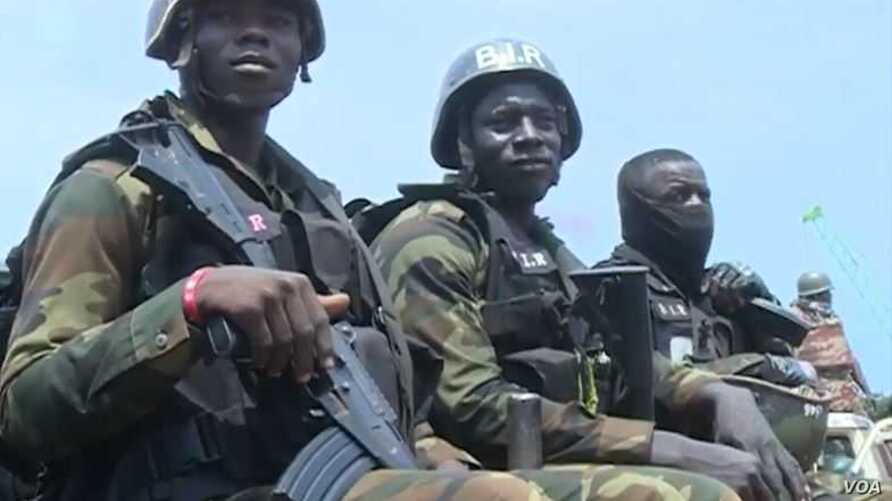
The NGO Human Rights Watch, specialized in monitoring the human rights situation around the world, has demanded justice for the twenty women raped almost a year ago by Cameroonian Army soldiers in the Southwest region, one of the biggest atrocities perpetrated by the Cameroonian military in recent years, according to the organization.
The women, four of whom were disabled, were sexually assaulted during an assault by the military on March 1 in the town of Ebam, which also resulted in the death of a man, 35 arrests, beatings, looting and the burning of a house.
According to witnesses, this operation was designed as a reprisal to punish any civilians suspected of collaborating with separatist groups in the region. “The rapists,” witnesses tell HRW, “also implied that they were committing the abuses partly as a form of punishment for any alleged affiliation” with these groups.
The attack went unreported for months, due in part to the stigma and fear of reprisals that deter survivors of sexual violence. In addition, and in the organization’s estimation, the fact that survivors refrained from even commenting on the assault “suggests that incidents of sexual violence by the military are likely much higher than documented cases.”
EARLY MORNING ASSAULT
The attack was perpetrated by more than half a hundred Cameroonian military personnel and began at about 3:00 am. The soldiers parked their vehicles in the vicinity and entered the village on foot in the locality, located in the Manyu department, territory of separatist groups that appeared in the wake of a conflict that erupted in 2016, first in the form of peaceful protests over their alleged marginalization and the imposition of French from the central government.
The forceful repression by security forces following the unilateral proclamation of the independence of Ambazonia — the Anglophone secessionist entity in southwest Cameroon — on October 1, 2017 led to the proliferation of these groups.
Once in the village, the military broke into almost all of the seventy-five homes in the village, looted money and other items, and dragged the men out. Some soldiers rounded up men in the center of the village, while others sexually assaulted women, mainly in their homes.
The assault lasted three hours, until sunrise. The military then took at least 36 men to a military base in Besongabang, about eight kilometers away, where they were severely and repeatedly beaten, in an act that HRW calls “torture.” The detainees were held at the base for a day before being transferred to Gendarmerie headquarters in Mamfe, Manyu’s main town.
A doctor who examined the survivors in August said the women described symptoms consistent with post-traumatic stress disorder and depression: fear, anxiety, insomnia and inability to complete daily tasks. They were never able to receive medical care immediately after the attack following a multitude of factors: travel problems, lack of facilities, cost of medical care, and the aforementioned stigma attached to survivors.
“Sexual violence and torture are heinous crimes that governments have an obligation to immediately, effectively and independently investigate and bring those responsible to justice,” said HRW’s deputy Africa director Ida Sawyer.
“One year on, the survivors of the Ebam attack are desperate, seeking justice and compensation, and living with the disturbing knowledge that those who abused them are walking free and without consequence,” she laments.

