

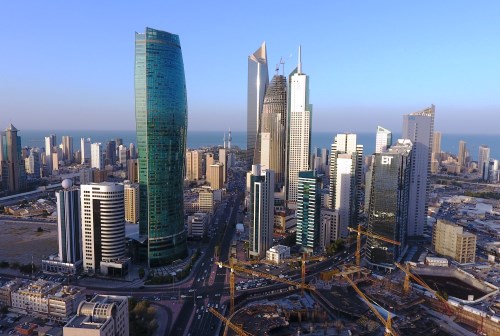
When Kuwait ended a months-long confinement, people poured into the streets and there were long queues in shopping malls. Especially at expensive jewelry stores.
The frenzy to invest in jewelry may be a foretaste of impending disaster.
Kuwait, one of the world’s richest nations, is facing a crisis because it cannot pay its debt. The coronavirus pandemic is driving oil prices to their lowest in history and forcing the country to rethink its spending habits, just as parliamentary elections are coming up in December.
COVID, rock-bottom oil prices and the liquidity crisis combined to create a perfect storm, said Bader al-Saif, professor of history at Kuwait University.
Like other Persian Gulf oil nations, 90% of the citizenry works for the state and receives generous benefits and subsidies, from cheap gasoline and electricity to free health care and education.
Recently, however, Moody’s rating agency downgraded its rating for the first time in its history and the finance minister warned that the government will soon be unable to pay salaries. The national bank said the country’s deficit could reach 40% of its gross national product this year, which would be the highest level since the catastrophic 1990 Iraqi invasion and subsequent Gulf War.
As oil prices fell to nearly $40 a barrel, other oil-producing nations in the region took on debt, reduced subsidies or raised taxes. Kuwait, however, did none of these things. To cover its costs, it needed oil to sell for $86 a barrel.
This is not to say that Kuwait is going to be begging for international aid. Its Investment Authority has assets worth $533 billion, according to the Sovereign Wealth Fund Institute in Las Vegas. It is the fourth largest such fund in the world.
The problem is that Kuwait has no legal framework for taking on more debt than the current $33 billion. The country would need the approval of its 50-seat parliament, unique among Arab kingdoms.
There is a spending proposal that would allow up to $65 billion in debt, but many are reluctant to approve it in a nation accustomed to major corruption scandals. And people’s distrust has been growing in tandem with the liquidity crisis.
Passing such a bill is the first major challenge facing Kuwait’s new emir, Sheikh Nawaf Al Ahmad Al Sabah, who ascended to the throne in September after the death of Sabah Al Ahmad Al Sabah, a 91-year-old seasoned diplomat who made the nation a respected regional mediator.
The parliament is up for renewal on Dec. 5, and passing the bill will not be easy.
The whole system is corrupt, said Omar al-Tabtabaee, an independent lawmaker seeking re-election. There is corruption in our projects, in the way they appoint public officials. No one is happy here with this situation.
This year the legislature rejected a bill that would have increased the debt for fear that fresh money would go to businessmen and foreign banks.
People don’t believe in the government, said Mohammed al-Yousef, an independent political analyst. There have been so many scandals and not a single minister is in jail.
There is also resistance to altering a system in which government benefits buy loyalty.
The government, however, is running out of money. For the first time in history, oil revenues are not enough to pay salaries and subsidies, which represent 70% of the national budget.

