

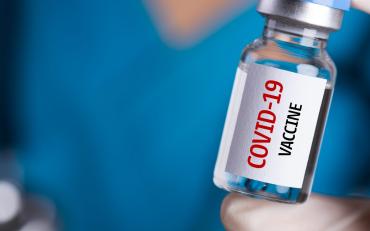
Brazil’s vast size and poor infrastructure make bringing the coronavirus vaccine to remote communities of indigenous people and descendants of slaves a particularly daunting task.
Nurse Rosemeire Bezerra has years of experience inoculating descendants of slaves, known as quilombolas, in the municipality of Cavalcante, some 290 kms (180 miles) from the country’s capital, Brasilia. Their biggest challenge in this campaign is keeping vaccine doses below 8 degrees Celsius (46 Fahrenheit) in an isolated tropical region. This is especially complicated in Ví£o de Almas, where he was headed.
On Monday, Bezerra protected the polymer foam coolers with cardboard shells and filled them with ice. He intended to vaccinate 190 families in four days, before the ice melted. He set out with his team and three others, including an experienced driver familiar with the remote region.
In the valley, houses are far apart and dirt roads full of holes complete a journey where it is difficult to keep the container balanced on the lap. Numerous river crossings also put four-wheel drive vehicles to the test.
Access is so bad that Bezerra and his team often vaccinate people they encounter on the road or cultivating their fields, as they may not get another chance. Some areas can only be reached on foot, and they have to carry their own food and water.
The vaccination team set up inside a school and pitched their tents in a classroom. Bezerra slept with a flashlight and portable coolers at his side.
I would wake up three times a night to see if the temperature was right,” he said. It’s a big responsibility if they get lost. I treated those vaccines like my daughter.
Brazil is suffering an alarming spike in coronavirus cases, with nearly 3,000 deaths per day for the first time since the start of the pandemic. Public health experts say restrictions on social activity and social distance may help relieve pressure on overcrowded hospital intensive care units, but the only long-term solution is mass vaccination of its 210 million people.
About 6% of Brazilians have received at least one dose according to Our World in Data, a collaboration between researchers at Oxford University and the NGO Global Change Data Lab. Only 1.5% have already had both doses.
Impressive logistics are needed to reach indigenous communities: many can only be reached by boat and doubts about vaccines must be overcome.
Members of the remote Baré group in Amazonas state received the injections on Wednesday, after health workers traveled for more than two hours up the Cuieiras River from the regional capital, Manaus, to the village of Nova Esperaní§a. Initially, some of the residents had refused the injection.
This was not the only time Januário Carneiro, coordinator of the region’s indigenous health unit, was met with skepticism and distrust.
Carneiro has spent hours convincing the native population that the vaccines are safe and, he says, has been successful. So far, 71% of the roughly 15,000 indigenous people living in the Manaus region received the first injection, and 52% had the second this week, he said.
Although some 195 people live in Nova Esperaní§a, on his Wednesday trip Carneiro immunized just 19 who had been left out earlier. This helps explain why prioritizing vaccination in indigenous and quilombola communities is a matter of efficiency.
Imagine if you go to those isolated areas just for people over 70, then have to come back later, paying for all the fuel for a boat for a small group. This is why when you go, you have to vaccinate everyone at once,” explained Jacqueline Sachett, a nursing professor at the state university of Amazonas, in a video posted on the state-run Fiocruz Institute. This is not just a question of human rights”.
The head of Nova Esperaní§a, José Prancácio, said the entire village was infected after those traveling to Manaus to buy food imported the virus.
Manaus suffered a devastating second wave of COVID-19 cases in January, driven by a more contagious strain of the virus. Hospitals were without medical oxygen for weeks and doctors had to choose which intensive care patients received a ventilator.
The state has seen the number of infections and deaths decline since then, but the vaccination campaign still has a long way to go. Nova Esperaní§a, meanwhile, is approaching immunity. After receiving the injection, Reinaldo de Souza Santos, 37, showed his vaccination card to show the stickers that prove he received the two doses.
Now, my people are calm and very happy about this vaccine,” said Prancácio. Until there is no vaccine, many people die. But today, thanks to God, we are 100% satisfied.
In Cavalcante, quilombola Manoel Pereira and his wife, Leona, received the first dose of the vaccine standing next to the fence of their cassava plantation. Wearing a disposable gown, Bezerra calmly administered a dose to Pereira, who seemed eager to get back to work.
This is a very poor community, with some areas that can only be reached by special vans,” Bezerra said. Our team has spared no effort. We need to give them hope.

