

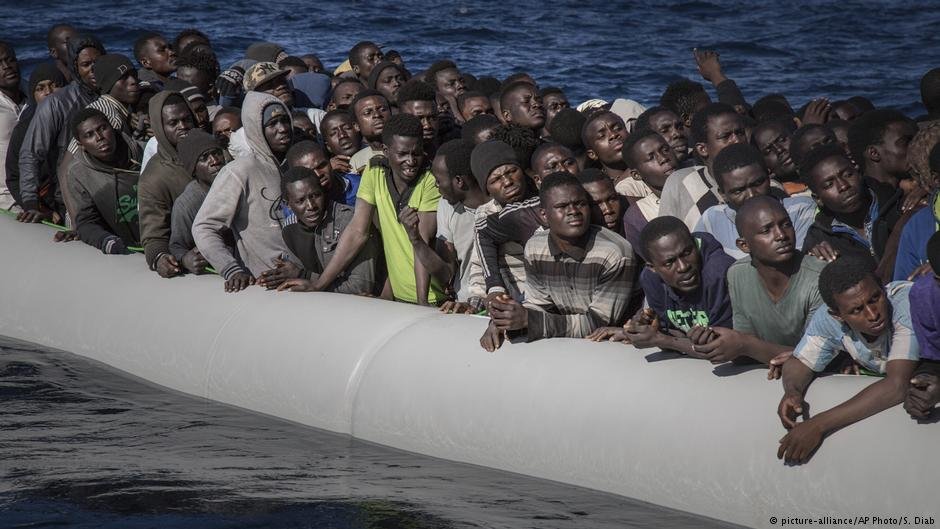
About 1,150 people have died in the first half of 2021 trying to reach the shores of Europe covering the crossing through the Mediterranean Sea and the Atlantic Ocean, a figure more than twice higher than that recorded in this period during last year, according to data released Wednesday by the International Organization for Migration (IOM).
The agency has indicated in a report that 1,146 people have died during this period, compared to the 513 deaths confirmed during the first half of 2020, which places some maritime migratory routes in the Mediterranean among the most dangerous in the world.
It has also highlighted that the number of people attempting to cross the Mediterranean to Europe has increased by 58 percent in this period compared to the first six months of last year, according to data from the Missing Migrants Project of IOM’s Global Migration Data Analysis Centre (GMDAC).
The analysis reveals that the increase in deaths is coupled with an “insufficient number” of search and rescue operations in the Mediterranean and the Atlantic route connecting Africa to the Canary Islands.
The report shows that 896 people died trying to cross the Mediterranean — 741 on the central route, 149 on the western route and six on the eastern route — while nearly 250 perished in their attempt to reach the Canary Islands, although the agency said the figure could be higher.
In this sense, it has pointed to “hundreds of cases of invisible shipwrecks” reported by NGOs that are “extremely difficult to verify”, while stressing that this shows that the total number of deaths could be much higher than the official figure.
“IOM reiterates the call on states to take proactive and immediate steps to reduce the loss of life on the migration routes to Europe and uphold their obligations under international law,” said IOM Director General António Vitorino.
“Increasing search and rescue (SAR) efforts, establishing predictable disembarkation mechanisms and ensuring access to regular and safe migration routes are key steps towards achieving this goal,” he argued.
On the other hand, the report shows an increase for the second consecutive year in maritime operations by North African countries, with more than 31,500 people intercepted or rescued during this period, compared to 23,116 in the first six months of 2020.
In this context, operations off the coast of Tunisia have increased by 90 percent, while the number of rescues in Libya is three times higher than in 2020, which he has described as “worrying”, due to the abuses suffered by migrants who are returned to Libyan territory.
Finally, it warns of “information gaps” on irregular migration to Europe and has stressed that, with better data, better strategies could be prepared for states to assume their commitments to “save lives and establish coordinated international efforts in relation to missing migrants”.

