

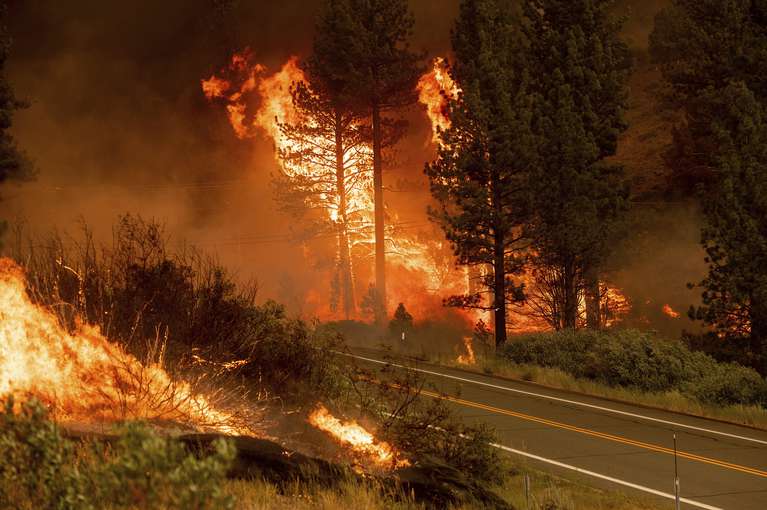
Erratic winds and dry forests in Oregon on Monday increased the risk to firefighters battling the largest wildfire in the United States, one of dozens burning in several western states.
The destructive Bootleg fire is considered one of the largest in Oregon’s modern history and stretched more than 476 square miles (1,210 square kilometers), an area the size of Los Angeles. The fire, just north of the California border, was 25% contained.
Meteorologists expected especially dangerous fire weather at least through Monday, with lightning possible in both California and southern Oregon.
With combustible material very dry, any thunderstorm has the potential to ignite new fires, the National Weather Service in Sacramento, California, noted on Twitter.
Evacuation orders had already been issued for thousands of people, including about 2,000 residents of a largely rural area of lakes and protected areas near the fire, which has burned 67 homes and 100 structures and threatens many more.
Extremely dry conditions and heat waves associated with climate change have punished the region and made fighting the blaze more difficult. Climate change has made the Western United States much hotter and drier over the past 30 years, and will continue to make weather more extreme and fires more frequent and destructive.
Firefighters said in July that they faced conditions more typical of late summer or fall.
Pyrocumulus, or fire clouds, complicated efforts Sunday against the Dixie Fire in Northern California. In addition, the flames spread to remote areas in rugged terrain that were more difficult to access, officials said. New evacuation orders were issued in rural towns near Feather River Canyon.
The Dixie Fire was 15% contained and covered 74 square kilometers (29 square miles). The fire was northeast of the town of Paradise, California. Survivors of that horrific fire, which killed 85 people, viewed the blaze with concern.
A growing fire south of Lake Tahoe crossed a highway, prompting more widening orders, the closure of the Pacific Crest Trail and the cancellation of a Sierra Nevada bike race.
The Tamarack Fire, started by lightning on July 4, had burned about 74 square kilometers (28.5 square miles) in brush-filled terrain and dry timber by Sunday night. The fire threatened Markleeville, a small town near the California-Nevada line. It has destroyed at least two structures, officials said.
There are about 70 active fires and areas where several are intermingled. So far they have consumed nearly 4,297 square kilometers (1,659 square miles) in the United States, the National Interagency Fire Center said. The federal Forest Service said at least 16 large fires were burning in the Pacific Northwest alone.

