

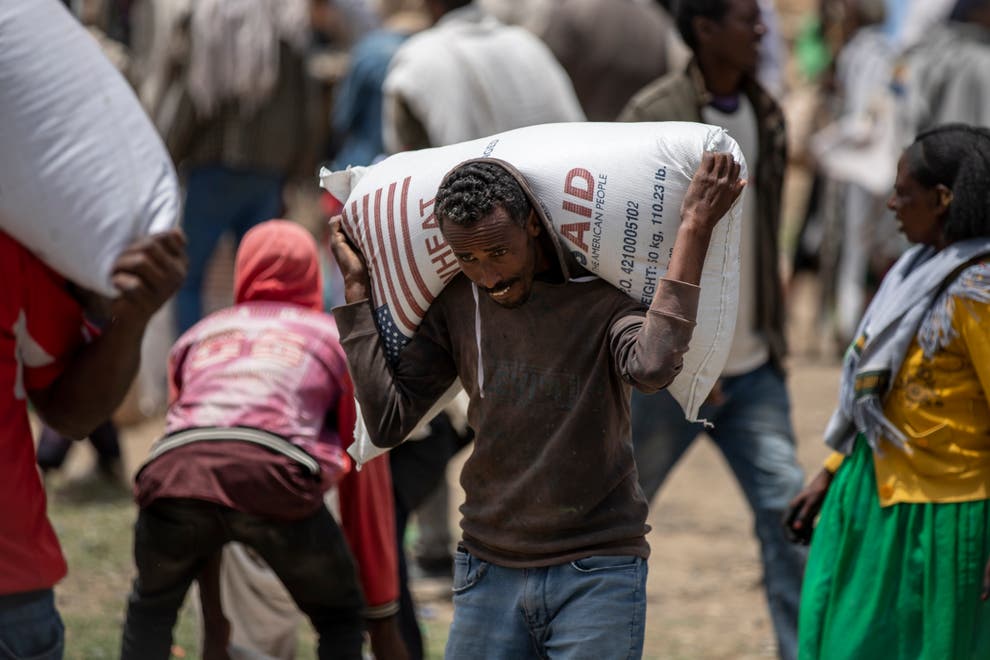
The World Food Program (WFP) said Tuesday that it needs $426 million (about 360 million euros) to meet the needs of 12 million people in Ethiopia for the remainder of the year, and has appealed for funding to scale up the assistance response.
The UN agency has indicated that it needs to fill a funding gap to secure aid for the next six months and to be able to provide long-term food security solutions to the population as it enters the annual “hunger season”.
This underfunding threatens WFP’s operations in the African country, where more than 13.6 million people are estimated to be food insecure due to the prolonged combined effects of drought, floods, desert locust invasions, market shocks and high food prices, as well as the COVID-19 pandemic, all exacerbated by the recent conflict raging in the north of the country.
“Time is running out for millions of people in northern Ethiopia and if we don’t get additional funds immediately we will be forced to cut rations or worse, stop distributions to some four million people we are trying to reach in Afar, Amhara and Tigray in the coming months,” warned WFP’s regional director for East Africa, Michael Dunford.
This month, WFP began delivering emergency food aid to communities in the regions bordering Tigray in coordination with government authorities. The agency plans to immediately reach 530,000 people in Afar and 250,000 in Amhara, but will scale up assistance as needs increase and funds are received.
In Tigray, the situation continues to worsen, with 5.2 million people across the region in urgent food needs, with humanitarian stocks nearly depleted as of Monday, when the first convoy for more than two weeks was able to gain access, carrying 3,500 tons of food and other key resources.
WFP expects to reach three million people in the region, an increase of 900,000 people since it took over operations in two districts in the northwest — Shire town and Tahtay Koraro — from its non-governmental partners.

