

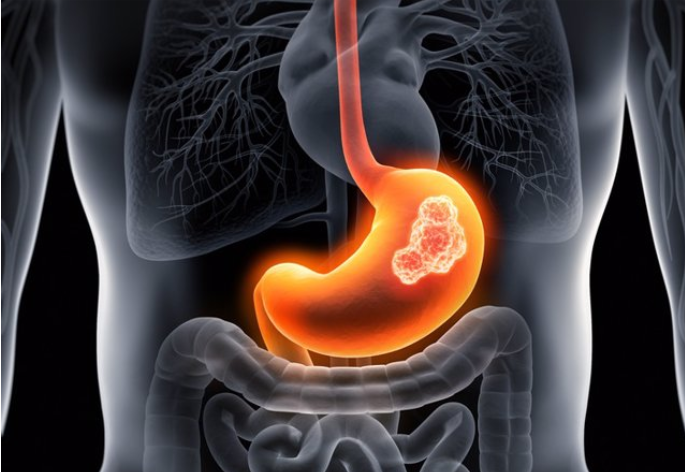
These are the signs that may lead us to suspect stomach cancer.
The term ‘gastric cancer’ is usually used to designate the malignization of the gastric mucosa, i.e. the innermost layer of the stomach, giving rise to a type of tumor called ‘adenocarcinoma’. There are other tumors that can form in the stomach, such as lymphomas, GIST, or neuroendocrine tumors, but they are much less frequent.
Dr. Sara Encinas Garcia is a medical oncologist specializing in digestive tumors and a member of the Disciplinary Committee on Digestive Neoplasms at MD Anderson Hospital in Madrid, and she explains this in an interview with Infosalus.
She points out that the initial stages of gastric cancer may be completely asymptomatic, although she warns of the symptoms that may make us suspect its presence or initiate a diagnostic study:
-gastric discomfort; early fullness; increased/decreased gastroesophageal reflux; nausea/vomiting.
-Tiredness; loss of appetite; unintended weight loss.
-Abdominal bloating; constipation; or abdominal pain.
“Any cancer is the result of damage to the genetic material of a cell, which leads it to grow indiscriminately, invading healthy tissue, losing the characteristics and functionality of the original cell, and giving it the ability to spread,” reminds the specialist.
TYPES OF STOMACH CANCER
Thus, Dr. Encinas emphasizes that most gastric tumors are adenocarcinomas, and within these she clarifies that two large groups can be distinguished, depending on the appearance of their cells, and with therapeutic and prognostic implications: the intestinal type and the diffuse type.
“This classification must be complemented with the determination of a series of molecular parameters that are essential at the present time: the amplification of the HER2 gene, the presence of microsatellite instability, and the expression of PDL1. These last two determinations will allow us to determine the possibility of using immunotherapy in the treatment of advanced stages of unstable tumors, or with high PDL1 expression”, explains the MD Anderson Madrid expert.
RISK FACTORS FOR STOMACH CANCER
As in most oncologic diseases, there is no single cause that explains its formation, according to the expert, although she stresses that exposure to certain risk factors increases the chances of sufficient cell damage occurring at the level of the stomach and conditions the malignization of the cells affected by that damage.
Among these risk factors he lists the following:
1. Diet: salted preserved foods, smoked foods and processed meat products, such as sausages, contribute to the appearance of gastric cancer, as do diets poor in fruits and vegetables.
Tobacco: carcinogenic substances in tobacco also increase the chances of developing gastric cancer.
3. Infection by H. Pylori, which is a very common bacterium in the world, and which can cause gastrointestinal discomfort, gastritis and ulcers. Most people who have H. pylori infection will not develop gastric cancer, but in the overall world population it is the most important risk factor for the formation of this tumor.
4. Previous diseases, such as chronic atrophic gastritis; pernicious anemia, which is an autoimmune disease; or gastroesophageal reflux, act as predisposing factors for gastric cancer.
5. Genetic factors. Genetic syndromes, i.e., identifiable genetic alterations that practically alone explain the formation of gastric cancer, are very rare: Lynch syndrome or mutations of the cadherin gene are the most important. There are cases of familial aggregation of gastric cancer without any of these genetic syndromes, so that the incidence of gastric cancer in individuals with several relatives diagnosed with this disease is 2 to 3 times higher than in the general population.
IMPORTANCE OF EARLY DIAGNOSIS
As in the rest of the oncologic diseases, the prognosis of gastric cancer depends intimately on the evolutionary moment in which the patient is diagnosed, increasing the possibilities of cure with early diagnosis, affirms the medical oncologist specialized in digestive tumors.

