

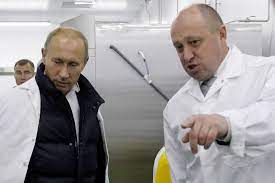
On Sunday—as the world waited to hear from Yevgeny Prigozhin, the leader of the Wagner mercenary group that, a day prior, had embarked on then aborted a mutinous march on Moscow—his press service indicated that the world would have to wait some more. Prigozhin “says hi to everyone and will answer questions when he has good reception” on his cellphone, the service said. Yesterday, Prigozhin finally broke his silence in an eleven-minute voice message posted to Telegram, saying that he had received thousands of press questions and wanted to set the record straight. The march on Moscow, he insisted, was not an attempted coup against President Vladimir Putin but merely a protest against Wagner’s mistreatment by Putin’s defense officials. Prigozhin also compared the march favorably to Russian troops’ botched advance on Kyiv last year, bragging that Wagner forces had put on “a masterclass.”
In recent days, Prigozhin has emerged as a character almost custom-made for the glare of global media interest: a petty crook turned hot-dog vendor turned ritzy caterer who served caviar to George W. Bush, then founded a private military empire, then used it to puncture the authority of an autocrat once seen as untouchable, if only in the realm of media archetype. In the course of his mutiny, as The Intercept’s Alice Speri noted yesterday, Prigozhin deftly spun his preferred narrative to the public, leveraging his decade-plus of experience in the field of information warfare. And yet, for most of that decade, Prigozhin lived in the shadows and aggressively fought journalists who attempted to shine a light into them. If the time between the mutiny and Prigozhin breaking his silence about it felt long, it was a heartbeat compared to the years that he spent on the margins of global attention—fighting a steady drift toward its center before finally seeming to decide, against the fraught backdrop of the war in Ukraine, to embrace it.

