

Dozens of students residing in cities in Florida and New York will be able to return to the island to complete an associate degree in nursing, as part of an academic program promoted by NUC University.
Its about Nursing Destination School, a curriculum designed for Puerto Ricans in the diaspora, with the purpose of providing them with the opportunity to achieve their respective professional goals under a hybrid modality that will begin virtually and extend their clinical practice to hospitals in Puerto Rico.
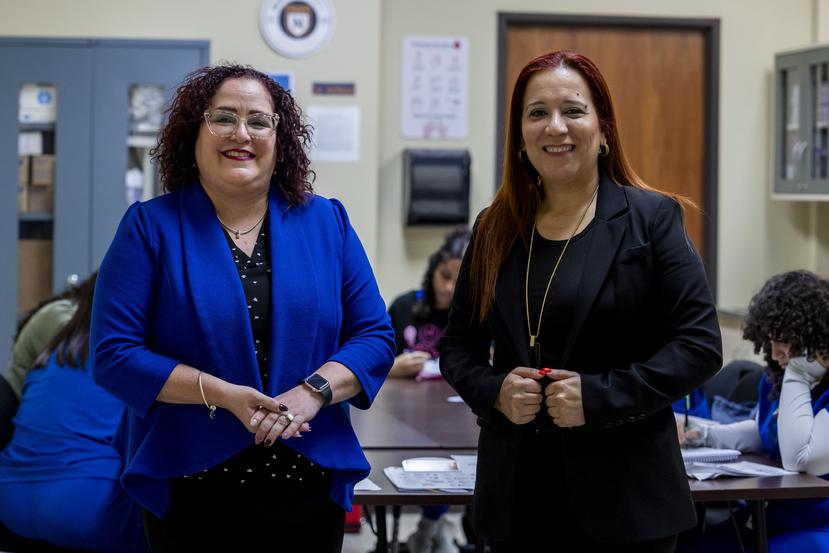
According to the director of the program, Wilda Velez Valdivieso, “It is a new project for NUC University, focused on this population that left Puerto Rico and that has needs.”
“It is a particular population that is in the United States and we want them to see our institution or this project as an alternative so that they can take their classes virtually, with the support of the teachers, with the support of the services that provide them.” “We are going to give,” he expressed.
“In addition, they can do clinical practices in Puerto Rico, in a certain period and can fulfill the dream of having an associate degree in nursing and can take the revalidation. “That this student can pass the exam, be employed and have a better future,” she said.
The associate degree in nursing, according to Velez Valdivieso, “is designed for the student to complete in two years and has the advantage that the student will be in virtual format, part of the time, and will carry out in-person internships in Puerto Rich, in just a few months.”
In fact, the clinical practices will be carried out in hospital institutions throughout the island, to which NUC University has access, among these, “the Medical Center hospitals and other regions where we have availability. But the Caguas campus is the one that will be receiving these students during their stay in Puerto Rico.”
According to Velez Valdivieso, the academic program is completely in Spanish.
“It is an opportunity for a population that may not be fluent in English, because our program is completely in Spanish, but we also provide an opportunity for them to become familiar with these concepts from the Board of Nursing because they are going to take the NCLEX (National Council Licensure Examination). , which is the exam taken by people who live in Florida and New York; It’s in English,” she explained.
“But our institution has taken great care that students can have this whole range of concepts in English, because we have an application that the student will be interacting with during all academic periods, so that the knowledge and skills that they acquire in the classes, I can transfer them to the board,” he noted.
From elsewhere, He highlighted that classes will begin on May 27, through a curriculum that consists of 70 credits.
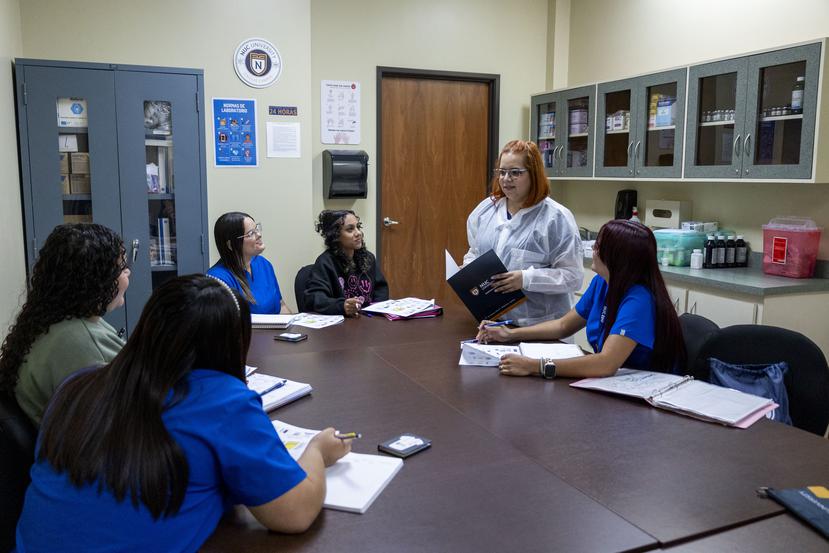
“From the period from May to December, the student will be online and will come to Puerto Rico for the second week of January. During that period until April, the student will have some practice courses that will also have some theoretical modules and during that time the student will be interacting in a practice in hospitals in Puerto Rico,” she explained.
Among the clinical areas that will be covered in person in Puerto Rico are: medical-surgical nursing 1 and 2, pediatrics, nursing fundamentals, maternity and community health.
“We are dividing those six classes into three clinical practices that will begin in January 2025, and the other three will be done between September and November of that same year, to take those last three courses,” he said.
“It is a slightly more accelerated practice, because the student will be from Monday to Friday taking clinical practices for the particular courses, so it is a little more accelerated, but we guarantee all the skills and competencies that the student must have to take that revalidation exam,” he clarified.
Notably, “Another advantage of the program is that our costs remain those of Puerto Rico.”
“Part of what we are seeing is this population of Puerto Ricans that left for the United States; An institution in the United States can cost $50,000 for an associate degree and here we are going to maintain the costs of Puerto Rico,” he insisted.
“Our interest is that these Puerto Ricans can continue with their lives and have other opportunities where they are, because we remember that when this profile of nurses passes the United States examination, they have an extraordinary gain,” he noted.
“We have a population that left Puerto Rico because of hurricanes, earthquakes, because of many things, looking for an opportunity. I believe that this is the opportunity for these people who have left and are making their lives in Florida or New York, to have a program so that they can come to Puerto Rico, so that they can see their family and friends that they have not seen for a while. period of time,” he highlighted.
For information: nuc.edu.

