


The panoramic route in Cayey It houses one of the most unusual greenhouses on the island, where around a thousand varieties of carnivorous and collectible plants are grown.
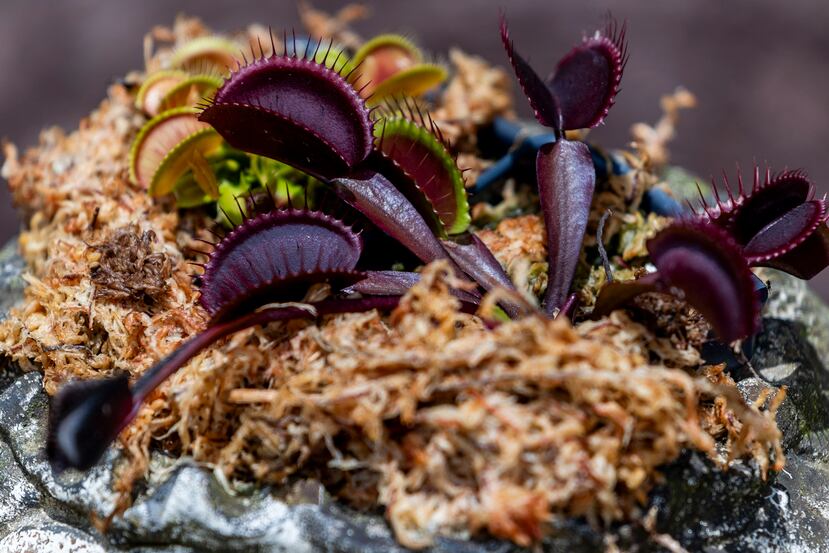
Is about Jurassic Plants PR, a space created by the biologist from Guayanilla, Daniel Cruz Smith who, for 11 years, has been dedicated to planting this type of flora that is nourished by the capture and consumption of small animals, especially insects.
His infatuation with these plants – for some gloomy and for others an uncommon beauty – arose while studying for his bachelor’s degree at the University of Puerto Rico in the ‘City of Mists’, when he discovered a hobby that became a passion.
“I have always been very passionate about nature and growing plants. When I was at university, I used to make community gardens, but when I discovered carnivorous plants, I literally became obsessed. That’s when I bought my first ‘venus flytrap’,” said the 31-year-old biologist.
“I found it so fascinating how a plant has the ability to be a predator and capture and digest animals; it gives them a very interesting personality. Although the world of carnivorous plants is very diverse, there are more than 800 known species and thousands of hybrids,” he revealed.
He also highlighted that in Puerto Rico there are about six species of native carnivorous plants, “although they are small in size and difficult to find in their habitat.”
“One of these is Drosera capillaris, which is one of those that has glue on the surface of the leaf. In addition, we have five species of Utricularia, which are carnivorous plants with underground traps and feed on microorganisms in the soil,” he stressed.
According to Cruz Smith, his collection has more than a thousand species of plants, most of them carnivorous, “although I also have other families such as orchids, bromeliads, succulents and aroids.”
“Apart from the Venus flytrap, other popular carnivorous plants are sundew plants, which have glue on the surface of their leaves and insects stick to them, mainly small insects such as ants and mosquitoes,” he explained.
“Pitcher plants are also very popular because there are many species; these are the nepentes and the sarracenia. Others that are less known are the pinguicula, utricularia, heliamphora and many other genera, such as even carnivorous bromeliads, of which there are only three species,” he explained.
Their greenhouse, which specialises in growing carnivorous plants and collectible plants, opened in 2020 and employs three people.
Among the clients’ favourites are “the little pitcher plants because they capture many insects that are harmful to us, such as mosquitoes, flies, ants and mimes.”
However, he confessed that his favourite plants “are the nepenthes because they are the most evolved carnivorous plants, they are the ones that have the capacity to capture the largest animals. Some species can eat animals as big as a rat.”
“(Nepentes) are also the ones that have more complex symbiotic relationships with animals because carnivorous plants not only feed on some animals, but are also home to some others,” said the biology specialist who has lived in Cayey for about 14 years.
“Some plants have symbiotic relationships with ants or other small animals that provide protection to the plant, while the plant provides a home for the plant to live in. So, these symbiotic relationships make them very interesting, and they are also highly evolved and specialized plants,” he insisted.
On the other hand, she admitted that the acceptance of these plants has been growing. That is why she has dedicated herself to educating people about the existing myths regarding this flora.
Myths and facts about carnivorous plants
“Some of the most common mythsis that they are difficult to grow or that they generate some kind of bad smell or that they are toxic to pets and all of those things are not true. They are harmless, both for pets and for children,” he said during his participation in the Flower Festival in Aibonito.
She also pointed out that most of her clientele are young people who are passionate about nature and others who are studying a profession related to science. However, “that doesn’t mean that there aren’t other sectors of the community because I have clients of all kinds, older people too.”
“Many people buy their first carnivorous plant thinking it is a good pest control. Although it is true that they devour a large number of insects that are harmful to us, but It does not mean that they are a pest control that eradicates all insects because they do not destroy their prey, but they control the populations.“, he clarified.
Meanwhile, He stressed that the tropical climate favors the cultivation of carnivorous plants.
“The universal rule for many of them is that we should not fertilize them. They are called carnivorous because they feed and derive most of their nutrients from the small animals they capture. For that reason, we do not fertilize them. The rest is light and water, some prefer more light than others and they must be kept fairly hydrated,” he said.
For details jurassicplantspr.com or 939-630-4269.
You may also like:
1 / 9 | El Cerro Garden: a colorful space that houses thousands of flowers. El Cerro Garden is a two-acre space where about thirty varieties of flowers are grown. – Isabel Ferre Sadurni

