It is sometimes said – half jokingly, half seriously – that politics in Puerto Rico is a national sport. If that is true, then the general electionswhich are held every four years, would be the “playing field”.
The truth is that Every four years, elections capture the collective imagination as much or more than any sporting event.. Perhaps, a little, because of the nuance that this process takes in Puerto Rico due to its peculiar political situation and, as commonly occurs, without thinking that these processes have taken decades to develop and evolve into what they are today.
Although The beginning of the electoral exercise in Puerto Rico dates back to the 19th century.the change of sovereignty caused by the The US invasion of 1898 began a process that culminated in the electoral system we know today.
“Until 1870, there were no political parties in Puerto Rico (…) Many of its rulers relied on the impunity granted to them by the so-called absolute powers, and they were in charge of administering justice without a system of checks and balances.“, said the historian Elma Beatriz Rosado Barbosa in his book “From the origins of political parties in Puerto Rico to the Puerto Rican Republican Party”about this period.
The first elections in Puerto Rico were held in 1869.when deputies were elected to represent the island government in response to demands from a large part of the territory’s sectors for greater political freedoms.
Electoral laws
However, it was not until March 8, 1906, after Puerto Rico became a territory of the United States following the Spanish-American War, that Puerto Rican voters were given the opportunity to approve an electoral law. The Electoral Act of 1906 became the cornerstone on which our current electoral system was founded.
This law established general elections every two years, to be held on the first Tuesday in November. Voters could choose a Resident Commissioner in Washingtonbut not the position of governor.
Despite being an advanced law, It still provided for census-based (or restricted) suffrage by limiting the vote to any male over 21 years of age who could read and write.thereby excluding women, illiterate people and those convicted of serious crimes.
On June 25, 1919, the Electoral Law of 1906 was repealed and new legislation was created.
This new electoral law brought with it significant changes to the elections. Among them, the 1928 amendment that allowed independent candidacies and that of 1929 where women were finally granted the right to vote.
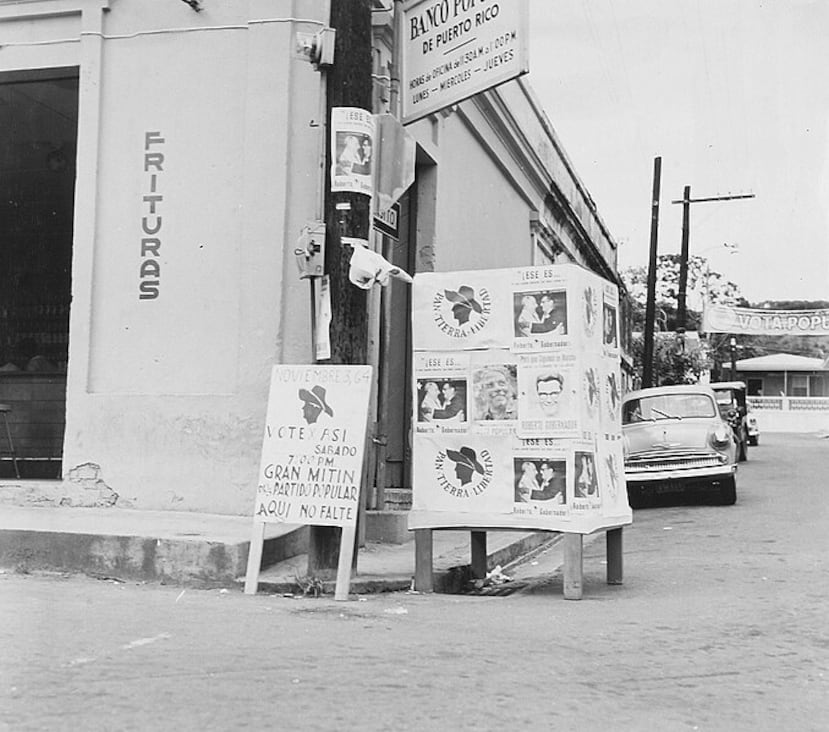
It was not until 1974 that this law was repealed in its entirety and replaced by Law 1 of February 13 of that year, known as the Puerto Rico Electoral Codeby which elections continue to be governed today.
The Jones Act
It was with the Jones Act of 1917 –which replaced the Foraker Act of 1900– that the island government separated the executive, judicial and legislative branches, creating a locally elected bicameral legislature. However, the positions of governor of Puerto Rico, as well as the judges of the Supreme Court of Puerto Ricoremained as positions directly selected by the President of the United States.
“There was a strong clamor in Puerto Rico from all parties to replace the Foraker Actwhich was a colonial law that allowed the president to continue appointing the governor and other high officials, until 1948, when the first change in political relations between Puerto Rico and the United States since 1917 occurred, through the Jones Act,” he explained, for his part, Antonio Quinones Calderonjournalist and historian expert in politics and government.
Quinones Calderon highlighted that, on May 2, 1947, Congressman Fred Crawford (R-Mich.) introduced before the Congress HR 3309 to amend the Jones Act to grant Puerto Ricans the right to elect the island’s governorbeginning with the 1948 elections.
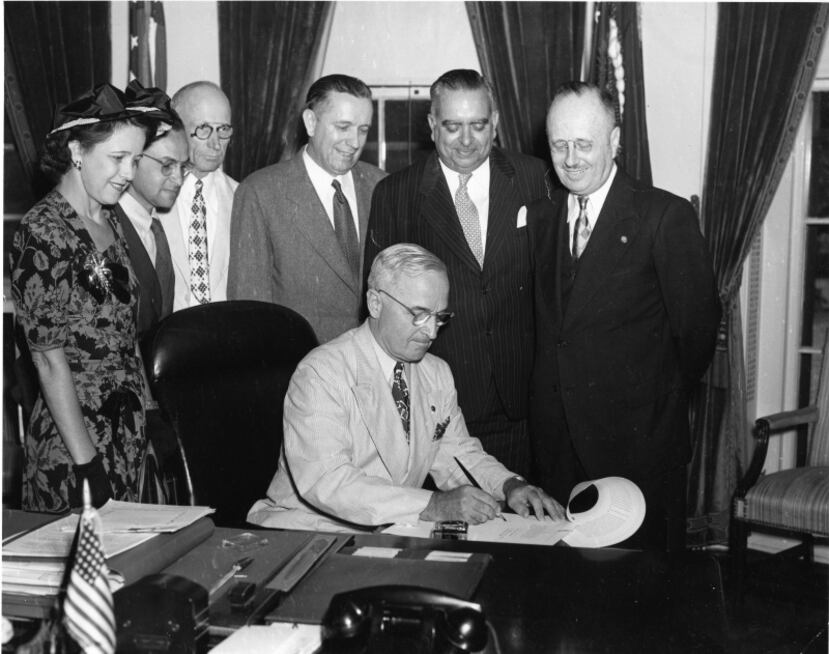
The project was approved expeditiously. During the general elections of that year, the People’s Democratic Party (PPD) won an overwhelming victory and Luis Munoz Marin He became the first governor elected by Puerto Ricans.
Polling stations closed
One of the transformations that the electoral process in Puerto Rico has experienced is the replacement of the “closed school”a concept foreign to the current process, but which undoubtedly marked the history of elections as we know them today.
“Until the 1976 elections, voters had to arrive at 8:00 in the morning and stay at the polling station until 1:00 a.m. That was a terrible thing. “The first time I voted, it was like that, in a closed polling station,” recalled the 82-year-old historian, about his first election, in 1960.
“They were called ‘closed schools’ because They locked the voters in the rooms – like when they kidnap a jury – “Without air conditioning, crowded. Then they would sound a siren and after 1:00 a.m. no one else could enter or leave,” he added.
Quinones Calderon explained that it was not until the general elections of 1980 when the law was amended and open schools began to be usedwhere voters chose what time to exercise their right to vote within an established schedule.
“This practice (the closed school) has a very peculiar political history. That started in the 1930s, because at that time it was alleged that the big landowners would get their workers drunk – who were members of a rival party to the landowner’s – so that they couldn’t go to vote the next day because of the hangover.“, said Quinones Calderon.
The first elected mayor
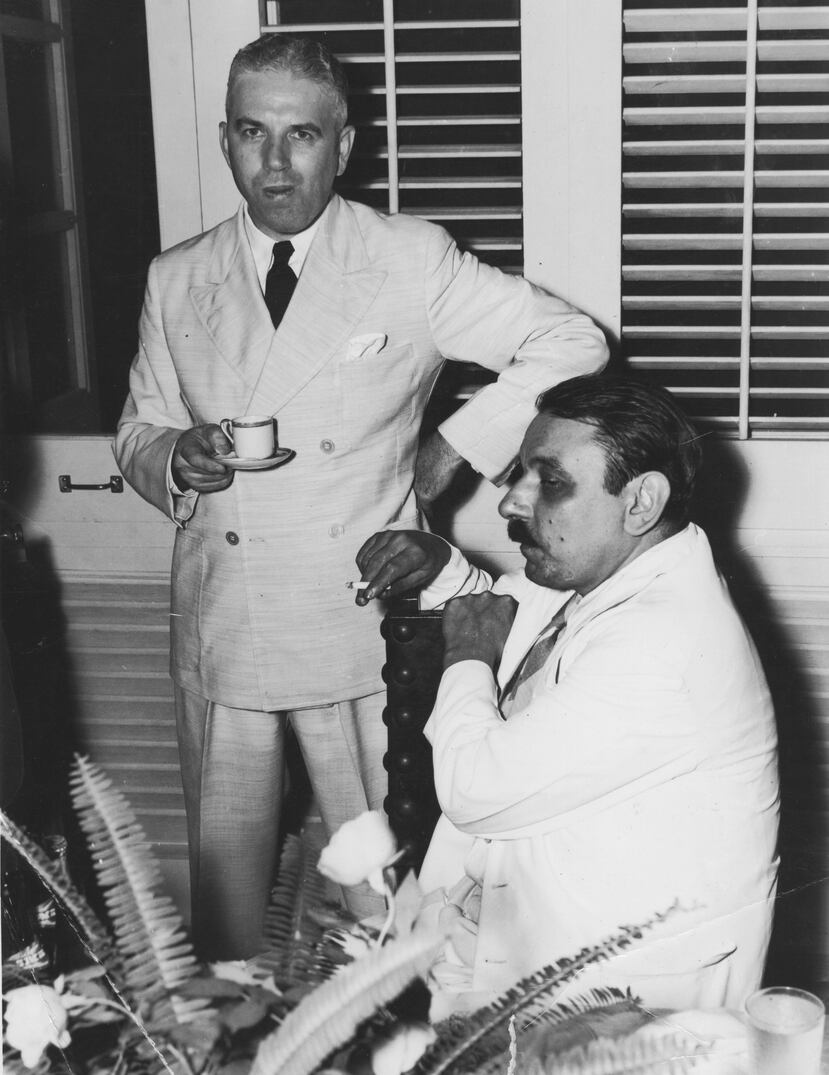
Although the historical rumor that remains in the popular imagination places Mrs. Felisa Rincon de Gautier As the first female mayor of San Juan, Quinones Calderon said that the official did not technically hold that position as a property, but rather acted as an administrator of the city council.
It was not until the 1968 elections that the position of mayor of San Juan was elected by direct vote for the first time.
“Many people don’t know that Carlos Romero Barcelo He was the first elected mayor of San Juan. The mayor was not elected until 1968.the historian revealed.
“Dona Fela was called ‘the mayor’, but her real title was ‘capital manager’. What was really chosen for Saint John It was a political slate of municipal assembly members, who at that time were called ‘compromisarios’ who, in turn, elected the administrator,” he added.
Romero Barcelo, the then young and charismatic candidate for mayor of San Juan for the New Progressive Party (PNP), took the claim to the Supreme Court of the United States so that the constituents of San Juan could directly elect their mayor.
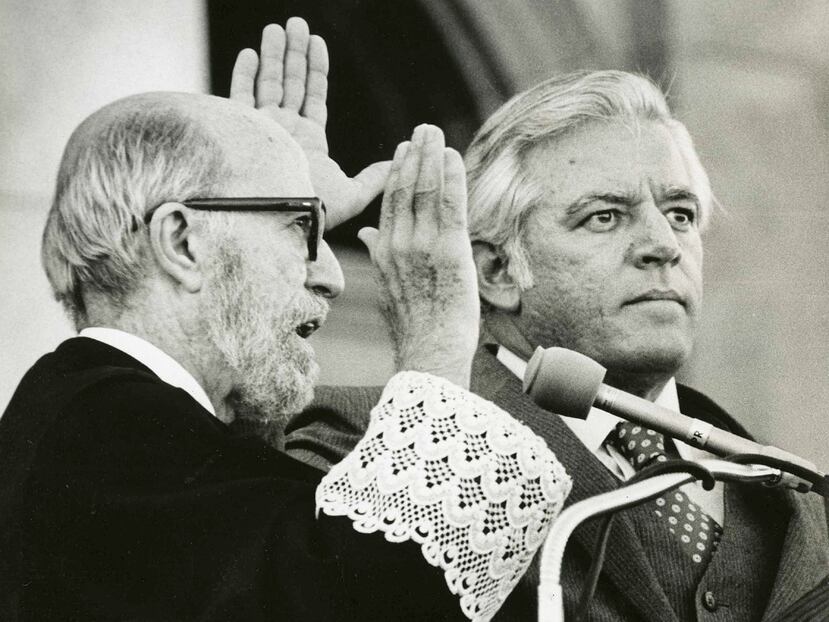
“In the midst of the 1968 campaign, Romero Barcelo announced that he was going to the federal Supreme Court to demand the right to elect the mayor by vote as a matter of civil rights, and he managed to prevail in that forum,” explained Quinones Calderon.
Electoral interest
Quinones Calderon assured that In the electoral history of Puerto Rico there has never been a massive mobilization like that experienced in the first four elections in which citizens elected a governor (1948 to 1964)..
“The truth is that Luis Munoz Marin He arrived with a message of great hope, because there was so much poverty in Puerto Rico (…) not only was he lucky enough to receive extraordinary financial aid from Washington, but he also knew how to manage it with impressive decency, and that is why he was there for four four-year terms with solid support,” said the historian.
However, Quinones Calderon did not attribute the phenomenon of electoral apathy solely to the presentation of the message, but also to the figure of the candidate.
“I think the candidate’s personality has a lot to do with it.For example, in 1976, Carlos Romero Barcelo was a sensation as a candidate for governor and, from one year to the next, electoral participation increased. The same thing happened with Rafael Hernandez Colon; when he ran for governor, voter turnout increased dramatically compared to previous years,” he said.
“They were two charismatic and strong figures, who attracted a lot of sympathy,” he added.