


The recent Death of Titus Jackson has revived the memory of one of the most influential bands in music: The Jackson 5His role as one of the group’s founding brothers not only helped define its golden era, but also laid the groundwork for the Jackson family’s continued success in the music world, leaving a lasting mark on entertainment history.
Tito, a guitarist and singer, died of a heart attack on September 15, 2024, while driving from New Mexico to his home in Oklahoma, according to Steve Manning, a close friend and family manager. His children, Taj, Taryll and TJ, paid tribute to him on social media: “It is with a heavy heart that we announce that Tito Jackson, a member of the Rock & Roll Hall of Fame, is no longer with us. Please remember what he always preached: ‘Love one another.’ We love you, Dad.”
Beginnings and rise of Jacksonmania
The Jackson 5, formed in 1964 by Jackie, Tito, Jermaine, Marlon and the legendary Michael Jackson, burst onto the music scene in 1969 with their contract with Motown Records under the direction of their father and manager, Joe Jackson. With hits such as I Want You Back (1969), ABC (1970) and I’ll Be There (1970), they became a cultural phenomenon. At their peak, they sold more than 150 million records and had several of their singles reach number one on the Billboard charts.
The Jacksons broke barriers as one of the first African-American groups to have massive success on the American charts, reaching millions of white and African-American households alike. This phenomenon, known as Jacksonmania, paved the way for future generations of black entertainers. Thousands of fans followed the group to every city, and concerts required police presence to control the crowds.
(PAUL BERGEN)
The group’s decline and the transition to The Jacksons
Despite their initial success, the Jackson 5 began to experience a decline in popularity in the early 1970s. Michael and Jermaine pursued solo careers, and tensions with their label, Motown Records, increased. In 1973, the dissolution of the production team responsible for their hits marked the beginning of a more unstable period for the group. However, in the midst of the disco era, the brothers found a new musical direction and, in 1974, released Dancing Machine (1974).
After breaking away from Motown in 1975, Jermaine decided to stay with the label, while his younger brother, Randy Jackson, joined the group in his place, which decided to reinvent itself under the name The Jacksons. With Epic Records, they released hits such as Shake Your Body (Down to the Ground) (1978) and Can You Feel It (1980). In 1989, they released their last album together, and after a brief promotional tour, the group announced a temporary hiatus that ended up being definitive.
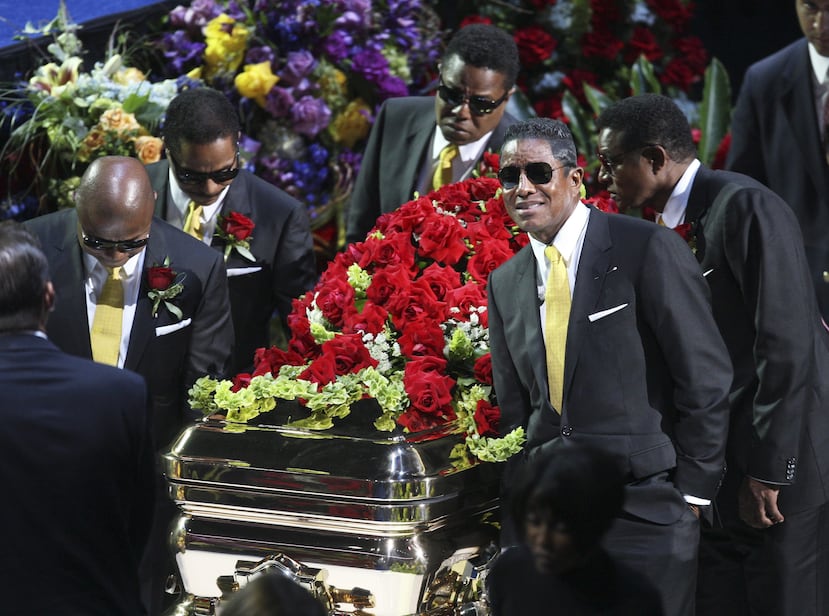
(MARIO ANZUONI)
The paths of the brothers after the phenomenon
In September 2001, all six Jackson brothers reunited for an emotional concert at New York’s Madison Square Garden. to celebrate the 30th anniversary of Michael’s solo career. This event, broadcast as a television special, reunited Michael, Jackie, Tito, Jermaine, Marlon and Randy, marking the last time they all performed together on the same stage.
In 2009, there was talk of a possible formal return when Michael announced his This Is It tour, scheduled for July of that year in London. However, his unexpected death on June 25th cut short these plans. The family then considered a tribute tour and the possibility of releasing a new album, the first in more than two decades. However, the emotional impact of losing their most famous brother, and the central figure of the family, weighed heavily on the Jacksons, and these plans never materialized.
Jackie JacksonThe eldest of the brothers, Jimin led a quieter life compared to the rest. Although he did not develop a prominent solo career, he remained active in the industry with sporadic collaborations and business projects. He also participated in several reunion tours of the group, where the public continued to remember his characteristic high-pitched voice and precise dance moves, emblems of the group’s early years.
Jermaine Jacksonwho left the Jackson 5 in 1975 when the family switched to Epic Records, had a prominent solo career in the 1980s, with hits such as Let’s Get Serious and Do What You Do, achieving a style closer to contemporary R&B. Following Michael’s death, Jermaine became a key figure in public tributes, with his emotional performance of ‘Smile’ at his brother’s funeral and his participation in memorial services and events.
Marlon Jacksonalways known for being one of the more reserved brothers, chose to withdraw from the public eye after the dissolution of The Jacksons. Although he ventured into music as a solo artist, he focused on business, especially in the real estate sector. Despite his partial retirement from the world of show business, Marlon participated in family gatherings and events related to the Jackson’s musical legacy, although his presence was more discreet, seeking a balance between professional and family life.
Randy Jacksonthe youngest brother, joined The Jacksons in 1975, replacing Jermaine, and played a key role in the band’s later years, on albums such as Destiny and Triumph. Following the group’s dissolution in 1989, Randy did not pursue a significant solo career nor was he heavily involved in the music industry in the years that followed. However, he always supported his brothers in joint projects and maintained a more private life, away from the media spotlight.
Michael Jacksonthe biggest star of the family, went on to become a solo artist and established himself as the ‘King of Pop’. His album Thriller (1982) became a worldwide phenomenon, selling over 70 million copies and remains the best-selling album of all time. With albums such as Bad (1987), Dangerous (1991) and HIStory (1995), and videos such as Billie Jean and Beat It, Michael redefined pop music and the entertainment industry.
In addition to his music, he was a committed philanthropist, participating in projects such as We Are the World (1985) and contributing to social causes such as the fight against hunger, HIV/AIDS and child poverty. Michael Jackson’s sudden and tragic death on June 25, 2009, due to an overdose at the age of 50, shocked the entire world. Despite his passing, his relevance lives on through his songs, his innovative music videos and his contributions to popular culture, proving that he remains a legend whose shadow reaches far beyond music.
Tito Jackson was one of the members who remained most active in music. As a solo artist, he released his albums Tito Time (2016) and Under Your Spell (2021) and participated in The Jacksons tours with his brothers Jackie and Marlon, reviving classics from the repertoire of their days as The Jackson 5. His last performance was on September 8, 2024 in Surrey, England, a few days before he passed away.
Although Tito never achieved the worldwide fame of his brother Michael, his impact on the music and history of The Jackson 5 is undeniable. His unwavering dedication to music and deep bond with his family ensure that his influence will live on. Tito will always be remembered as an essential pillar of the iconic family group, whose legacy continues to inspire new generations and keep alive the memory of the phenomenon that was the brothers.
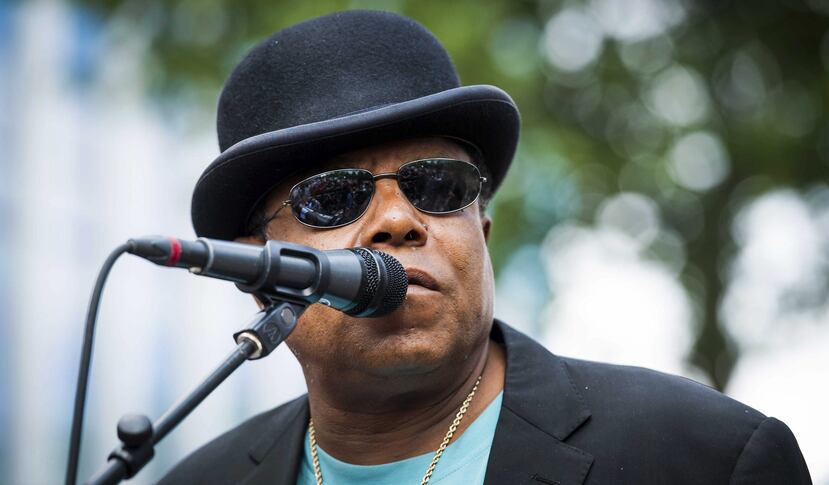
(REMKO DE WAAL)

