

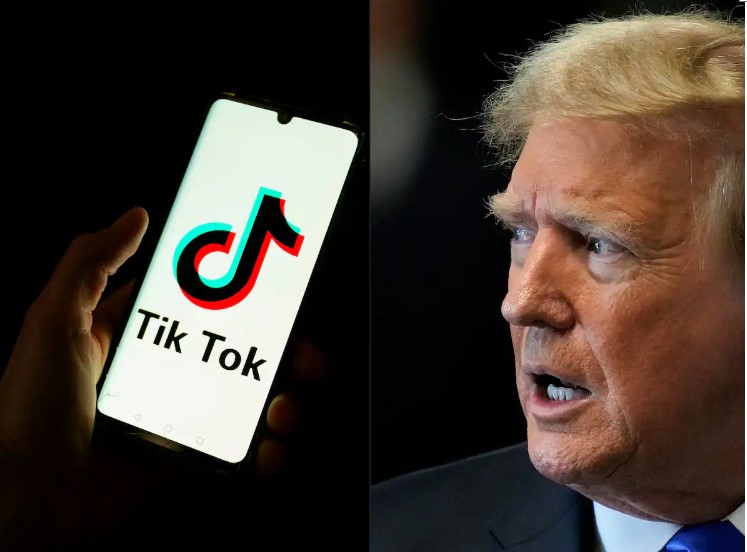
Remember, the president-elect was against the popular platform before he was for it.
It’s not often that a single friend-of-the-court brief to the Supreme Court merits individual attention. Then again, it’s not often — not ever, actually — that a brief is filed like the one by President-elect Donald Trump in TikTok v. Garland.
Agreeing to hear the case on a supersonic schedule, the Supreme Court said last month it would hold oral argument Jan. 10 on TikTok’s claim that the statute violates its First Amendment rights. (A federal appeals court unanimously rejected that argument in early December.)
The Biden administration, which last I checked was still in office, is defending the law, saying it “addresses the serious threats to national security posed by the Chinese government’s control of TikTok, a platform that harvests sensitive data about tens of millions of Americans and would be a potent tool for covert influence operations by a foreign adversary.”
But that was then: The order was blocked by a federal judge who ruled that Trump had exceeded his authority, then later rescinded by President Joe Biden. And this is Trump, for whom consistency is no virtue. He then went from TikTok antagonist to TikTok advocate, a switcheroo that happened to coincide with a March 2024 meeting with Republican megadonor Jeff Yass, a major investor in TikTok parent company ByteDance (Trump said they didn’t discuss the company), and more broadly with Trump’s discovery that the platform could be an effective campaign tool.
And so much for that one-president-at-a-time stuff. The Biden administration is doing its constitutional duty, which is to defend a duly enacted statute. Trump’s argument is that, because he is about to be sworn in and is now determined to ride to TikTok’s rescue, the court should concoct some basis on which to suspend the operations of the statute until he takes over. This isn’t the law, and it’s not the way courts are supposed to operate. You can’t claim to be a believer in the unitary executive and not let that executive govern until his time in office runs out.

