

‘We think we can handle it,’ Prime Minister Pham Minh Chinh said of Vietnam’s US ties at the World Economic Forum in Davos Vietnam’s hesitation on Brics highlights delicate US ties, economic consideration
Will Trump’s ‘tariff tantrums’ spark a US-Southeast Asia trade war?
From Hoi An to Hanoi: a ride along Vietnam’s twisty Ho Chi Minh Highway
Opinion | How Trump could upend South China Sea calculations all round
Malaysia calls for Myanmar ceasefire as Asean pushes for peace talks
A weekly curated round-up of social, political and economic stories from China and how hey impact the world.
Vietnam’s Prime Minister Pham Minh Chinh has said his country’s top leader recently chatted with Donald Trump and is ready to deal with the new US administration.
“Our Party General Secretary To Lam has spoken with President Trump on telephone,” and his government has made “some approaches” to Trump’s administration, Chinh told the World Economic Forum in Davos on Tuesday. “We think we can handle the relationship with the US.”
The Southeast Asian government is pursuing an ambitious goal of boosting growth to at least 8 per cent this year but faces uncertainty over the prospect of tariffs.
Vietnam was a major beneficiary of the first US-China trade war, but its ballooning trade imbalance with the US and Trump’s determination to bring more manufacturing jobs back home makes it a target for protectionist policies.
Chinh said Vietnam was “working on solutions” to rebalance its trade surplus with the United States, reiterating a promise to buy Boeing Co. planes, and expressing an interest in purchasing other American hi-tech items.
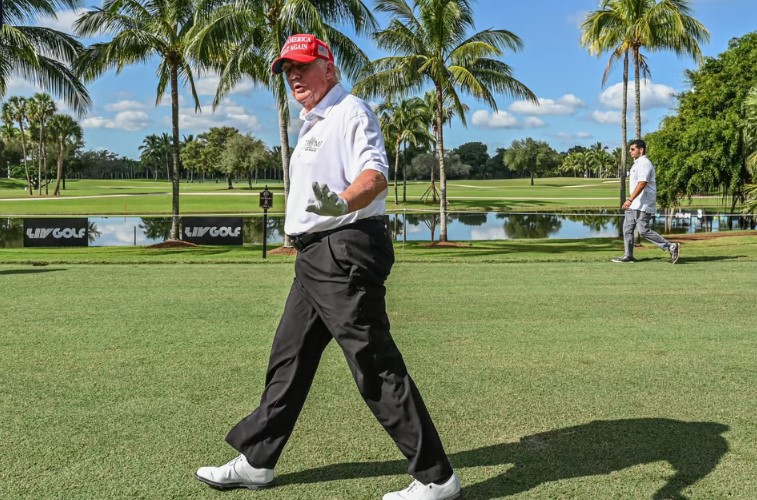
“If playing golf can help bring benefits to my country and my people, then I can play golf all day long,” Chinh said, eliciting chuckles from the audience, as he responded to a question on whether he’d be willing to travel to Trump’s private Mar-a-Lago club in Florida to meet and play a round with the US president.
Double-digit growth in exports, along with resilient foreign investment and strong manufacturing, helped the economy expand 7.55 per cent in the fourth quarter last year, surpassing all expectations and taking full year growth to 7.09 per cent, well above the government’s target for 2024.
While the National Assembly has set an economic growth target of 6.5 per cent-7 per cent this year, Chinh said last month that the government sees 2025 as “the year of acceleration” and would strive for about 8 per cent growth.
Vietnam is also undergoing the biggest political reform in decades as the Communist Party seeks to cut the size of government by around 20 per cent, to streamline the bureaucracy, and reduce red tape and costs.
Last year, the government’s highest echelons also underwent a reshuffle after the death of the country’s long-serving Communist Party general secretary. Chinh tacitly referred to this, noting Vietnam experienced “a change in a generation of leadership without warning”.
Chinh also said Vietnam is issuing legal instruments and policies to promote the development of artificial intelligence. He added that the country is also seeking to develop a national database to connect different ministries and localities.
Like governments around the region, Vietnam has sought to pull in capital from foreign tech giants as the country emerges as a viable alternative to China in the manufacturing of everything from gadgets to basic semiconductors. Intel Corp. operates a chip assembly and test manufacturing facility in Ho Chi Minh City, and the country has also attracted the likes of Apple Inc. suppliers and Samsung Electronics Co.
Chinh last year vowed to lure “crucial” foreign investment to AI development by cutting logistics costs and improving infrastructure, as the country seeks to establish itself as a global hub for advanced technology.
Vietnam has targeted more than US$100 billion a year in revenue from the semiconductor industry by 2050 and set out ambitious plans for a sector seen as key to economic expansion. The government aims to set up three big data centres and three AI centres by 2030, according to a national strategy released in 2021.
Communist Party chief To Lam said the top priority is that by 2030, Vietnam will become a country with a modern industry, and by 2045 become a developed country with high income, according to a government notice on December 31.

