

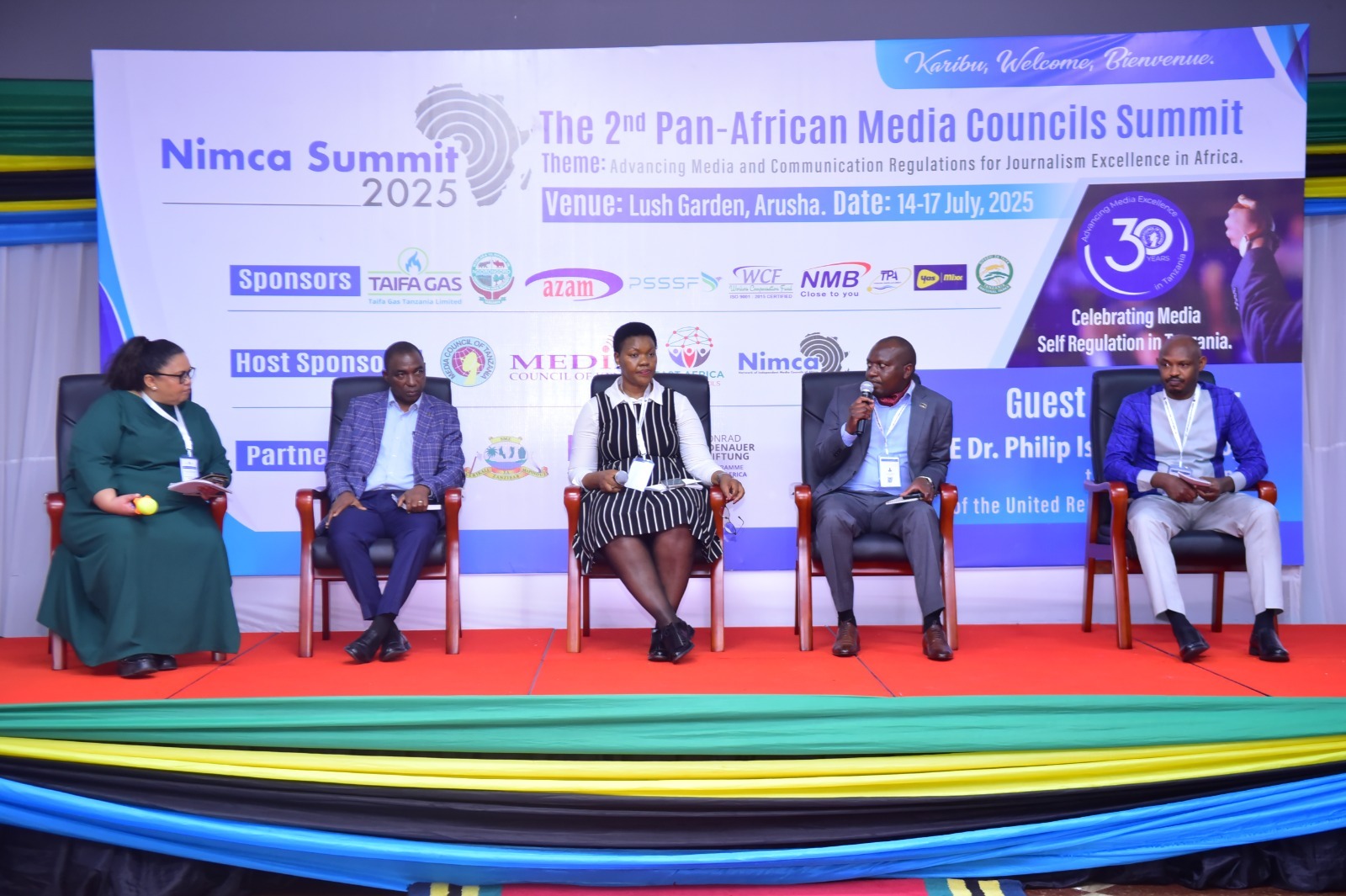
As Africa’s media environment rapidly evolves, discussions at the second Pan-African Media Councils’ Summit in Arusha, Tanzania, emphasized the urgent need for sustainable funding for media regulators. Leaders and experts from across the continent highlighted the crucial role that media councils and regulatory bodies play in upholding democracy.
Emmanuel Mugisha, Executive Secretary of the Rwanda Media Commission, emphasized that governments must prioritize funding for media as a fundamental aspect of governance and public accountability.
“Just as governments allocate resources to the judiciary and other state institutions, they must also invest in media accountability and public interest journalism,” Mugisha stated. He proposed establishing a media basket fund, potentially supported by telecom giants and technology firms that depend on media content, to help cover the high costs of quality journalism and safeguard the independence of regulators.
David Omwoyo, CEO of the Media Council of Kenya (MCK) and Secretary of the East African Press Councils, shared Kenya’s hybrid model of regulation, which combines public funding with operational independence. While effective in balancing press freedom and public interest, Omwoyo acknowledged challenges related to representation and potential conflicts of interest.
“These are common tensions in a thriving democracy,” he said. Omwoyo called for funding mechanisms that protect regulators from political interference.
The debate also touched on the possibility of a unified media regulation framework for Africa. An Algerian delegate questioned why the continent couldn’t adopt a single model, but Omwoyo argued that regulation must be tailored to the unique political and social contexts of each country. He urged nations to secure funding for public interest journalism while maintaining regulatory independence.
Phathiswa Magopeni, Executive Director of the Press Council of South Africa, highlighted the importance of professional, unfiltered reporting. She stressed that regulation should focus on content quality rather than platforms, especially amid digital media convergence.
Ernest Sungura, Chairman of the Network of Independent Media Councils in Africa (NIMCA) and Executive Director of the Media Council of Tanzania, called for greater collaboration, adherence to ethical standards, and the promotion of a bold Pan-African media narrative. Describing the summit — co-hosted by NIMCA and the East Africa Press Council (EAPC) — as a “clarion call for a new era in media governance,” he urged regulators to foster an authentic, fearless voice that celebrates Africa’s diversity and resilience.
In his keynote address, UNESCO Assistant Director-General for Communication and Information, Dr. Tawfik Jelassi, underscored the importance of enabling legal frameworks and independent regulators to promote ethical journalism.
Reflecting on three decades of progress in Africa’s media sector, Jelassi stressed that an independent, pluralistic, and free press is essential for sustaining democracy. He also called for increased cross-border cooperation to tackle emerging challenges such as artificial intelligence, misinformation, and climate change, warning that “trust in media is under global strain as technology reshapes how information is shared.”
The summit, held from July 14 to 17, 2025, in Arusha, Tanzania, was themed “Advancing Media and Communications Regulation for Journalism Excellence in Africa.” It was regarded as a pivotal movement towards strengthening journalistic integrity and ensuring that Africa’s media truly reflects the aspirations of its people.

