

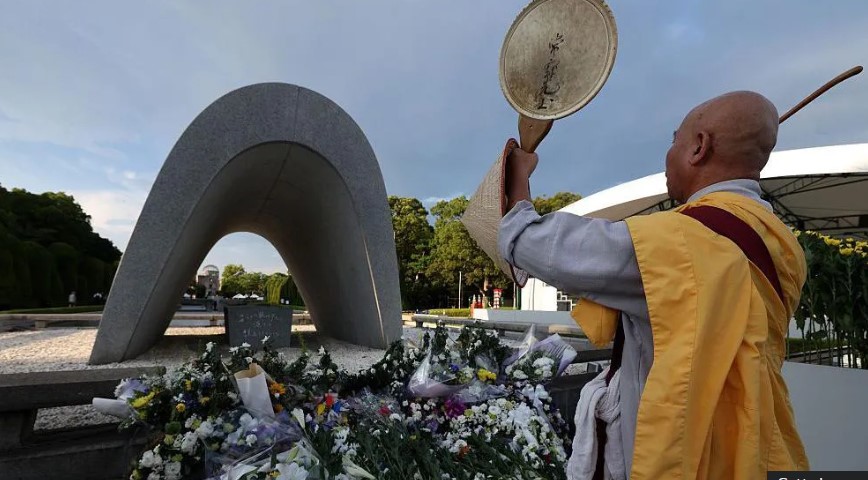
Commemoration Marks 80 Years Since Hiroshima Atomic Bombing
A moment of silence was observed in Japan on Wednesday morning to honor the 80th anniversary of the atomic bombing of Hiroshima by the United States.
Japanese Prime Minister Shigeru Ishiba attended the memorial ceremony alongside international representatives and Hiroshima’s mayor, Kazumi Matsui.
During his speech, Mayor Matsui expressed concern over the global trend toward military expansion and the growing belief that nuclear weapons are vital for national security. He criticized this mindset as a blatant disregard for the lessons learned from past tragedies, emphasizing the importance of remembering the devastating consequences of nuclear warfare.
World War II concluded with Japan’s surrender following the atomic bombings of Hiroshima and Nagasaki, which claimed the lives of over 200,000 people—many instantly, and others suffering from radiation sickness and burns in the aftermath.
The enduring impacts of these weapons remain deeply felt by survivors. Hiroshima resident Shingo Naito recounted his tragic memories to the BBC, sharing how his father was severely burned and blinded by the blast, and how he was only six years old when the destruction unfolded—losing his father and two younger siblings. Today, Naito shares his stories with students as they transform his experiences into art, keeping the memory of the tragedy alive.
In 2024, Nihon Hidankyo, a Japanese coalition of atomic bomb survivors, was awarded the Nobel Peace Prize for their persistent efforts to eliminate nuclear weapons.
During the ceremony, Mayor Matsui warned that the nuclear Non-Proliferation Treaty (NPT), designed to prevent the spread of nuclear arms and promote peaceful nuclear energy use, is “on the brink of dysfunction.” He urged the Japanese government to ratify the Treaty on the Prohibition of Nuclear Weapons, an international agreement effective since 2021 that bans nuclear arsenals.
While over 70 countries have ratified the treaty, nuclear-armed nations such as the US and Russia oppose it, citing nuclear deterrence as a security measure. Japan itself has also refrained from endorsing the ban, asserting that its security benefits from the presence of US nuclear weapons.
The nuclear debate remains highly contentious within Japan. Leading up to the Peace Memorial Park, small protests took place advocating for the abolition of nuclear arms.
Survivor Satoshi Tanaka, who malignantly suffered multiple cancers from radiation exposure, reflected on the current conflicts in Gaza and Ukraine, stating, “Seeing the destruction and suffering in those regions brings back my own memories.”
He further emphasized, “The most urgent task is to hold the leaders of nuclear-armed nations accountable. The world must intensify its outrage, speak out louder, and take decisive action to prevent nuclear catastrophe.”

