


According to data from the Centers for Disease Control and Prevention (CDC, in English)approximately 90% of adults over 20 years of age in the United States have had, at least once in their lives, a tooth decaywhich is usually treated by a dentist who removes the affected tissue by restoring the tooth, or tooth, through a filling.
However, the fact that the development of bacteria is the main cause of the production of dental cavities was an unknown topic until the beginning of the 20th century, when a dentist, originally from Adjuntas, changed the course of orthodontics forever.
The greatest of United States ArmyFernando E. Rodriguez Vargas, was a prominent pioneer of oral bacteriological research and the first to find conclusive evidence of how bacteria cause cavities and deteriorate dental health, identifying the types of Lactobacillus responsible for this.
According to military biographer James B. Mann in his book “Fernando E. Rodriguez, Major, Dental Corps, US Army”, Rodriguez Vargas was born on February 24, 1888 in Adjuntas, where he completed his primary studies, while Puerto Rico was still a Spanish colony.
However, the town did not have a high school until 1950, so young Rodriguez Vargas had to attend the Ponce high school, where the other Adjuntas students also studied.
After graduating at the age of 18, he applied to the University of Puerto Rico, where he studied as a paramedic and obtained his teacher certification. Later, he worked as an inspector of the United States Internal Revenue Service (IRS, in English) and, later, as a Spanish translator for the United States Department of War.
According to the biography, in 1910, at the age of 22, Rodriguez Vargas applied to the School of Dentistry at Georgetown University, in Washington, D.C.from where he obtained a doctorate in Dental Surgery in 1913. From 1913 to 1915, the assistant doctor practiced private dentistry in the American capital.
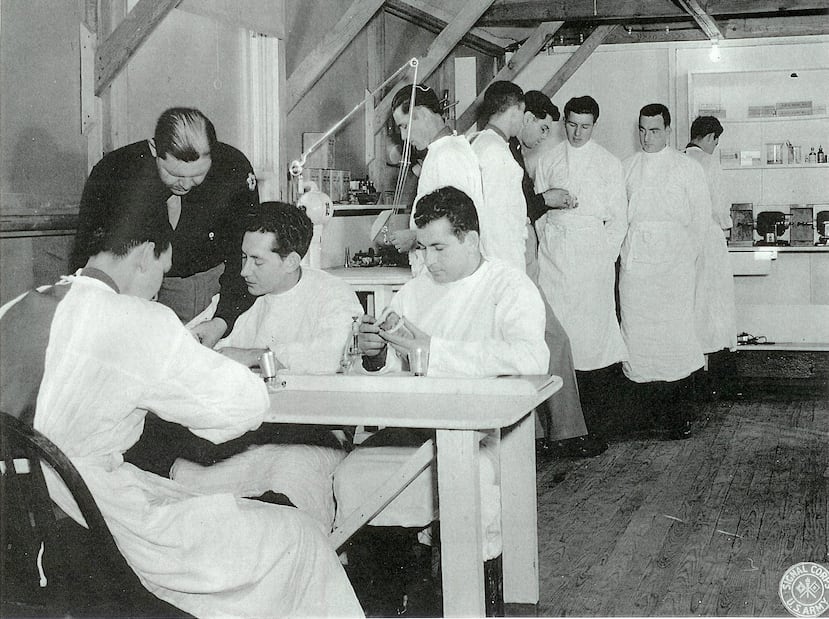
His research began in 1915, when he joined the United States Indian Medical Service, stationed in Tucson, Arizona, where he studied the problem of mottled enamel that affected Native Americans.
Later, in 1917, shortly after the United States entered the World War IRodriguez was commissioned as a first lieutenant and during his military service accepted a position in the United States Army Dental Corps.
Rodriguez Vargas also worked as an educator and researcher of the bacteriological aspects of dental diseases. His research led him to discover the bacteria that causes tooth decay.
Rodriguez Vargas’ discovery contributed to understanding how oral hygiene and diet influence the periodic fluctuations of bacteria of the genus Lactobacillusassociated with the development of cavities. Their research identified three types of this bacteria that, during the fermentation process, favor the appearance of these lesions.
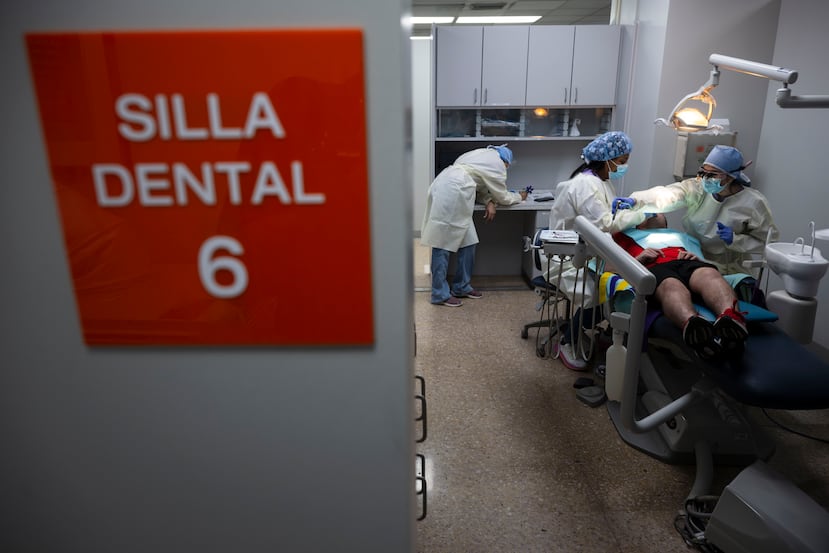
(Carlos Rivera Giusti)
“His work on the specific bacteriology of dental caries has been the basis of much of the research in this field,” wrote Willard Camalier, former president of the District of Columbia Medical Service, in 1940, about the Puerto Rican’s medical work.
It was in 1921, at the age of 33, when Rodriguez Vargas published his main research on the causes of dental diseases, documenting his discovery of the three species of bacteria.
At the time of its publication, the doctor’s research and findings were considered one of the most valuable advances in the etiology of dental caries.
On February 18 of that same year, the young orthodontist was sent to Washington, DC and assigned to the Army Dental Corps, where he continued his research in the field of bacteriology, according to Dr. Jose Munoz Barait in his book “Historical Affairs: Tribute to the Late Commander Fernando E. Rodriguez.”
Their findings were published in the December issue of the Military Dental Journal, titled “Specific study of the bacteriology of dental caries.”
According to data from the Rodriguez General Hospital Armed Forces Medical Library, in 1928 the dentist also published in the “Journal of the American Medical Association” his findings on the effectiveness of iodine and other chemical agents as oral mucosal disinfectants.
Since then, other scientists have used their research data as a basis for studying the bacteriology of dental caries.
On August 16, 1917, Rodriguez Vargas began his successful career in the United States Armed Forces and on September 14 of that same year he was promoted to first lieutenant. Additionally, Rodriguez Vargas was assigned to the Army Dental Reserve Corps and attended a course at the Medical Officers Training Camp at Camp Greenleaf, Georgia.
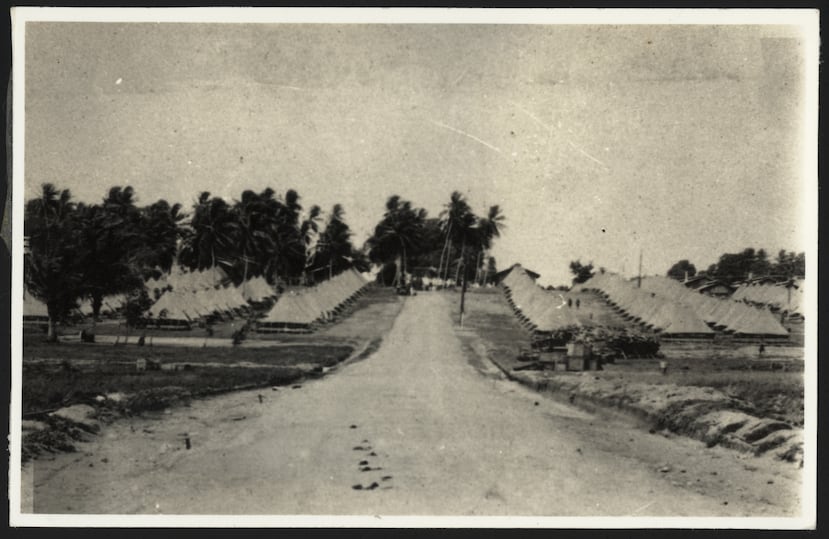
The United States had already declared war on Germany when Rodriguez Vargas was sent to the United Kingdom. In August 1919 he was reassigned to San Juan and served at Camp Las Casas, in Santurce, where he met Maria Anita Padilla, who would become his wife. The deputy orthodontist was promoted to captain on September 8 of that same year.
In 1921, he was reassigned to the city of Washington, to the Dental Corps, as an educator and researcher of the bacteriological aspects of dental diseases.
In his later years, Rodriguez Vargas was a member of the District Dental Society of the District of Columbia, the International Association for Dental Research, and a member of the American College of Dentists. In 1925, he was assigned to the General Army Dispensary, Boston, Massachusetts, until August 1926, when he was reassigned to the Holabird Quartermaster Depot, Baltimore, Maryland, which would be his last assignment.
The major fell ill with pneumonia and was hospitalized at Walter Reed Army Medical Center for treatment. Finally, on October 21, 1932, Rodriguez Vargas died due to complications of the disease at the young age of 44. He was buried at Arlington National Cemetery, Section 6, Plot 8429.
After his death, Rodriguez Vargas’ work was highlighted worldwide and he received several important posthumous recognitions.
On March 16, 1940, the American College of Dentists presented a plaque to the Army Medical Service Postgraduate School—now Walter Reed Army Research Institute—in memory of the major for his pioneering research that demonstrated the relationship between Lactobacillus acidophilus and dental caries.
Rodriguez Vargas is also the only Puerto Rican honored with a plaque and a bust in front of the Walter Reed Army Research Institutein Washington, D.C.
In the 1950s, the College of Dental Surgeons of Puerto Rico honored Rodriguez Vargas with the establishment of the “Dr. Fernando E. Rodriguez Scientific Competition.” Then, in 1969, the dean of the newly created School of Dentistry published a tribute to Dr. Rodriguez Vargas in the Puerto Rico Dental Magazine.
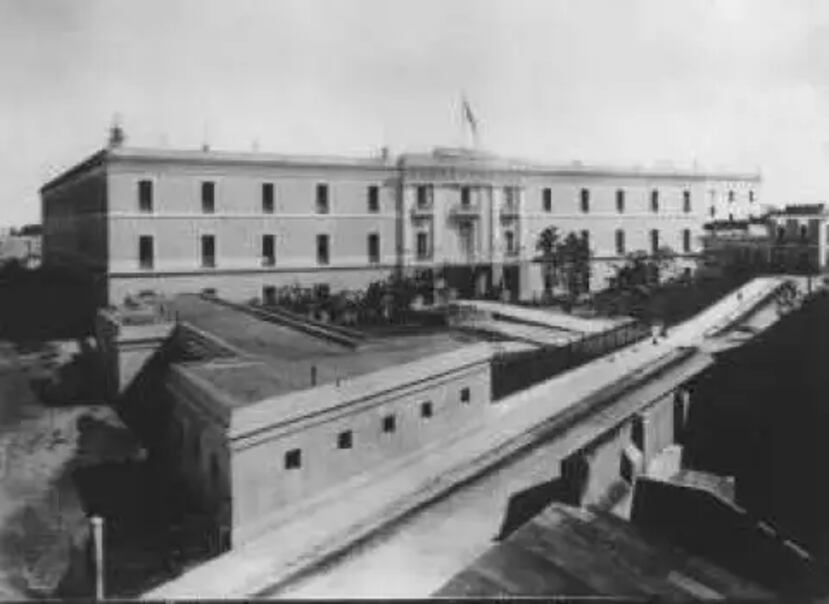
A few years earlier, on August 31, 1944, the United States War Department issued General Order Number 71, which renamed the Fort Brooke Army General Hospital, located in the former Ballaja Barrackson the castle grounds San Felipe del Morroas Hospital General Rodriguez (161º), in honor of the mayor adjutanteno.
However, on February 14, 1949, as part of the dismantling of Fort Brooke, the Rodriguez General Hospital was closed.
Regardless, the tribute to the important doctor continues at the Outpatient Clinic located at Fort Buchanan, which was renamed the Rodriguez Army Health Clinic (RACH) and remains partially operational to this day.

