


Washington- Duane Mitchell has big plans for the 250th anniversary of USA.
Mitchell, a 78-year-old veteran from Montana, plans to take a red, white and blue 1954 Chevrolet pickup truck that he restored himself and drive it in local Fourth of July parades. In honor of this emblematic anniversary for the country, he has purchased a decorative eagle to place on the back of the truck, along with American flags.
“I’ll go in my van,” he said, referring to his role in the parades. “We usually freeze a bunch of candy, and there are a couple of neighborhood kids who climb in the back and throw them. Everyone loves it.”
Mitchell isn’t the only one looking forward to this year’s celebrations. About 4 in 10 American adults feel “proud” about the country’s 250th anniversary, according to a new poll by The Associated Press and the NORC Center for Public Affairs Research.
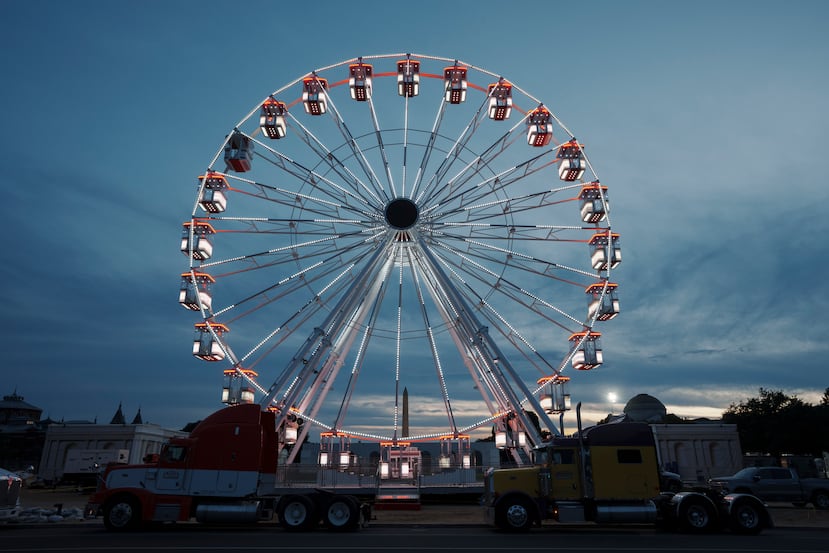
About 3 in 10 say “excited” is the word that best describes their feelings. This milestone will be celebrated with events throughout the country, and the president donald trump has organized several in the capital, including a fair on the National Mall in Washington.
However, now that the celebrations begin, Many Americans are also indifferent or have mixed feelings about the country’s celebration. Other Gallup polls reveal that a majority of Americans now believe that signers of the Declaration of Independence would be disappointed with the current state of the United States, a significant increase from 25 years ago.
Most older people feel proud
Most Republicans say “proud” or “excited” are the adjectives that best describe how they feel about America’s 250th anniversary. About 7 in 10 Republicans say pride describes their emotions, compared with about 3 in 10 independents and about 2 in 10 Democrats.
Older Americans—those over age 60—also mostly feel proud: About 6 in 10 say this describes how they feel about the nation’s anniversary.
Mitchell, the Montana veteran, wants the country to “celebrate him in style.” As a veteran of the Vietnam Warwho was recruited to go to war, wants Americans to remember the men and women who have given their lives to protect the freedoms they enjoy today.
“It was a sacrifice,” Mitchell said, referring to his service. “The most important thing about this celebration is to understand that freedom is not free, and it never will be, so we must celebrate it.”
Approximately half of Republicans, 54%, say they feel excited about the country’s anniversary.
As the country celebrates 250 years of independence, a majority of Americans believe the country has achieved its founding ideals, according to a new Gallup poll. About 7 in 10 American adults say the United States has “largely” or “somewhat” achieved the ideals upon which the country was founded. This view is shared by most Democrats, independents, and Republicans, although Republicans are especially likely to say that the country has been successful.
Divided or indifferent
More Democrats and young people say “conflict” or “indifference” describes their feelings about “America 250.”
About 4 in 10 Democrats and about 3 in 10 adults under age 30 say the term “conflict” describes their feelings “extremely” or “very” well. Approximately 3 in 10, in both cases, feel “indifferent.”
Laura Davis, a 44-year-old from Chicago who identifies as a progressive liberal, has struggled this year to accept what she describes as “American grandiosity,” including Trump’s construction of the White House ballroom and the repainting of the Lincoln Memorial’s reflecting pool. He believes that money could be better spent on Americans in need as well as international aid, and he worries that the country’s reputation will be damaged by the Trump Administration’s actions.
“That doesn’t mean we can’t celebrate those things that make America unique and, in some ways, exceptional,” he said. “But I think it’s a little more nuanced than that, and I hope that doesn’t get lost in the celebration.”
According to a new Gallup poll, about 8 in 10 Americans say signers of the Declaration of Independence would be disappointed with the country’s current situation. Only about 2 in 10 say that the signatories would be satisfied. This is a significant drop from 1999 – the first time this question was asked – when 55% believed they would be disappointed and 44% said they would be satisfied.
Sydney Crispin, a 39-year-old Democrat from Maine, thinks the country’s “incredible” foundation is worth celebrating. But she is divided over what she sees as a deterioration in people’s ability to engage in respectful dialogue, which she believes is the very essence of American identity. He hopes communities find a way to celebrate the best of America this July 4, while still reflecting on those areas where there is still room for improvement.
Celebrating the 250th anniversary
Just under half, 44%, of American adults plan to celebrate the country’s 250th anniversary by spending time with friends or family, according to a recent Gallup-With Honor poll. About 3 in 10 American adults say they plan to watch coverage of “America 250” events on television or social media.
More than half of adults aged 65 and over plan to celebrate with friends or family, while almost half plan to follow the event broadcast on television or on social networks. Adults under 30 are more likely to say they don’t plan to celebrate at all.
The Gallup-With Honor poll found that about 2 in 10 American adults plan to participate in a neighborhood or community event, while about 1 in 10 say they will attend an official “America 250” event.
Lyle Nelson, a 67-year-old Idaho man, has said he plans to keep up his tradition of watching the annual fireworks display from home. Macy’s.
Nelson — who agrees with much of what Trump has done during his time in office — noted that while Trump was disappointed not to be re-elected in 2020, he may be pleased to be the one occupying the White House during this historic event.
“I wonder if he will be grateful to be president during the 250th anniversary,” Nelson said. “I think he’ll be delighted with that.”
The AP-NORC poll of 2,596 adults was conducted April 16-20 using a sample drawn from NORC’s probability-based AmeriSpeak panel designed to be representative of the U.S. population. The margin of sampling error for adults as a whole is plus or minus 2.6 percentage points.

