


Ten years of forced coexistence have transformed the relationship between Legislative Assembly and the Fiscal Oversight Board (JSF) in a constant climate of tensions, vetoes and legal battles. The intervention imposed in 2016 to prevent the financial collapse of Puerto Rico reaches a decade under a big question: has the organization fulfilled its mandate?
From opposite ideological corners, the leaders who have led the Legislative Assembly During this period they agree that resistance to the fiscal entity has prevented the work of elected officials from being completely undermined, managing to stop the 10% cut to retirees’ pensions, stop the massive dismissal of public employees and get the Board to accept amendments to the project to restructure the debt.
“I fought the Fiscal Oversight Board since before its creation… I see it as the boot of North American imperialism and as the crudest power of that empire over Puerto Rico”declared the president of the House of Representatives, Carlos “Johnny” Mendezwho also led said legislative body between 2017 and 2021, just when the body began to exercise its powers. “I was against that because it was accepting a reality and, apart from that, it was going to leave the Legislative Assembly without power.”
One of the first attacks against the Junta, from the legislative front, came, precisely, from Mendez, who, in 2018, together with the president of the Senate, Thomas Rivera Schatzsued the fiscal entity for “usurping the powers of the Legislative Assembly” when implementing its budget. Then, they questioned the cuts in the Legislature and alleged that said reduction responded to the failed attempt to repeal Law 80 of Unjustified Dismissal of 1976, an initiative that the governor endorsed at the time. Ricardo Rossello Nevares. The appeal was dismissed.
“From there, then, a confrontation began to enforce what the law (Promesa) says, which is that the role of the Board was to address the problem in the Executive Branch”Mendez recalled.
After several years of deadlock due to the legislative refusal to implement the required cuts, the dynamic evolved towards negotiation. Currently, the Board allows the government to present its own budget proposal, although it retains the power to have the final say regarding its validity and final approval.
“The Board coldly and quickly let us know that the power belonged to the Board, that here neither the governor nor the Legislative Assembly had any power over the finances of the people of Puerto Rico. Then, the elected officials became merely decorations, and I did not accept that… The Board wanted to establish public policy, and that is why the first years were full of clashes.“said Mendez, from the New Progressive Party (PNP).
At that time, the executive management of the JSF was occupied by Natalie Jareskowho resigned from the position in 2022 and was replaced by Robert Mujica.
According to Mendez, the legislative strategy of confronting the fiscal entity never wavered while he and Rivera Schatz were in charge of the chambers during that first period. He noted, in contrast, that there was a shift toward a stance of greater openness and negotiation under his successor in the House, Rafael “Tatito” Hernandezof the Popular Democratic Party. That change, he acknowledged, also responded to the departure of Jaresko, whose style, he said, was more “confrontational.”
“The net contributions of the fiscal control board have been not flattering. Beyond putting a stop to the embargoes to which Puerto Rico could have been subject to creditors… The fiscal control board has not made large contributions”, stated, for his part, Rivera Schatz.
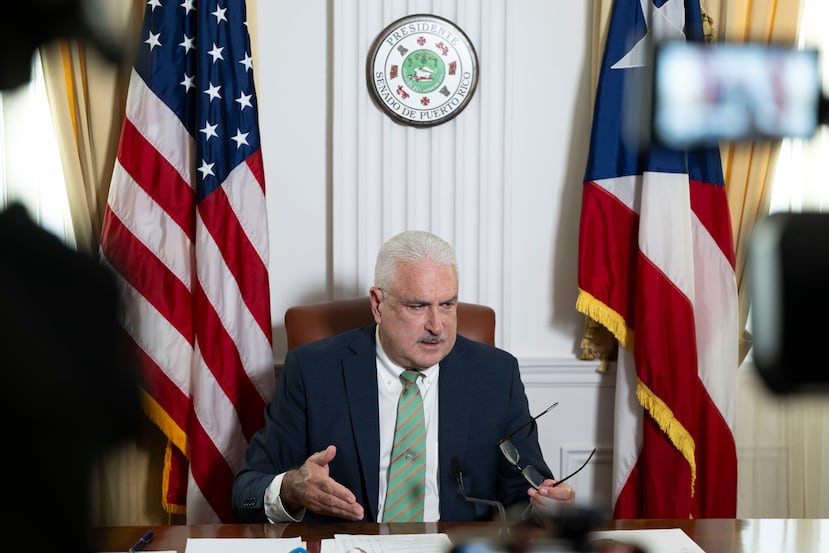
Since its imposition following the approval of the Promesa law, said the Senate leader, the Board has interfered in micromanagement matters that do not reflect the purpose for which the federal statute was created. They have not promoted economic development legislation or concrete proposals or recommendations so that, at the same time, Puerto Rico can once again inspire confidence in the market, he stressed.
“For me, the Junta is a naked portrait of the colony”Rivera Schatz pointed out.
For Hernandez, who became president of the Chamber in 2021, the true loss of power did not initially come from the Board, but from decisions by former governor Ricardo Rossello Nevares and his successor, Pedro Pierluisi, in granting a “blank check” to the body by approving legislation that, in its opinion, prevented legislators from fulfilling their responsibility.
Among these statutes, Hernandez highlighted the amendments to the Organic Law of Management and Budget, as well as the approval – during the four-year term of Rossello Nevares – of the Law of the Financial Advisory Authority and Fiscal Agency, the Law to address the Economic, Fiscal and Budgetary Crisis to Guarantee the Functioning of the Government and the Law of Financial Emergency and Fiscal Responsibility.
“What happens if the Legislature does not have to intervene in the debt restructuring process? You have no power, zero, you have nothing to negotiate.”said Hernandez.
Faced with this panorama and determined to reverse these limitations, Hernandez presented the House Bill 500which eliminated the powers delegated to the Executive to address the fiscal emergency. The measure was vetoed by former governor Pierluisi, sparking a power struggle that caused the House to suspend the appointment of Larry Seilhamer as Secretary of State.
Shortly after, Pierluisi gave way to House Bill 959, which became Law 42-2021, which, as Hernandez had claimed, returned to the Legislature its primary role in the budget process and, above all, would prevent the Board from continuing to move forward with the approval of the Adjustment Plan (PDA) of the debt without the endorsement of that branch of government.
“This allowed us to regain power, allocate resources, establish priorities and avoid cutting pensions,” Hernandez stressed.
His administration, he said, balanced four consecutive budgets with the Board – which along the way became unbalanced – a strategy that he defended, although he recognizes that “it was not necessarily the politically correct thing to do.” “It is not sexy to agree or agree, but to hit the Board, because that brings you votes and news,” said Hernandez. At the moment, the Board has only certified the current budget, which ends on June 30, as balanced.
Throughout this decade, there are several laws that the Board has stopped. Recently, he ordered to stop the application of the Law 141 of 2024which raises the cost thresholds that trigger the obligation of municipalities to hold formal auctions for public works, and the Law 215 of 2024which allows municipalities to claim construction taxes from entities that act as agents of public agencies exempt from that tax.
Likewise, it stopped the application of the Law 156-2024which establishes a monthly base salary of $2,600 for security guards of the Department of Natural and Environmental Resources, and of the Law 41 of 2022which returned to private sector workers some of the rights lost under the Labor Reform of 2017. Law 41-2022 was declared null and void by federal judge Laura Taylor Swain.
He did the same with the Law 47-2020, that extended the granting of contributory incentives to a greater number of health professionals, and the Law 176-2019which reversed the rate of accumulation of vacation and sick leave for public employees at the rate existing prior to the Law 26-2017. Both were without effect.
Although some progress has been made, both Mendez and Hernandez recognize that there is still a way to go to achieve true financial self-sufficiency and regain credit confidence.
“The Board controls the expenses of the government of Puerto Rico, and believe me, I see it as reasonable because the Legislature has not yet understood that we can have the pleasure of champagnebut that our pocket is deep, that we do not have the necessary resources, that we would like to give everything to the people, but we have to understand that we can stretch our foot as far as the sheet goes,” said Mendez.
“We think that the government is an open key, and the Board has taught us… that we have to manage the government budget taking care of what are essential services. For everything else, we have to find new money”Mendez stated.
He admitted that this culture of fiscal prudence “has not yet been created” in the Capitol, where minds that seek to “distribute money when there is none” still persist, nor in the municipal structures that remain “in a mess.”
The central government has made adjustments, he pointed out. “Many agency heads approach me asking for more budget because they have had cuts in their expenses, and we all have to learn to live with less,” he noted.
For Hernandez, meanwhile, a A transcendental step at this stage – and given the long stay of the Board – is for the government to begin to change the narrative before Congress, and to present solid evidence of sound administration and good practices.
Along these lines, he agreed with Mendez that the Budget Office of the Legislative Assembly (OPAL) is a crucial instrument that functions as an independent arbiter that certifies that the government has no surpluses or “money to throw away anywhere,” stopping populist legislation.
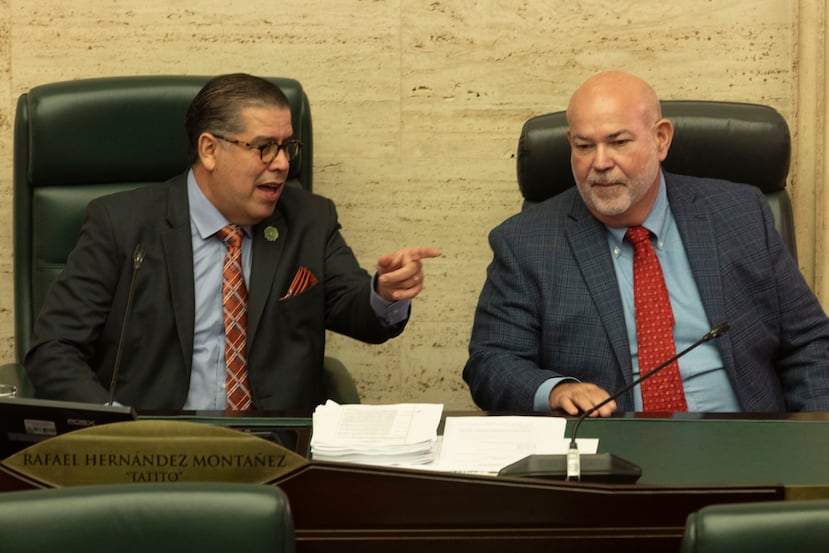
Hernandez mentioned, as the positive balance of this decade, the fiscal discipline imposed. “There is still a lot of time left for them,” he said.
The president of the Senate, meanwhile, stressed that the permanence of the Board is unnecessary, maintaining that the legal framework created to stop creditor seizures was more than enough.

