

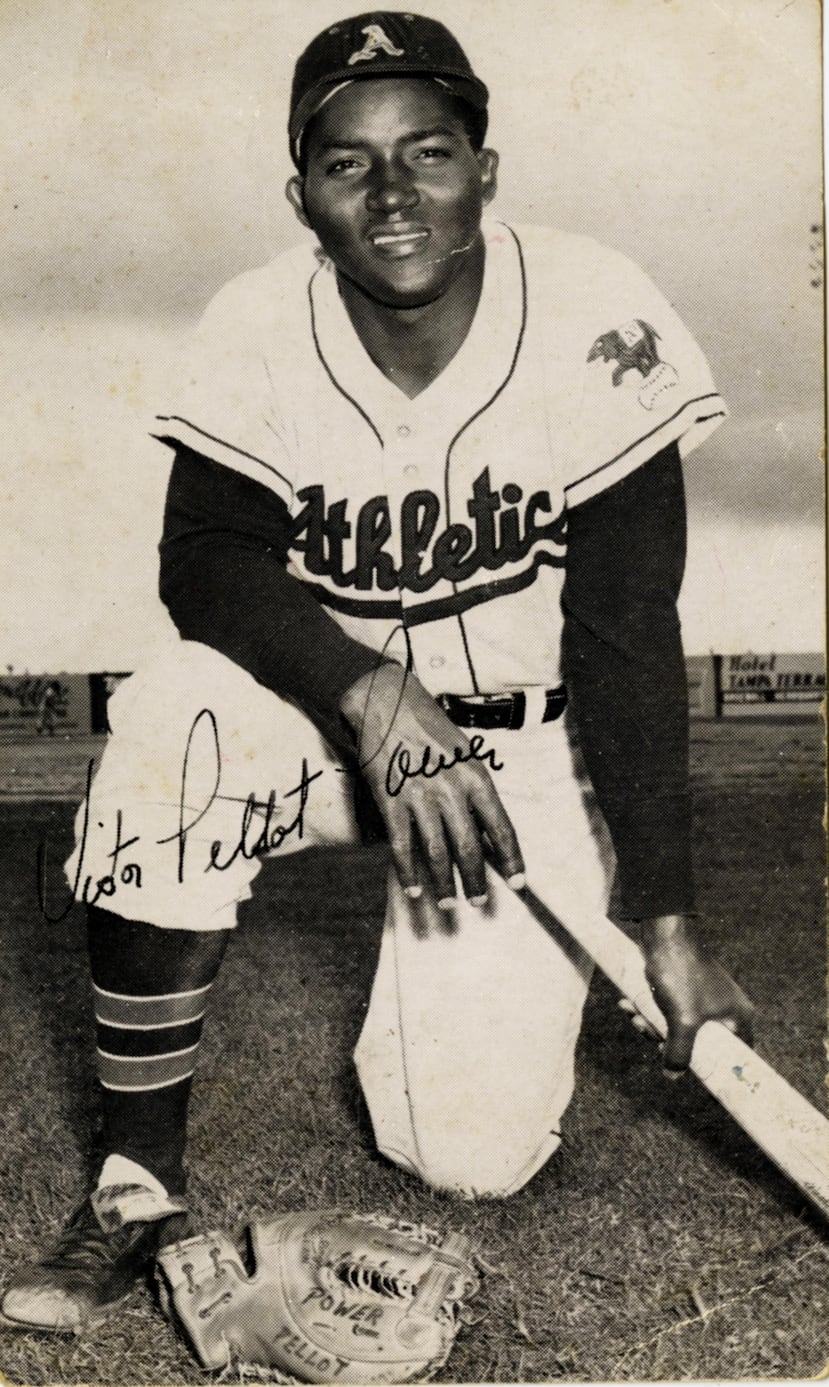
Three years before his death, the former first baseman of Major Leagues and first Puerto Rican to see action in an All-Star Game, Victor Pellot Powersat down to relate anecdotes and experiences from his 12-season career in the Majors, in an interview on Radio Hoy in Salinas that was saved for posterity.
The audio with said piece that includes one of the last interviews he offered and that was only heard on the day of the live broadcast on the Salinense radio station in 2002, can now be enjoyed as part of the innovative offering made by the delivery of the eighth edition of Puerto Rico in the Major Leaguesfrom baseball writer Jossie Alvarado.
Although this is another piece of the printed book series, Thanks to technology, readers will be able to access the audio interview by scanning a code with their mobile phone. QR that will appear inside the work, in a large 46-page chapter dedicated to the remembered first baseman who played in the Major Leagues between 1954 and 1965.
Pellot, remembered for having won a whopping seven consecutive Gold Gloves, first played for the organization of the Athleticsin his initial stages in Philadelphia and then in Kansas City, until the 1958 season, in the middle of which he was traded to Cleveland.
I would also play for the Minnesota Twins, Los Angeles Angels, Philadelphia Phillies and California Angels in his final year.
“Part of what is new in the book is the interview conducted in 2002 with Victor on Radio Hoy. The interview was with him, but there was Felix Torres (another former Puerto Rican major league player), Rafael Alomar and Desiderio de Leon), and since they all played together (in professional baseball in Puerto Rico), the interview lasted an hour and 12 minutes. It was an hour talking with Pellot, but since he played with all of them, there they talked and told stories about when they played,” said Alvarado, who conducted that interview 24 years ago.
Pellot died in 2005 at the age of 78.
Pellot became the first Puerto Rican to be selected and play in an all-star classic in 1955, which is why Alvarado dedicated this edition of his book to him. That same season, former pitcher Luis “Tite” Arroyo was also selected for the All-Star Game but did not participate in it.
The 70th anniversary of Pellot’s appearance in that classic that was played in the County Stadium of Milwaukee, was completed last year, and Alvarado’s book reviewing his career and remembering that milestone, It will be presented this coming Sunday, July 12 in Caguas, on the exact date that will mark 71 years from that moment.
Pellot appeared in the game for the American League team but only had one at-bat as a pinch-hitter, and went scoreless. The following year he returned in 1956 and pinch-hit and then stayed at first base. He went 1 for 2.
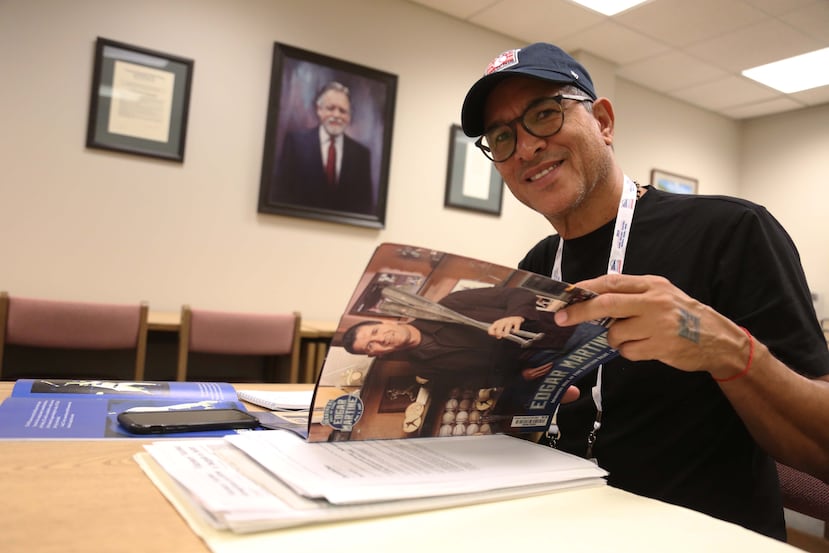
The presentation will have special guests and will be held in the restaurant on the second level of the Yldefoso Sola Morales Stadium in Caguas, starting at 1:00 in the afternoon. Mr. Joaquin Monserrate Matienzo, former president of the Puerto Rico Professional Baseball League (LBPRC)will be the speaker.
“The 70th anniversary was in 2025 and I wanted to release the book last year, but several people told me, ‘why don’t you hold on, wait for the season to end, update the statistics and publish it in 2026,’” Alvarado explained about what he ended up doing. The first copies will arrive on the island this Tuesday, in time for the presentation, which will be just two days before the 75th edition of the All-Star Game takes place in Philadelphia, corresponding to this 2026 campaign.
“In the book you will also find that we talk about Pellot since he played in Arecibo Class A and Double A. Then they look for him from Caguas and take him to study at high school, and he ends up playing with the Criollos professional team,” Alvarado added.
The book of just under 500 pages includes in the chapter dedicated to Pellot, information from his time in the Caribbean Series, in the minor leagues in the United States, and naturally in the Major Leagues. There are also pages dedicated to his history as a coach and leader, including when he worked as coach of the Puerto Rico team that traveled to Nicaragua in 1972 and was coached by Roberto Clemete months before his death.
Pellot’s chapter is divided into several topics and subtitles with several figures who wrote for this publication, apart from Alvarado.
The rest of the piece, as is tradition, is complemented by graphs and tables that compile the entire history of Puerto Ricans in the Major Leagues, up to the debutants of 2025.
Alvarado pointed out that an additional attraction of the book is the gallery found in chapter six, with photos of the career of Pellot, who hit .284 for life with 126 home runs and 658 RBIs in the Majors.

