

In a room on the second level of the Rogelio Rosado Crespo Second Unit School, in Yabucoa, a wooden and glass box several feet high houses a beehive, the protagonist of the “Bees in Action” project.
The initiative, which aims to highlight the importance of bees as pollinators and serve as a science laboratory, involves the entire campus, from kindergarten to eighth grade, reported the school director, Yamilis Roldan Fontanez.
The room, which was unused, was enabled for the project. Now it has the wooden and glass box that serves as a display of the hive and allows students to observe how these social insects live. “We can see the bees buzzing and turning around. This is how they tell their sisters where there is food,” Roldan Fontanez showed. “Some bees make honey, others go out to look for nectar and others feed the little bees that hatch from the eggs laid by the queen.”
“We see that this hive has started to make honey and has made new honeycombs. If it looks shiny it means there is nectar; if we see orange colors inside the cells, we are seeing pollen,” he explained.
The classroom also has: an information table with the instruments used by the beekeeper, banners with information about bees and pollinators, as well as everything necessary for teachers to teach classes there.
Roldan Fontanez reported that the project began three years ago. When she began working as school director, Science teacher Karen Cintron told her that she had a project about the importance of pollinators, which are living beings that carry pollen from one flower to another, which facilitates the reproduction of plants and the production of seeds and fruits that serve as food for animals and humans.
“The teacher told me: ‘We have the display, but not the hive’. So I went to the Eastern Beekeeping School, took classes to learn how to work with the hive and got certified as a beekeeper. We also contacted a beekeeper from Yabucoa, who comes to the school and helps us,” said the director.
Then, they set up the room and placed the hive on the display. To finance the project, he reported that the school has grants from two nonprofit organizations in the United States: The Bee Cause Project, which helps them financially maintain the hive; and Whole Kids Foundation, which provides money for the school garden.
The garden, located in the campus patio, has several boxes where students plant chili, cilantro, chives, cucumbers, eggplant, cilantro and flowering plants. It is part of “Bees in Action” because the flowers provide food for the bees, which enter and exit the display through a tube that leads out of the room. Since the classroom windows have metal grilles, the bees do not enter the room.
School community in action
“One day a month we work on the topic with the entire school. During the homeroom period, they are offered information about the importance of bees as pollinators, the biology of the bee, their care, and time is dedicated to planting,” explained Roldan Fontanez.
He added that students are also guided about what to do if they are stung by bees on campus, which has a nurse.
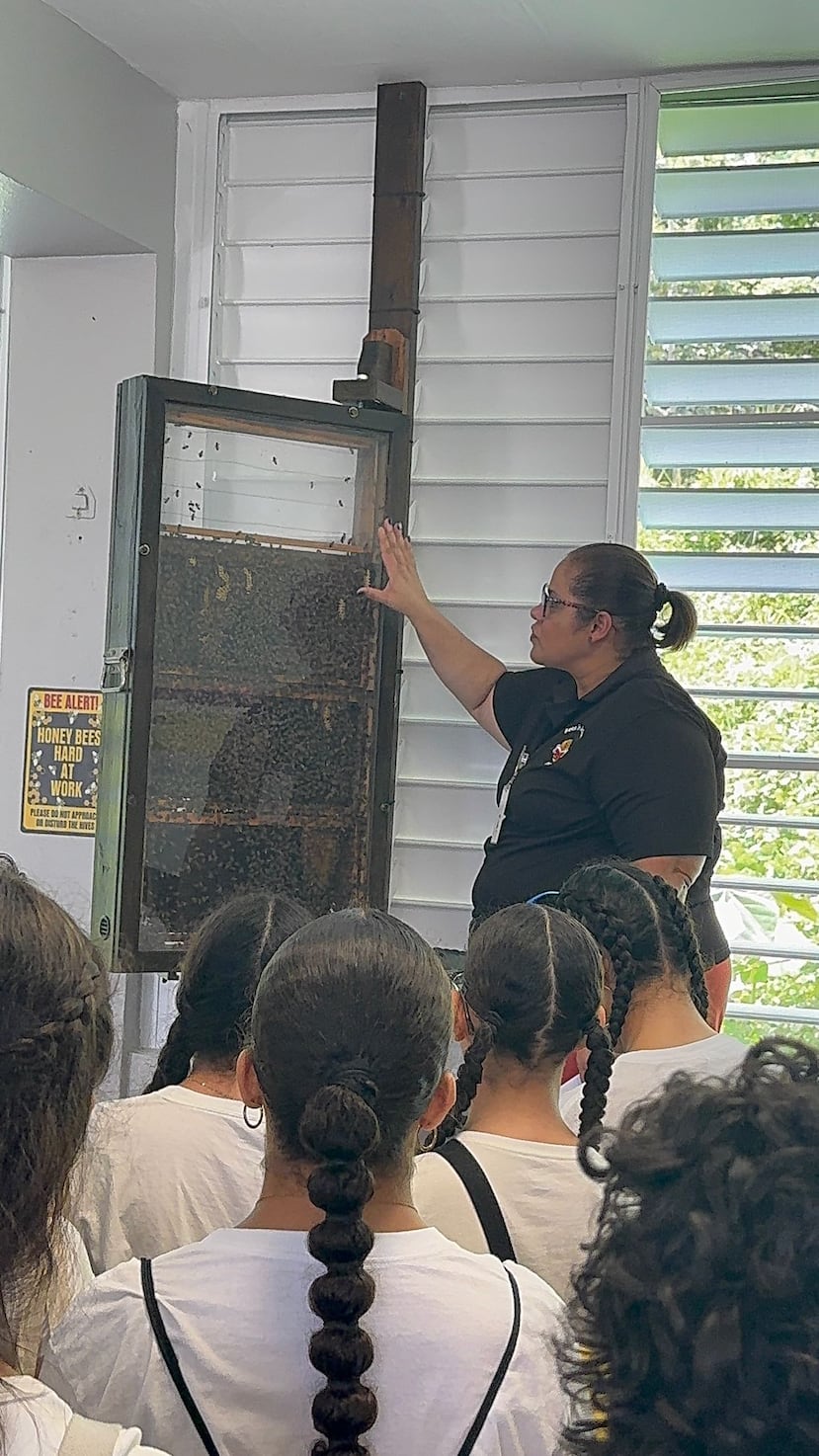
Although all students receive the information and at some point go to the bee room with their teachers, there are specific students who use the hive for their science fair projects. Other children go to activities, with an information table on “Bees in Action”, to guide the community about the importance of bees.
In addition, the campus receives students from other schools, who are told about pollinators and are given a tour where they can see the garden and the display with the beehive.
Roldan Fontanez highlighted that, thanks to the project, students learn about agriculture, biology, the scientific method and even entrepreneurship, since intermediate level groups sold part of the harvest and other products during an agricultural fair.
By educating others about bees, children also develop communication and leadership skills. “Seeing that they develop as leaders is a great satisfaction,” said Roldan Fontanez.

