


Although tensions between the United States and Spain were increasing, nothing suggested that Tuesday, June 28, 1898, would be different for the transatlantic steamship Antonio Lopez, which was sailing on its usual route between Spain, Cuba and Puerto Rico to transport merchandise, mail, passengers, soldiers and military equipment.
The crew was unaware that, a few miles from their destination, an ambush awaited them. United States Navywhose attack would condemn the Antonio Lopez to rest forever on the Angelina reef, off the northern coast of Puerto Rico.
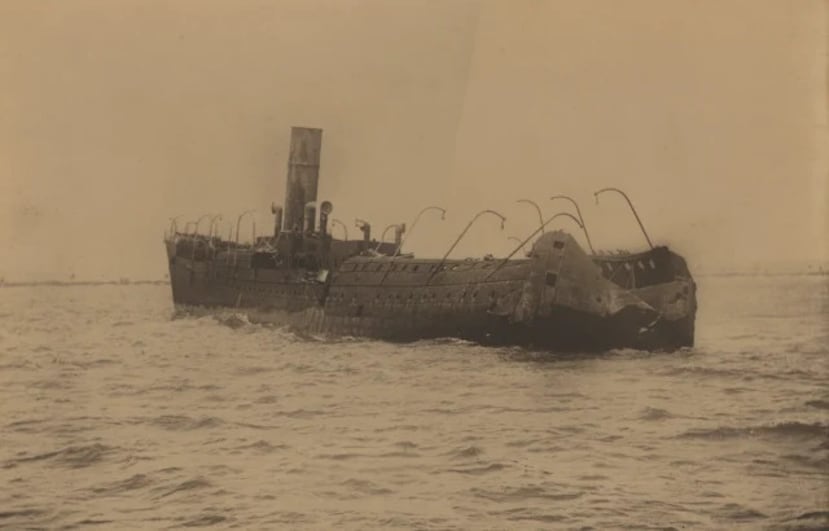
It was the USS Yosemite that, after pursuing and attacking it, caused it to run aground on the reef. However, two weeks later, on July 16, the USS New Orleans completed the task by bombing and burning the wreck of the steamer, which sank completely two hours after that attack.
However, the importance of this ship goes far beyond the historical context in which its sinking occurred; at the time, it represented a marvel of 19th century nautical engineering.
According to data collected by text historians “Chronicle of the Spanish-American War in Puerto Rico” (1972), from Editorial Edil, in Puerto Rico, and “One Hundred Years of Life on the Sea: 1850-1950”, from Editorial Vicente Riego, on Thursday, June 16, 1898, the Antonio Lopez left Cadiz bound for San Juan across the Atlantic on a trip without incident, until Monday, June 27, when the coast of Puerto Rico began to be seen.
It is possible that intelligence obtained by the US Navy told them that, on that voyage, the steamer was carrying a vital cargo of military equipment to reinforce Spanish troops in Puerto Rico.
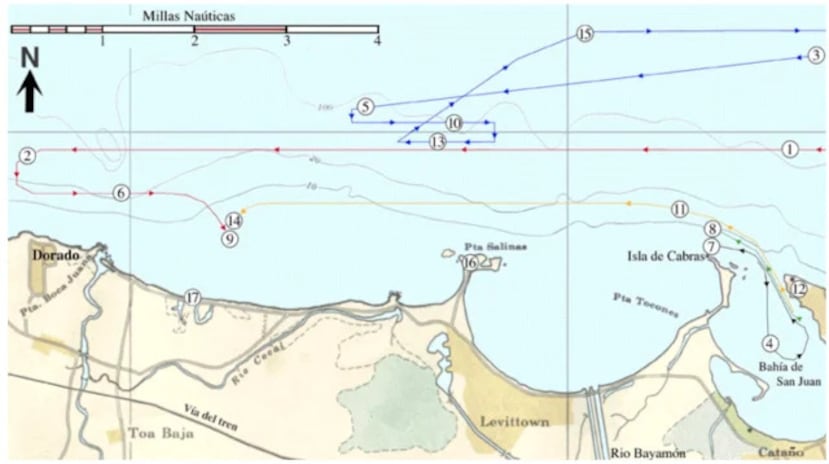
To the east, the crew of the Lopez began to sight a steamship. At 7:00 p.m., about 60 miles north of Arecibo, the ship adjusted its course toward San Juan by placing its bow toward the east. Two hours later, they spotted the mysterious ship again. At dawn, the ship was still visible by the Lopez. There was no longer any doubt in their minds: it was an American ship.
They adjusted course again; this time towards the west without losing sight of the coast.
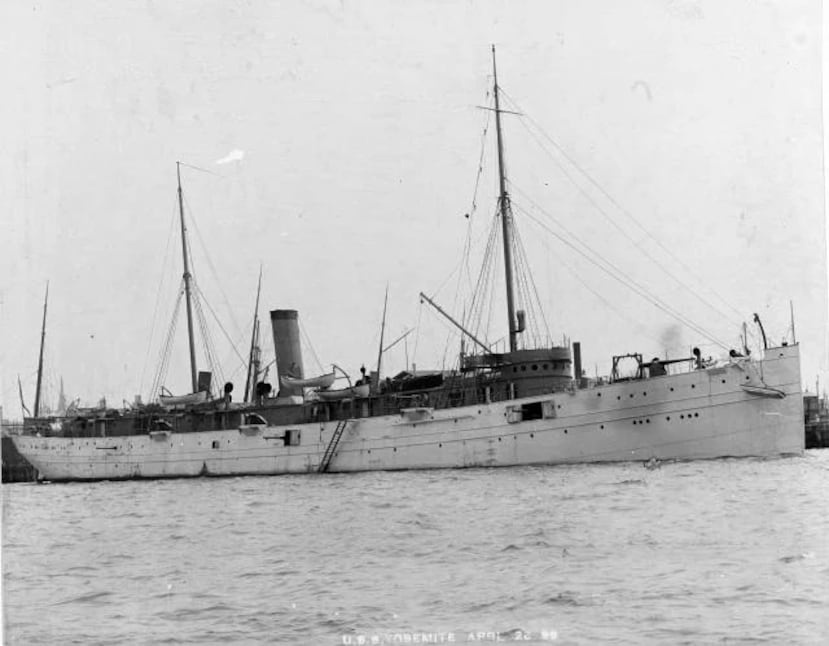
According to the texts, at 3:00 am on June 28 they sailed at full steam towards the bay. At around 4:00 am they spotted the USS Yosemite on the port side, which quickly made a first round of detonations with its cannon battery. Then, another volley of over 15 cannon shots hit the Antonio Lopez, which in its escape got too close to the coast and ran aground on the reef that is today in front of Mameyal beach, in Golden.
The Spanish battleships Isabel II and La Concha set sail from San Juan to protect the Lopez, engaging in a battle that lasted until 10:00 am. More than a hundred cannonballs were fired during the clash.
For its part, the Spanish government immediately organized a land mission to save the cargo that the strong waves threatened to sweep away. Although it became stranded 15 feet deep, the cargo was able to be rescued.
Seeing this, the US Navy sent, on July 16, the battleship USS New Orleans to finish the job, carrying out a volley of 20 guns that pierced the hull of the ship and sank it permanently.
On September 4 of that year, the remains were still burning.
As documented by the National Register of Historic Places (NRHP, in English)the steamship Antonio Lopez, at the time a high-tech ship, was commissioned for construction by the Barcelona Transatlantic Company at the William Denny & Brothers shipyard in Dumbarton, Scotland, between 1881 and 1882. It was named after the founder of the nautical company.
It is considered as the first Spanish ship with a steel hull and equipped with electric light, which operated with a combination of steam and sail. It had a funnel, three masts and weighed about 6,400 tons.
The ship was 370 feet long, with a mast 42 feet high and a draft 30 feet deep. Since its construction, it has navigated the route with the most modern comforts of the time for first-class passengers. Among its attractions, it had marble floors, ceilings carved from high-quality wood, ice, showers with hot water, electricity in each cabin and a grand piano.
The Antonio Lopez could transport 156 passengers in first class, 72 in second and 27 in third, in addition to having 1,100 berths for transporting troops to the colonies.
The ship’s hull was painted black with a red stripe on top, while the funnel was lead-colored. Its crew was made up of 74 men, including officers and sailors, as well as a doctor, a practitioner, a nurse and a chaplain.
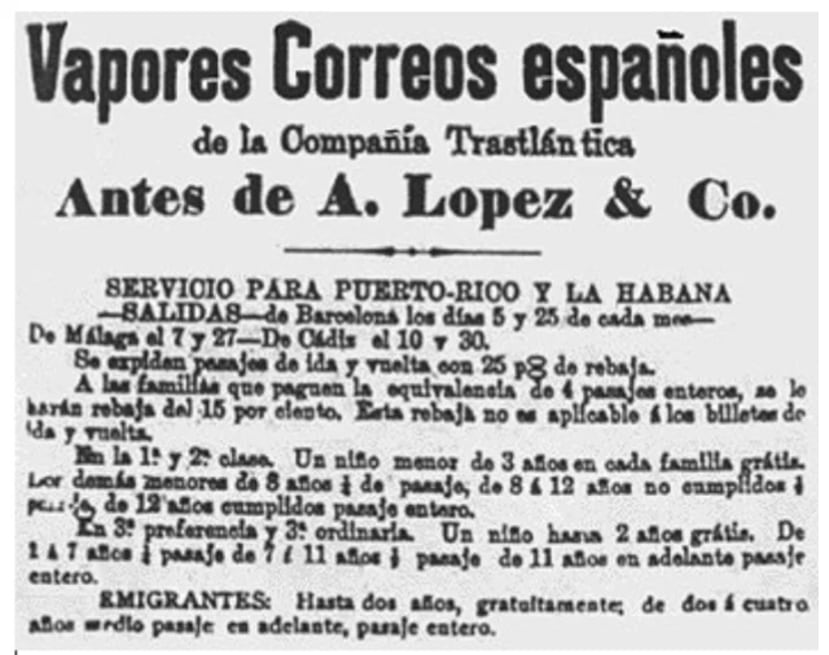
“The ship is significant for what it represents in the development of ship design, since it was one of the first ships of its type built in steel and with an electrical system. Its wreck is closely associated with the history of Puerto Rico”notes the NRHP on its website.
Despite lying at the bottom of the sea for almost a century, the remains maintain their integrity, making them an important resource for research into the history of navigation and underwater archaeology.
On July 17, 1998, the United States Government designated the remains of the ship as a “National Historic Landmark,” according to the National Park Service.
Today, the wreck of the Spanish steamer lies about 1,700 feet deep at the northwest end of the reef and is frequently visited by amateur divers from around the world.
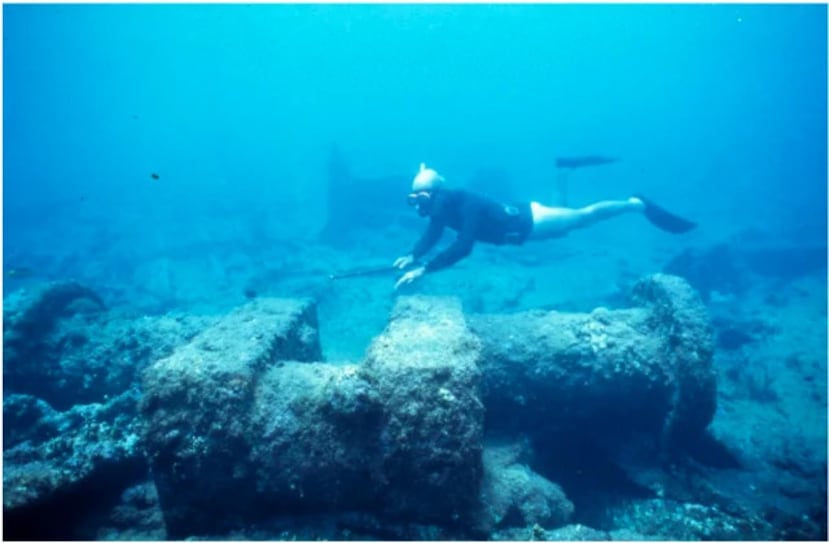
“The Antonio Lopez is best located in small boats sailing northeast from the beach behind the restaurant ‘El Caracol’ (next to the southern curve of the PR-165 highway), until you see the two white radar domes of the USAF Fort Mascaro Military Reserve, in Punta Salinas”points out the National Park Service portal.
“Since the domes never overlap, sail due east, on a magnetic heading of 103 degrees. This heading crosses the three starboard boilers of the Antonio Lopez, which are easily seen from a slow-moving vessel,” he adds.
According to the federal agency, the ship is practically intact, in the same place where it ran aground. The exposed machinery, boilers, remains of the deck, masts, rigging, anchors, chains, rudder, funnel, extensive remains of the steel hull and complete double bottom are also still relatively intact and easy to identify.

