


Women’s health can be affected during menopausea stage marked by important hormonal changes that directly influence the functioning and balance of the ocular system.
Decreased estrogen may increase eye strain, cause prescription fluctuations, or influence the risk of glaucoma. Hormonal changes influence visual health, increasing the prevalence of dry eye, a pathology suffered by one in five adults.
The progressive decrease in estrogen levels not only affects different organs and tissues of the body, but can also alter the ocular surface, tear production and other structures of the eye. As a consequence, the probability of experiencing visual discomfort or developing certain ocular pathologies associated with this stage of life increases.
One of the most common disorders is dry eye, a pathology that affects approximately one in five adults, especially women.according to the first prevalence study on dry eye in Spain (PrevEOS).
In fact, “many patients report itching, a feeling of grittiness, redness or intermittent blurred vision, symptoms that often normalize but should be treated,” as the doctor explains. Laura Porruaophthalmologist at Miranza Instituto Gomez-Ulla.
(Amalia Gonzalez Manjavacas)
Hormones that influence the ocular surface
The decrease in estrogens and androgens has a direct effect on the ocular surface. These hormones play an essential role in the production, renewal and stability of the tear film, as well as in the modulation of inflammatory processes in the eye.
Estrogens participate in the regulation of epithelial cells on the ocular surface and in the function of the lacrimal glands, influencing the quantity and quality of tears. And for their part, androgens are essential for the correct functioning of the meibomian glands, responsible for the lipid component of tears, which prevents excessive evaporation and contributes to the stability of the ocular surface.
The alteration of these hormonal levels can favor the appearance of dry eye, ocular inflammation and visual discomfort, especially in stages such as menopause or endocrine disorders. Furthermore, estrogens seem to have a certain protective effect regarding the risk of glaucoma, which could be increased in cases of early menopause.
Hence, during the menopause stage, sensitivity to light, visual fatigue and fluctuations in prescription may increase.
Specialists emphasize the importance of carrying out periodic ophthalmological check-ups during menopause, even in the absence of symptoms.
“A complete eye exam allows us to detect alterations in the initial stages and apply personalized treatments that significantly improve the quality of life of patients”point out from Miranza Instituto Gomez-Ulla.
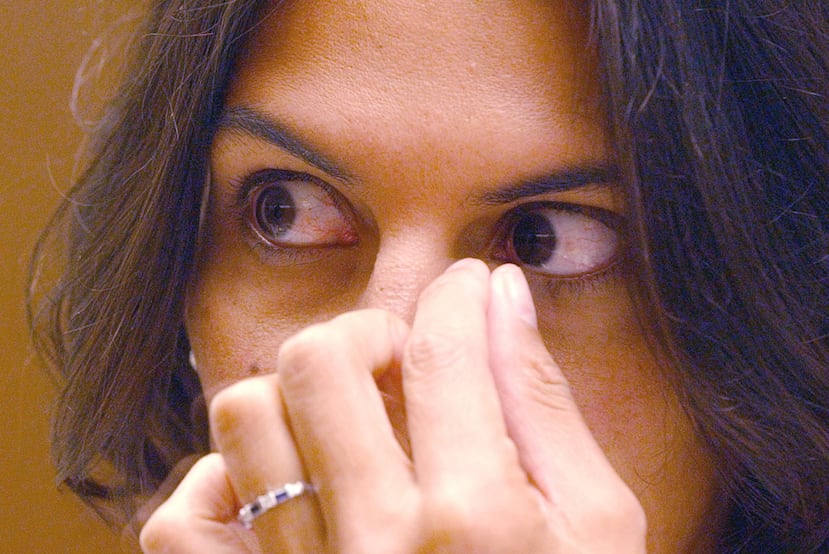
(Heep)
To complement these treatments, doctors recommend daily self-care guidelines: maintaining proper hydration, consuming foods rich in omega-3 and antioxidants, using eye sun protection, and taking breaks during prolonged use of screens without breaks.
Menopause should not be experienced as a loss of well-being, but as a stage in which self-care becomes even more important. Paying attention to eye health is part of a comprehensive approach that allows women to continue enjoying good vision and an active life.
Advanced treatments Advances in ophthalmology make it possible to address dry eye in an increasingly effective and personalized way. Among them, therapy with Endoret (PRGF) stands out, a technology based on the use of regenerative proteins obtained from patients’ own plasma. This treatment promotes the repair and regeneration of the ocular surface, reduces inflammation and helps improve symptoms in cases of moderate or severe dry eye.
Another of the most innovative options is Intense Pulsed Light (IPL), especially indicated when there is an alteration of the meibomian glands, one of the main causes of dry eye. IPL helps to improve the functioning of these glands, promoting the production of more stable tears and reducing the inflammation associated with the disease.
But currently, as Dr. Porrua highlights, we have “advanced treatments that allow us to act on the origin of the problem and not just relieve the symptoms. The combination of therapies such as Endoret or IPL, together with a precise diagnosis and individualized follow-up.”

