

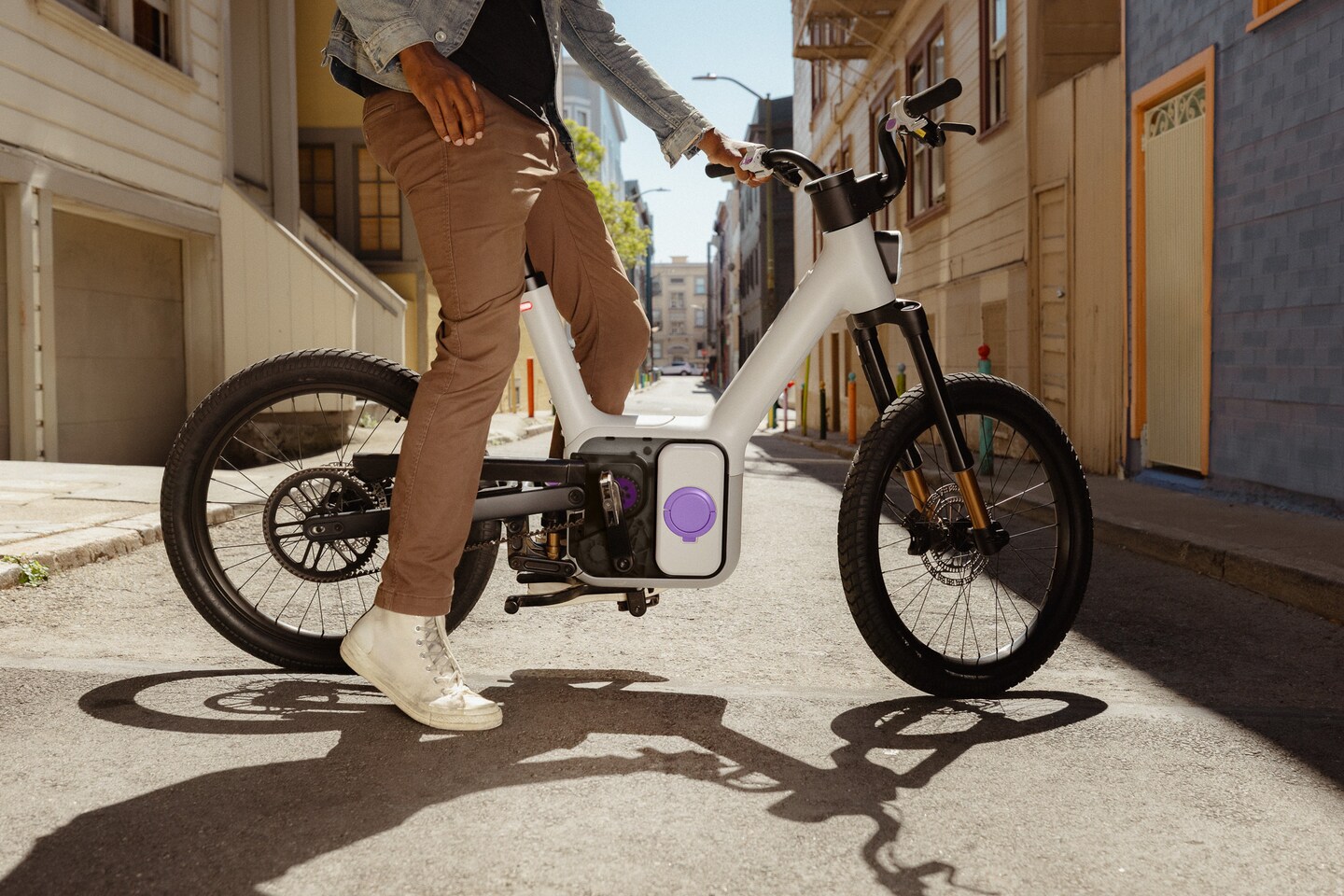
A start-up spun out of the electric truck maker Rivian makes its case by cribbing techy flourishes from electric cars.
PALO ALTO, Calif. — It looks like a bike. It rides like a bike, mostly.
But a new electric two-wheeler from a Rivian spin-off packs more than a few features you would expect from a full-size electric car instead.
Get concise answers to your questions. Try Ask The Post AI.
The TM-B e-bike, built by a team that spun out of the electric truck maker, recharges its battery when you brake. A five-inch touch screen it calls the “Portal” offers music controls and navigational cues. When the $4,000-plus e-bike starts shipping next year, your phone will act as a key, unlocking the bike and priming it for a ride when you — or another designated rider — walks up to it.
It’s pretty flexible, too: You can swap out the standard bike seat for a Vespa-style bench that seats two, or a utility frame that can accommodate a few bags of groceries. And most notably, its “virtual” drivetrain — which means pumping those pedals doesn’t directly turn the bike’s wheels — makes the TM-B both fun to ride and surprisingly difficult to steal. I took one for a ride around the start-up’s Palo Alto headquarters and found it nimble, fast off the line and easier to handle than its 80-pound frame suggests.
Sales of electric bikes surged in the wake of the pandemic and have become fixtures of city streets and suburbs across the United States. But why give them the technological flourishes of a well-specced car?
The idea isn’t just to give existing e-bike riders an upgrade path, Chris Yu, president of the start-up, called Also, said in an interview with The Washington Post. It’s also to catch the eye of Americans who find using their cars for short jaunts kind of obnoxious — and there are more of these people than you might think.
Residents in well-to-do enclaves in sunny states have embraced golf carts, not cars, as their go-tos for running errands and ducking out to dinner. And more than 300 U.S. cities have shared bike or scooter systems in place, which might take on a larger role as some larger cities contemplate congestion charges to tamp down traffic.
There’s a hunger for a “lower-cost, more enjoyable, less hassle-filled way to do short trips” that reduce the stress of sitting in traffic and finding parking, Yu said. He expects that, within 10 to 20 years, nearly all of the smaller vehicles better suited to those situations will be fully electric.
“There’s going to be a couple of dozen companies like Also that will need to exist to service this transition to an electric future,” he said.
Also President Chris Yu showing off the TM-B at a launch event in Oakland, California. (Chris Velazco/The Washington Post)
That transition is likely to unfold much faster overseas, where tiny cars, bicycles and three-wheelers such as tuk-tuks are already woven deep into the fabric of everyday life. The U.S. is a trickier matter. Large swaths of the country are too spread out for a new breed of tiny electric vehicles to make sense. Some cities with citizenry that might benefit most from a flexible kind of electric bike are contemplating slower speed limits and other regulatory tools to squash rising e-bike accident rates.
That means Also’s job isn’t just to convince people that the TM-B is a capable stand-in for cars and rival e-bikes — it also has to be a good community citizen.
To do that, Yu said the TM-B was built to strictly adhere to existing U.S. e-bike regulations, unlike some imported models that zip around at much faster speeds than state and federal laws permit. The company also baked software features into its e-bike that allow parents to set speed limits for their younger riders.

