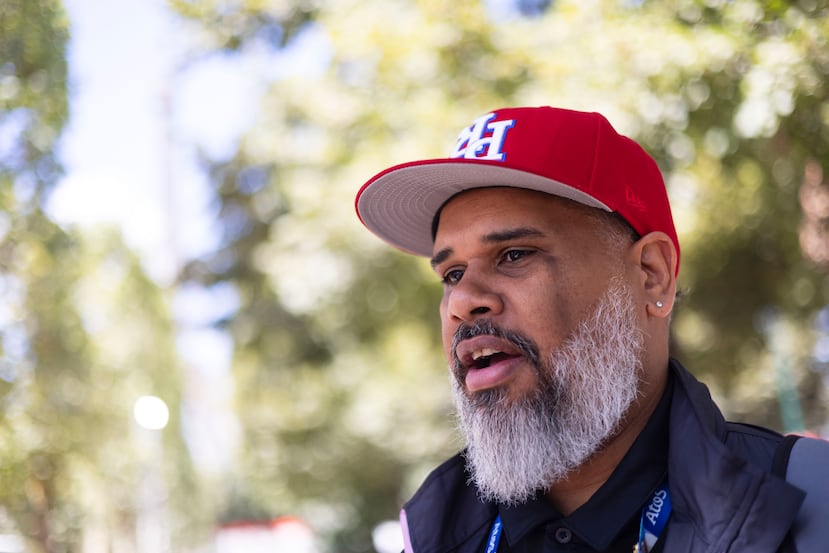
Paris, France – Puerto Rican wrestling already had its medal in London 2012 and is aiming for its second in the Paris 2024 Olympic GamesBut in this edition, more than just wrestlers, Puerto Rico also has an Olympic referee.
It’s Sanjuanero Abram Galva, who debuted here at the Olympic level as a referee and judge. When he whistles, he not only exudes passion, he also exudes pride for what he has achieved.
Click here to visit our special Paris 2024 Olympic Games site
“The Olympic Games are a class apart, and knowing that I am the first Puerto Rican referee with Olympic qualification is a dream come true. A dream that we have had since we were children. I am enjoying the moment and raising the name of Puerto Rico and Latin America,” he said.
Galva is one of a class of Puerto Rican referees who have worked in sports at these Olympic Games, such as basketball and boxing, who also had officials representing them.
“What we have to do is work so that other young people see this as possible,” said Galva, who has refereed medal fights in various divisions and categories.
The former athlete and coach of the Spartans de San Juan club has the highest classification for wrestling referees. That is the Olympic classification that the referee achieves by moving up the ranks based on evaluations made by the United Wrestling Union at events in which he is invited to participate.
1 / 8 | Puerto Rican co-flag bearer Sebastian Rivera splits honours in Paris. Sebastian Rivera tries to keep a hold on the elusive Japanese Kotaro Kiyooka (left), whom he faced in the quarterfinals. – Xavier Araujo
His performance here, according to his own assessment, has been of quality.
“This time, as a referee and judge, I have not been able to be the presiding judge because I am in my first Games. But the simple fact of being the third man on the mat is a very nice exposure. It has its challenges, but we have overcome them all, in terms of strong nations, fights that can get difficult along the way, but we have done a good job,” he said.
Wrestling has a complex referee structure. On one side is the central referee, who sits on the mat. Then there is the table judge, who sits alone and off the mat. There is also the mat president, who sits opposite the table judge. And there is a three-member jury, also sitting off the mat.
The central referee and the table judge evaluate the actions individually and at the time of these. The cushion president enters the evaluation when the referee and the judge differ. The president has the last word. The jury is in charge of protests.
The Parisian public was present at the fight, which took place on the Champ de Mars, in a removable stadium at the foot of the Eiffel Tower.
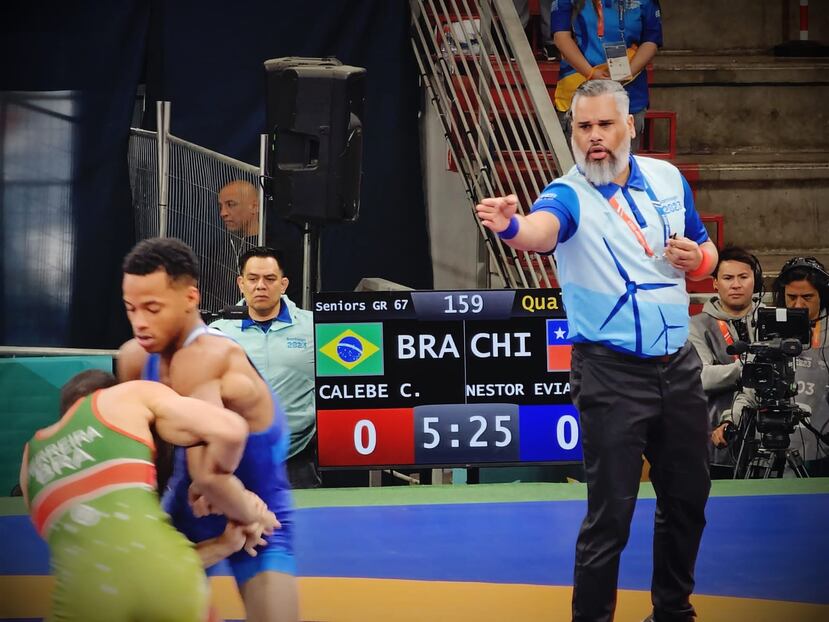
This public is fair, in the sense that it applauds the winner and does not forget the loser. But it also expresses its anger against the judges’ decision, as occurred in another sport with the evaluation of a routine by Puerto Rican skater Steven Pineiro, who was booed by the disagreement of those present, who felt that he deserved a better rating in his first performance in the park modality.
In Olympic wrestling, Galva has also proven himself in front of the public, who always keep the referees in mind, regardless of the sport.
“This audience is very reactive to all actions and very respectful. At international events we don’t have the audience so close. This ‘venue’ is smaller, which makes it more energetic. That motivates you to be more clear about your role when it comes to evaluating. In addition, the whole world is watching you,” he said.