

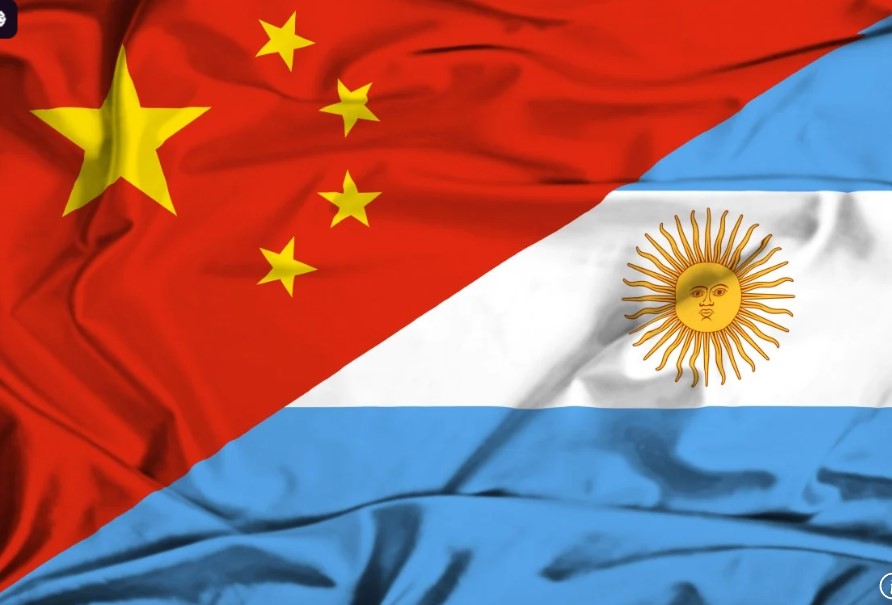
Under the new policy, effective Tuesday, Chinese nationals with US or European Union visas will not need Argentine visas to enter the country for tourism or business.
Until now, all Chinese citizens were subject to Argentina’s full visa requirements.
The policy change follows weeks of uncertainty around the timing of a long-anticipated tariff agreement with Washington and comes amid growing US discomfort over Argentina’s warming ties with Beijing.
China’s foreign ministry responded at the time by accusing Washington of attempting to “drive a wedge” between China and its Latin American partners. The dispute highlighted the delicate position Milei faces as he courts both superpowers.
The Jorge Cepernic and Néstor Kirchner dams, the largest infrastructure works funded by China in Argentina, had been paralysed since late 2023 by financial and contractual delays.
For more than a year, tensions mounted between the two countries over the stalled progress.
In March 2024, Chinese contractor Gezhouba Group suspended operations and repatriated its personnel, citing the Argentine government’s failure to meet prior obligations and the absence of the so-called Adenda XII, an agreement required to unlock further disbursements from Chinese banks. The delay led to thousands of lay-offs and public protests in the region.
The deadlock began to shift early this year, when Santa Cruz provincial officials resumed talks with Beijing. In February, Cabinet Chief Guillermo Francos and Governor Claudio Vidal held a closed-door meeting with Chinese Ambassador Wang Wei and representatives of Gezhouba at the Casa Rosada, Argentina’s presidential palace.
Buenos Aires presented a confidential proposal intended to restart financing flows and move forward with construction. While details of the agreement remain undisclosed, officials described the talks at the time as “constructive” and said China was reviewing the terms.
It was not immediately clear from last week’s dams announcement when and which sectors of hydroelectric construction would initially resume.
The dam projects have long been a flashpoint in the bilateral relationship. First signed in 2014 under then-president Cristina Fernández de Kirchner, they were halted by a Supreme Court injunction, downsized under former president Mauricio Macri, and only partially revived during the administration of Alberto Fernández.
As of mid-2025, the Cepernic dam is roughly 40 per cent complete, while the Kirchner site stands at 25 per cent, according to official estimates.

