


Sao Paulo — A 4-year-old boy was struggling to keep his balance as he walked around the living room. His mother’s eyes watched his every move intently. Then a seizure threw him to the floor, the thud of his tiny body echoing throughout the house.
On this July morning in Guaruja, a coastal city in the Brazilian state of Sao PauloMurillo quickly regained consciousness as his mother, Janaina Silva, rocked him to sleep.
“From five minutes of agony, now it’s just seconds,” Silva said, recalling how just three months ago her son’s seizures lasted much longer. Murillo was diagnosed as a baby with Lennox-Gastaut syndrome, a type of epilepsy with multiple types of seizures that cause stiffness and drooping of the head and limbs.
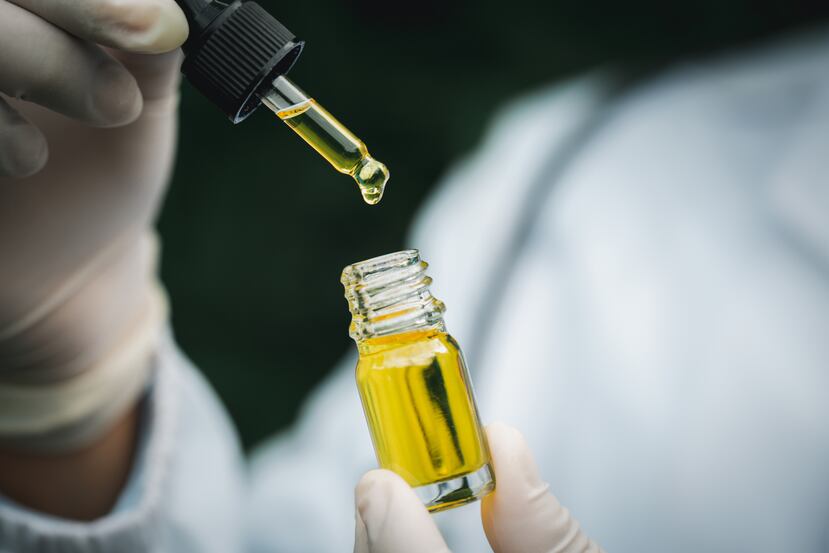
Their shorter—and less intense—seizures are the result of a steady dose of Liquid Cannabidiol (CBD)) which Silva can obtain for free through the state’s public health system. It’s a step the federal government has not taken, as the bill to regulate medical cannabis nationwide has been stalled in Congress for years.
In pharmacies, a bottle of One fluid ounce of the CBD Murillo’s pediatrician prescribed for her condition costs up to $180, which is more than half of Silva’s monthly salary as an office assistant. Since June, she hasn’t spent a penny on her son’s CBD medication. Twice a day, she drips the oil into the boy’s mouth, and each bottle lasts about 45 days.
Sao Paulo, Brazil’s most populous state with more than 44 million people, was the first to enact a law that allowed CBD to be made available for free.
The law was a victory for Brazilian mothers who have led a decade-long campaign to ensure access for their sick children. They have fought back through civil disobedience, legal petitions, marches and political pressure.
One of the mothers leading the initiative is Maria Aparecida Carvalho, 56 years olda former bank employee. Her daughter, Clarian, was diagnosed at age 10 with Dravet syndrome, a severe form of epilepsy that can cause cardiac arrest and sudden death. Her medication had serious side effects — she once came close to needing hemodialysis for poisoning — and her seizures could last up to an hour. Carvalho and her husband took turns sleeping over for fear of losing their daughter during the night.
Later they learned about Charlotte Figian American girl who suffered from the same disease and became the global face of medicinal cannabis. When Carvalho read about her in 2013, she rushed to tell her husband.
“The first thing I said to him was: ‘We’re going to get (cannabis) from drug dealers’“Carvalho said.
But it wasn’t necessary: She got some CBD months later, when her daughter’s neurologist smuggled it into her luggage upon returning from a trip abroad. Later, with the help of a lawyer, Carvalho obtained a special court permit to grow marijuana in his backyard in the city of Sao Pauloand produces the extract for her daughter and 200 other patients.
Current Brazilian law allows the use of cannabis for scientific and medicinal purposes, said Emilio Figueiredo, a lawyer and member of the National Drug Policy CouncilHowever, growing marijuana is still illegal, so the industry has to import raw materials, such as cannabis oil, which increases prices dramatically.
1 / 10 | Long lines to buy marijuana in Uruguay. Sixteen Uruguayan pharmacies have begun selling marijuana in what can be considered the final step to implement a 2013 law passed in the South American nation. – The Associated Press
When Caio Francea center-left state lawmaker, met Neide Martins, a mother who was having trouble getting CBD to treat her son’s rare form of epilepsy, and realized that families needed help, particularly those who couldn’t afford the medication.
In 2019, Franca drafted the country’s first bill aimed at allowing families to request the drug through the public health care system. For three years, she worked to convince her overwhelmingly conservative counterparts, one by one, with testimonies from families who needed marijuana extract as the most effective alternative for their children’s treatment.
“The political environment was misinformed and prejudiced against cannabis. It was surprising how little my fellow MPs knew about it.”said France.
The bill was passed in late 2022, with nearly two-thirds support in the state legislature. It was signed into law in January 2023 by an unlikely figure: Governor Tarcisio de Freitas, a former cabinet member of far-right ex-president Jair Bolsonaro who is frequently mentioned as a possible new standard-bearer for the political right.
He limited the bill to patients with three rare diseases, including Dravet and Lennox-Gastaut syndromes, citing research showing they were the only ones for which cannabis use had been shown to be effective.
Speaking at the signing ceremony, de Freitas said he has a nephew with Dravet who uses medicinal cannabis. Before, he said, the boy wore a helmet in public in case a sudden seizure struck him and knocked him off his feet.
“Every seizure takes a little bit of life away from you. And it is very sad to witness it.”“The governor said, holding the podium in both hands. “And then when you get this bill, you think, ‘Oh my God… finally.’ This had to be done.”
Recreational marijuana is still banned in Brazil, but after years of deliberation, the Supreme Court decriminalized it in June for personal use, up to a maximum permitted amount. In response, Brazil’s conservative Congress began pushing for stricter drug laws.
Even If Congress tightens recreational drug laws, that should not affect patient accesssaid Figueiredo, the lawyer. A 2023 Datafolha survey found that opinions on medical cannabis transcend the country’s deep political polarization.
The use of medicinal cannabis in Brazil is on the rise. In 2023, more than 430,000 Brazilians received cannabis treatment, almost 130% more than the previous yearaccording to a survey by Kaya Mind, a business intelligence company.
Sidarta Ribeiro, a prominent Brazilian neuroscientist and founder of the Brain Institute at the Federal University of Rio Grande do Norte, said mothers of sick children have led the fight. He recently published a book on the subject, titled “As flores do bem: A ciência e historia da libertacâo da maconha” (The flowers of good: The science and history of the liberation of marijuana).
“All of this has come together over the last 10 years to change the course, but the game is far from over,” Ribeiro added.
Murillo’s mother, Silva, comes from a conservative family and says she had a bias against marijuana, but changed her mind after seeing how much it has benefited her son.
“It is a medicine that can give you a better quality of life”said.
