


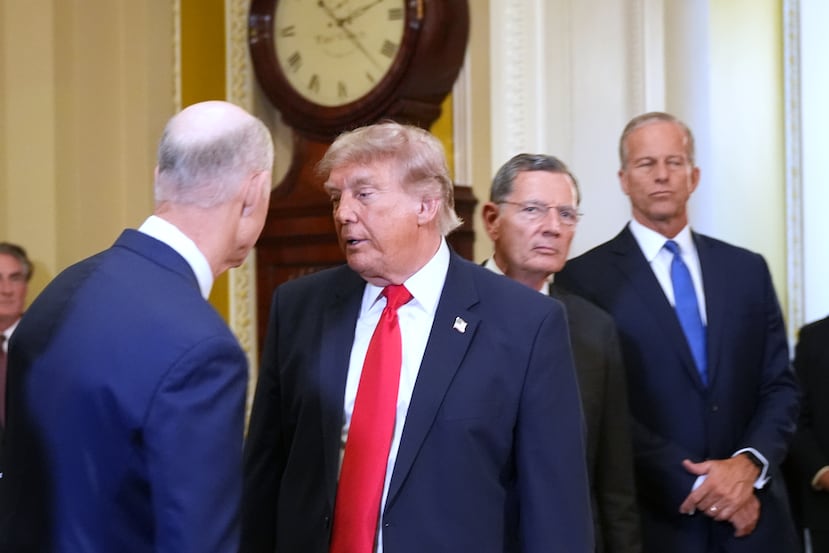
Washington- The president donald trump He chastised Senate Republicans face-to-face on Wednesday for allowing a vote to block his war against Iranwhich has further aggravated a dispute that has diverted the efforts of the Republican Party to focus on affordability issues in this election year and has paralyzed much of the chamber’s activity.
Invited by Florida Senator Rick Scott to speak at a Republican Party luncheon at the Capitol, Trump had announced in advance that he would take advantage of the closed-door meeting to pressure senators to approve his bill on the obligation to prove citizenship to vote.
However, The conversation focused instead on Tuesday’s vote to approve the war powers resolution, a largely symbolic measure that allows Congress to rebuke the government’s military actions. The House of Representatives passed its own version of the resolution earlier this month.
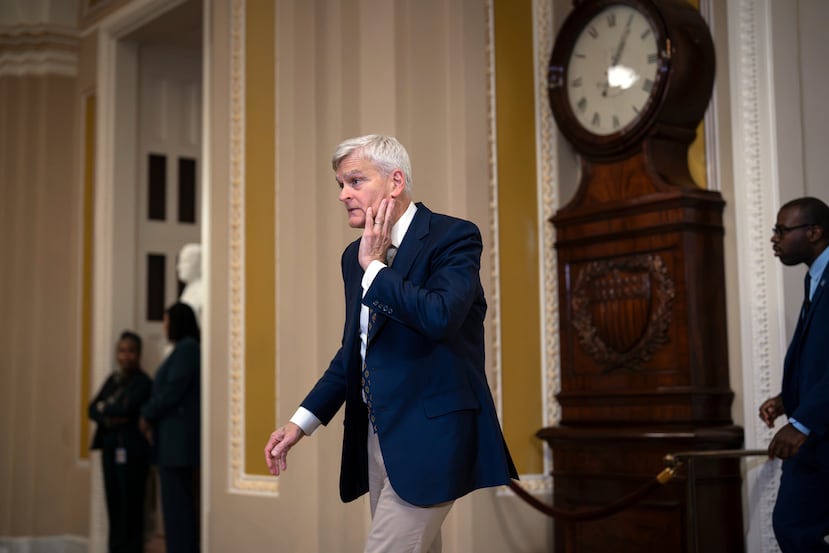
Trump dedicated special words to the four Republican senators who voted with Democrats in favor of the measure — Republicans Lisa Murkowski, of Alaska; Susan Collins, of Maine; Rand Paul, of Kentucky, and Bill Cassidy, of Louisiana—after calling them “losers” on social media.
Most Republicans remained silent. However, Cassidy, who lost reelection in last month’s primary after Trump endorsed one of his rivals, spoke up and defended his vote.
“I stood up and said, ‘You haven’t told the American people what’s going on,’” Cassidy told reporters after the meeting. “This was supposed to last four weeks, but it’s already been going on for four months. Our initial goals have not been met.”
The two men “got into an argument,” Cassidy explained, and he “accommodated their tone and volume.” Cassidy said he eventually calmed down, but he didn’t want to be intimidated.
“I’m going to vote for war powers until they tell me about it,” he said later.
According to a person familiar with the private meeting — who was not authorized to discuss the matter — Trump repeatedly told Cassidy to sit down. At one point, the president called the senator a “lunatic.”
Publicly, Trump later said they had “a really great meeting.” However, he hinted that there had been disagreements.
“We like everyone here,” Trump told reporters as he left. “There are some people I don’t like, but that’s okay.”
The lunch ended weeks of tensions between Trump and Senate Republicans and provided new cause for frustration, as Tuesday’s vote was the first time the Senate passed a war powers resolution regarding the Iran war.
Trump made clear he was unwilling to concede even before it began, canceling a planned signing ceremony for a housing bill that had overwhelmingly passed both chambers this week and that Republican lawmakers were touting as an election-year achievement.
Trump backs down on housing bill
Republican senators were looking forward to holding a conciliatory meeting with the president after the escalation of tensions in recent weeks. But Trump scuttled their plans by declaring on social media just before the meeting that he would not sign the law until he was sent the “SAVE America Act,” his bill to require proof of citizenship for all voters.
North Carolina Senator Thom Tillis has stated that he does not know why Trump is holding the housing bill “hostage” in exchange for the election bill that “will never pass this Congress.”
“I don’t see the point,” Tillis said as he entered the lunch.
Senate Majority Leader John Thune, R-South Dakota, said the housing bill, which aims to reduce costs, is “a matter of affordability,” Thune said, “and I hope that, in the end, we find a way to enact it.”
It is unclear whether Trump could veto the law. But by refusing to sign it publicly, Republicans worry that Trump is showing some indifference to voters’ concerns about price affordability ahead of the November midterm elections.
They have been at odds
Trump’s decision on the housing bill is his latest change of position after weeks of disagreements with Senate Republicans.
Trump has blocked the Senate from approving one of his own candidates, asking them to fund part of his ballroom project. White House despite the opposition and has forced them to defend the war against Iran, even when they question its strategy and outcome.
1 / 13 | From imitating a sniper to talking to children about Iran: Donald Trump’s gestures in the White House. President Donald Trump simulates aiming a sniper gun while speaking to reporters in the James Brady Press Briefing Room of the White House on Monday. – Julia Demaree Nikhinson
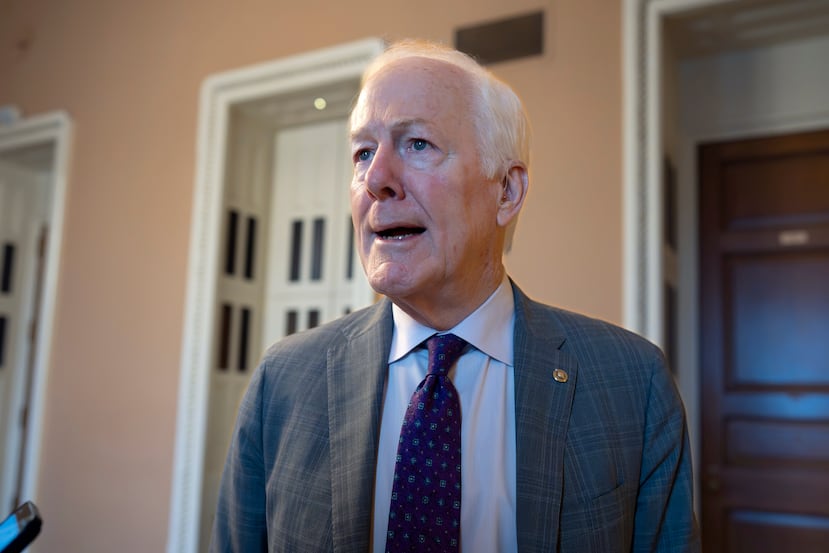
Trump has also helped chip away at his own support in the Senate by endorsing primary rivals of two sitting Republican senators who were previously reliable votes for his agenda: Cassidy and Texas Sen. John Cornyn. Both have become more critical of Trump since losing re-election.
“If we want to win the midterm elections, we have to come to an agreement,” Cornyn said before the meeting. “Right now we don’t agree, and that seems dangerous to me.”
The lunch meeting did not seem to bring the two sides closer at all. “It was a bit of a one-sided conversation,” Thune said later.
Trump pressures Thune on SAVE America Act
Trump has been pressuring Republicans for months to end the Senate filibuster and focus on the bill on requiring proof of citizenship to vote, even though Thune has repeatedly told him that neither of them have the necessary votes.
Although Thune remains popular in his caucus and maintains a cordial relationship with the president, he has spent much of his time lately telling Trump what he doesn’t want to hear. Thune said Tuesday that while Trump and some members of his caucus want the voting bill to pass, “it’s just not realistic.”
Trump has also demanded that a ban on voting by mail be included in the bill, as well as unrelated provisions to prevent sex reassignment surgeries for some minors and prevent transgender women from participating in women’s sports.
Thune dedicated several weeks of floor debate to this bill earlier this year and has expressed support for it. However, he has repeatedly noted that there are not enough votes to eliminate the filibuster, which imposes a 60-vote threshold to pass most bills in the 53-47 Senate. Additionally, Democrats are unanimously opposed to the bill.
“Those are simply difficult realities,” Thune said. “And I think, at some point, people have to accept that.”
Scott did not notify Thune before inviting Trump to Wednesday’s lunch, which he is hosting. Scott, who ran against Thune in the caucus chair election two years ago, said Trump immediately responded to her invitation while they spoke last week and said he would come.
They affirm that it is still possible to approve the electoral law
House Speaker Mike Johnson, R-La., stated Wednesday that he had floated a different approach during his phone conversation with Trump: including the voting bill in a budget reconciliation measure that would only need a simple majority to pass. He has proposed a federal grant program that would provide funding to states if they implement various provisions of the SAVE Act.
But the process is long and complicated, and Republicans are divided over how to proceed.
Additionally, a handful of senators continue to push the bill. Republican Sen. Mike Lee of Utah has built a large following on
Scott said that Trump laid out in detail during the meeting the different options that the Senate could consider to pass the SAVE Act.
“He’s convinced that’s the key to this fall,” Scott said, referring to Trump.

