

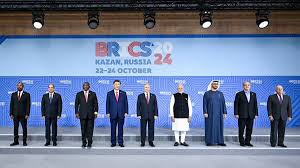
Ethiopia views its BRICS membership as a key tool for development, but must navigate complex energy issues and differing geopolitical interests within the group, according to Abdeta D. Beyene, Executive Director of the Centre for Dialogue, Research and Cooperation. Beyene spoke at the Raisina Dialogue 2026 in India.
Representing Ethiopia at a panel exploring how BRICS can turn global challenges into opportunities, Beyene stated that BRICS is a significant force in the global economy. While membership offers development advantages for Ethiopia, he highlighted the challenge of managing trans-border energy grid rivers, stressing the need for “energy diplomacy.”
Beyene also pointed out the diverse geopolitical interests within the expanded BRICS, which now includes Ethiopia and Indonesia along with Brazil, Russia, India, China, and South Africa, suggesting that complete agreement on all issues is unlikely.
Indonesian delegate Aisha Rasyidila Kusumasomantri cautioned that tensions in West Asia and a potential closure of the Strait of Hormuz could trigger an energy crisis. She advocated for building energy resilience within BRICS and emphasized infrastructure as a vital investment, urging flexible financing approaches.
Brazilian delegate Renato Galvão Flôres outlined three key areas for energy transition: establishing shared policies on fossil fuels, prioritizing renewable energy with preferential agreements, and developing robust infrastructure, including sanitation and digital access. He described BRICS as a diverse group with varied goals, suggesting collaboration through subgroups.
Chinese delegate Tan Ya argued that U.S. tariffs have created trade barriers, hindering developing countries’ ability to trade. This has led the Global South to implement understandable trade barriers. She stressed that developing nations should identify their own strengths and development paths, given the varying levels of development among BRICS members.
Russian delegate Victoria Panova acknowledged the difficulties in coordinating BRICS nations due to differing viewpoints and geographical separation. However, she highlighted the achievements of the New Development Bank. She emphasized that BRICS complements existing institutions, advocating for increased awareness of the bloc’s initiatives.

