


1/19 | France and Spain continue to battle massive forest fires. The French government mobilized soldiers to join firefighters in the fight against one of the worst forest fires recorded in the country in the last half century. – Emma Da Silva
Lege-Cap Ferret, France— France sent a huge military cargo plane on Saturday to drop tons of flame retardants in its fight against raging forest fires and shortened the last leg of the Tour de France to reassign security personnel to the fires that forced tens of thousands of people to flee their homes.
The latest forest fires that occurred this week in southern Europe have forced more than 250,000 people to leave their homesincluding some 70,000 who were evacuated in central Spain. A man has died in Manises, as reported by the city council on its Facebook page; This is the first fatality recorded so far in these fires.
In France, the giant A400M transport plane flew low overhead, leaving behind a long trail of ocher retardant over drought-stricken southwestern forests, as fire crews on the ground battled flames that authorities feared could spread to the wine-growing city of Bordeaux.
Race organizers and Paris police announced on Sunday that the 21st and final stage of the Tour, France’s most famous annual sporting event, would be shortened, due to the enormous pressure that the two major fires in the southwest are putting on emergency services.
The Tour riders will compete on Sunday inside Paris, instead of starting from Thoiry, west of the capital, on a 55-mile circuit, which represents a reduction of a third from the 82.5-mile route that had been planned. Part of the race’s safety device will instead be used to “reinforce response efforts in the areas affected by the forest fires,” according to the statement announcing the “exceptional measures that the situation has made necessary.”
Changes in wind raise concern
With winds expected to shift from west to east on Saturday afternoon, which could push the flames closer to Bordeaux, fire crews and authorities were digging trenches, using retardants and taking other measures to slow the fire’s advance, French Interior Minister Laurent Nunez said, predicting a “long and very difficult” battle.
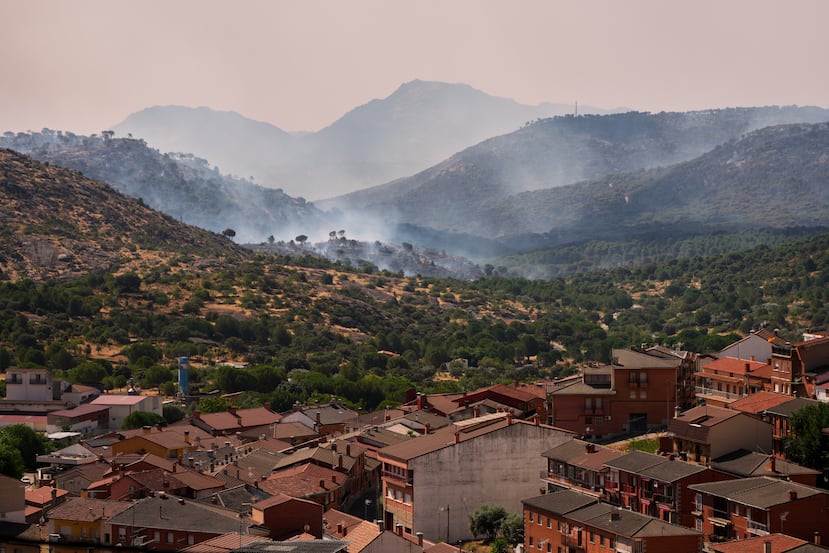
He said the fire was about 20 miles west of the city and had lost some of its intensity overnight. The prefect of the Gironde region, which includes Bordeaux, said the fire became a “firestorm” on Friday after breaking out earlier this week, and warned that it “remains dangerous” even though firefighters were making progress.
The Government mobilized soldiers to join firefighting teams and was urgently sending 1.5 million masks to protect themselves from the choking smoke.
Authorities ordered the evacuation of people between the fire and Bordeaux, including some areas of the city’s western outskirts and other towns and villages.
Prime Minister Sebastien Lecornu called the fires “unprecedented” and said the Gironde fire had reached such intensity on Friday that it had begun to generate its own winds. According to Lecornu, firefighting teams were being reinforced with the addition of hundreds of soldiers and respiratory masks were being urgently distributed to filter potentially harmful smoke particles to exposed people.
In Bordeaux, authorities welcomed thousands of evacuees, providing them with food and accommodation at a fairground, and the city’s mayor said it could be converted to accommodate up to 10,000 people if necessary. The city’s airport reported that it remained open, but that bus and tram services had been suspended.
The evacuation orders were sent through special alerts to mobile phones, in which the population was instructed to leave the area, according to the prefect of Gironde, Sophie Brocas. He has indicated that the fire has destroyed about 140 homes in the region.
It took the authorities by surprise
The French A400M military transport plane, specially adapted for firefighting, was a major new tool in this battle. HE joined at least 18 other planes and helicopters dedicated to dropping water and retardants that, according to Nunez, were deployed in the Gironde region, working in shifts in smoky skies.
The intensity of the forest fires in France and Spain, fueled by high temperatures and the long-term effects of climate change, caught firefighting teams and authorities by surprise.
Spanish firefighters claimed that the fires spread so quickly and violently that they were unable to fight them head-on. In France, some people even fled by boat when flames devastated several tourist towns on the Atlantic coast.
“We have never seen anything like it,” said Javier Organista, a resident of El Tiemblo, west of Madrid, where the fire burned a famous chestnut tree. “When we saw that the flames were approaching our town, surrounding us and leaving us practically with no way out, all the neighbors united to try to stop their advance.”
“It’s really sad,” he said.
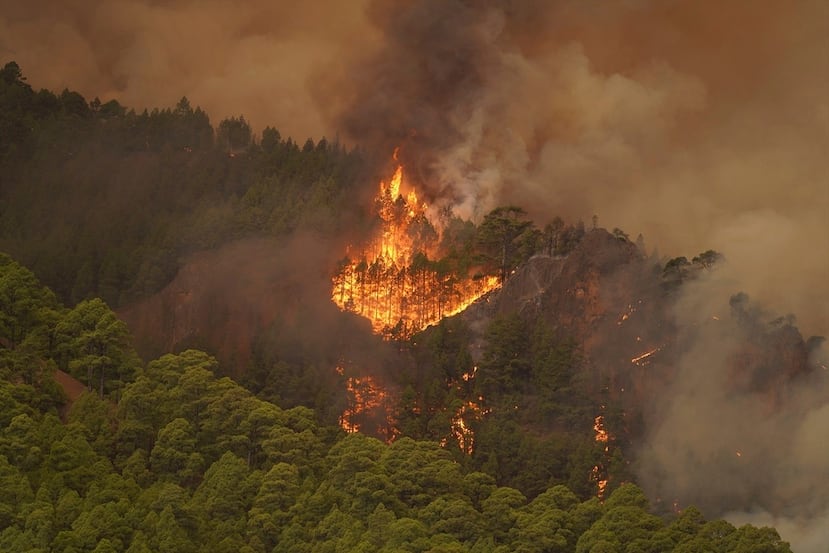
Climate change worsens fires
Spain mobilized 2,600 firefighters, police officers and other emergency personnel to deal with two fires west of Madrid, with the support of 19 firefighting planes and helicopters.
France mobilized 1,400 firefighters to fight the Gironde fire and hundreds more to deal with another forest fire further south in the Landes region. Dozens of firefighters were injured, authorities said, amid scenes of panic in which residents fled by car and police went door-to-door asking people to leave the area.
The successive heat waves that this year have arrived unusually early and have been especially intense, scorching Europe with maximum temperatures that have broken all records, have turned the forests and bushes into veritable tinderboxes.
Fires have already devastated 130,000 hectares of forest this year in Spain, a figure higher than the annual average of 100,000 hectares recorded over the last decade, the President of the Spanish Government, Pedro Sanchez, declared on Saturday during his visit to a command post west of Madrid.
He said Saturday’s more favorable weather conditions offered “an opportunity” for firefighting teams to bring the fires under control. The regional government of Madrid said the fires lost intensity as winds decreased and temperatures dropped.
The fatality reported on Saturday died in Manises, a town located in the Valencia region affected by forest fires.
Other European countries were helping: Italy, Greece, the Netherlands, Portugal, Croatia, the Czech Republic, Sweden, Slovakia, Germany and Switzerland had already sent or were planning to send firefighting planes and helicopters to the Spanish and French fire fronts.
