


Editor’s note: visit our special place to see the match schedule, standings, statistics and information about the 2026 World Cup teams.
Miami Gardens, Florida— Tickets for the World Cup are expensive. Flights to North America are expensive. Hotel rooms in many places are expensive.
And then there’s the price of beer.
In the venues hosting the World Cup there are some fun – and yes, sometimes expensive – food and drink offerings.
In Miami, for the most daring – or to share – a tray of tater tots with caviar costs $75, while a five-pound empanada sells for $40. In Guadalajara, Mexico, steak tacos cost eight dollars. And in Los Angeles, a culinary curiosity called Twinkie Cheeseburger —which, despite its name, has nothing to do with the cake of that name—is offered for $22.
In many cases, the costs are not too different from those paid by American fans during NFL or college football games. However, for many international visitors these amounts are unusual and often generate complaints, particularly the price of beer, which in some stadiums can exceed $20.
“It’s unfair. It’s not right. It’s a mistake,” said Thomas Schuller, a German engineer who was in Toronto to watch his national team play this weekend, while holding a beer that had cost him 24.25 Canadian dollars (about 17 dollars or 15 euros). “It is three times more expensive than what I pay in my country.”
But is that stopping you?
“Well, no,” Schuller admitted.
The price of beer irritates fans
It is evident that international visitors to this World Cup have been surprised when they see the prices, especially when it comes to food and drink stalls. In Europe, it is not uncommon for beers to cost around 4 or 5 euros (about $5-6).
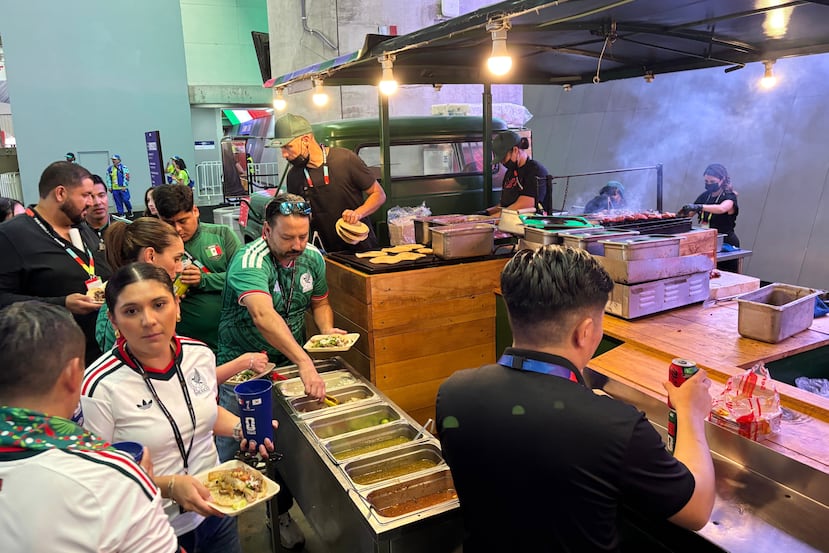
There is also no shortage of surprises in the gastronomic offer at the food stands in the stadiums in the United States, Canada and Mexico.
“I’ve never seen anything like it,” said Janine Arbetter, a fan from Austria, while waiting for a hot dog, fries and soda menu in Miami last week. The price without tip: 19.35 dollars (about 17 euros), which included a discount for paying with Visa. “That’s a lot of food for a small snack.”
Some Argentine fans proudly showed off their $34 lobster rolls purchased during a game in Kansas City on social media. But in Toronto, a brisket sandwich accompanied by fries and a bottle of soda for almost 40 Canadian dollars (28 US dollars) sparked numerous complaints online, with several users going so far as to call the price a “steal.”
“It’s okay, more or less, for the World Cup,” German fan Daniel Feldmann said of food prices while watching a game in Vancouver last week.
A different offer in each stadium
FIFA, the sport’s governing body and tournament organizer, has very specific rules on virtually everything related to the World Cup, and there are also guidelines that concessionaires must follow. However, prices can vary depending on the market, as can the food and drink offerings. And that means that the experience in one city may seem, or turn out, very different from what is offered in another.
The Fancy AF Totswhich cost $75 at Miami Stadium, actually have little to do with the traditional tater tots: these are three fried potato pancakes covered with caviar, crème fraiche and chives. For those who prefer to skip the potatoes and just have the caviar, a portion costs $70.
The Twinkie Cheeseburger Southern California also defies expectations. Far from being a hamburger accompanied by the popular sponge cake, it consists of a hamburger topped with a “Texas Twinkie”: a jalapeno stuffed with beef. brisket and cream cheese, wrapped in bacon.
But there is also a wide variety of options inspired by each local market. For example, in Vancouver it offers short rib poutine —an iconic Canadian dish that combines French fries with gravy, pulled ribs, and cheese curds—as well as maple bacon smokiea smoked sausage topped with bacon and onion jam made with Canadian maple syrup.
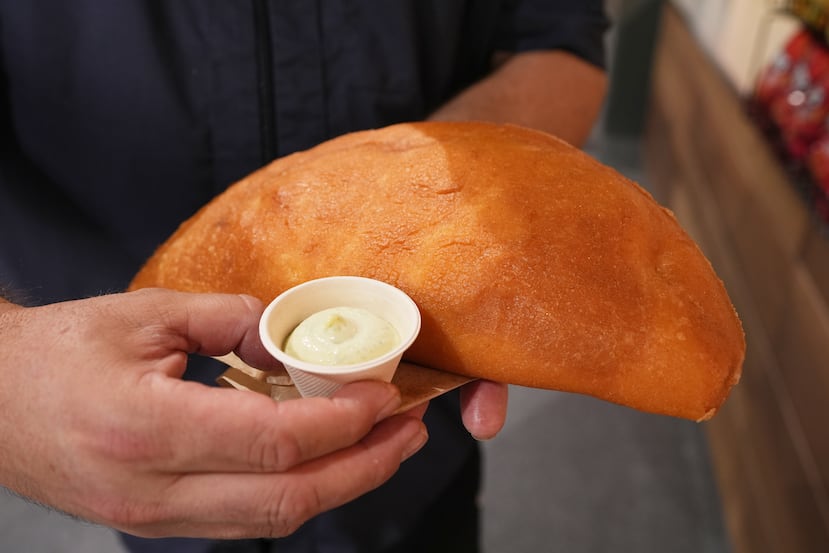
In Miami, meanwhile, specialties include pan con lechon—a Cuban-inspired sandwich made with pork, dressed with citrus mojo sauce and served on toasted Cuban bread—and World Empanadaa five-pound artisanal empanada filled with chicken and cheese whose name refers to the World Cup.
Both Vancouver and Miami have Sodexo Live as a food and beverage provider, and the usual menus at both stadiums were adjusted to serve the soccer crowd that has arrived for the tournament.
“We want the experience to feel like Miami when people come here,” said Zach Williams, vice president of operations for Sodexo Live at Miami Stadium. “Everything we do at the stadium seeks to ensure that visitors understand that they are living an authentic Miami experience.”
Atlanta stadium keeps prices low
In Mexico City, a beer can literally cost a day’s salary. The minimum daily wage in Mexico City is only 315.04 pesos (about 18 dollars). Some beers at the Mexico City Stadium were selling for between 299 and 310 pesos, about double what fans would normally pay at the same stadium when the World Cup is not being held.
But in Atlanta, where Falcons owner and stadium manager Arthur Blank promised that the low prices of concession stand products—something he has advocated for many years—would continue through the World Cup, slices of pizza cost $3, 32-ounce soft drinks cost $4, a cheeseburger cost $5, chicken fingers and fries cost $6, and beers could be purchased for as little as $8.
Jonathan Arango, a 33-year-old man from Greenville, South Carolina, attended a game in Atlanta with his wife, daughter and father.
“In total, for everything we ordered—three servings of tacos, a slice of pizza, two waters and a Coca-Cola—we spent about $50,” Arango said. “Compared to what we have paid at other events… it is appreciated after paying so much for the ticket.”
And Schuller noted that even though the tournament is held every four years, it still feels like a once-in-a-lifetime experience.
“Everyone in football is having a great time, so let’s toast to that,” Schuller said.
Associated Press journalists Tales Azzoni, Maura Carey, Andrew Dalton, Carlos Rodriguez, Alanis Thames, Stephen Whyno and Ben Kule contributed to this report from various World Cup venues. Kule is a student at the Carmical Sports Media Institute at the University of Georgia.
This story was translated from English to Spanish with an artificial intelligence tool and was reviewed by an editor before publication.

