

Why have so many people had to leave Puerto Rico? What does it really mean to return to the island? What happens when the return no longer leads to the same place from which it started?
These are some of the questions that the Puerto Rican artist Joshua Guarionex hopes to provoke with “The Cart Made a U-Turn”a public sculpture that will inaugurate next June 21 at the Socrates Sculpture Parkin Queens, New Yorkas part of the park’s annual arts scholarship program exhibition.
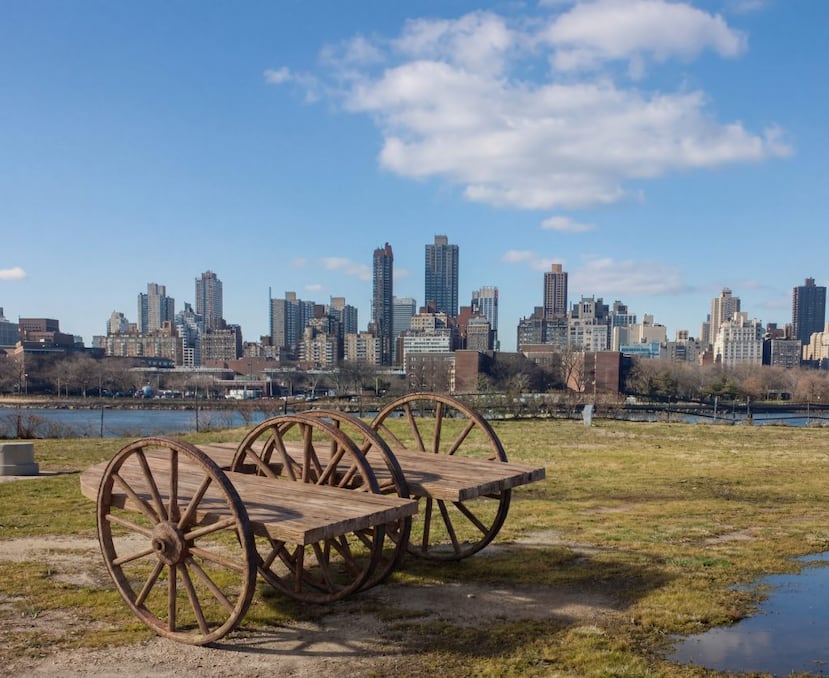
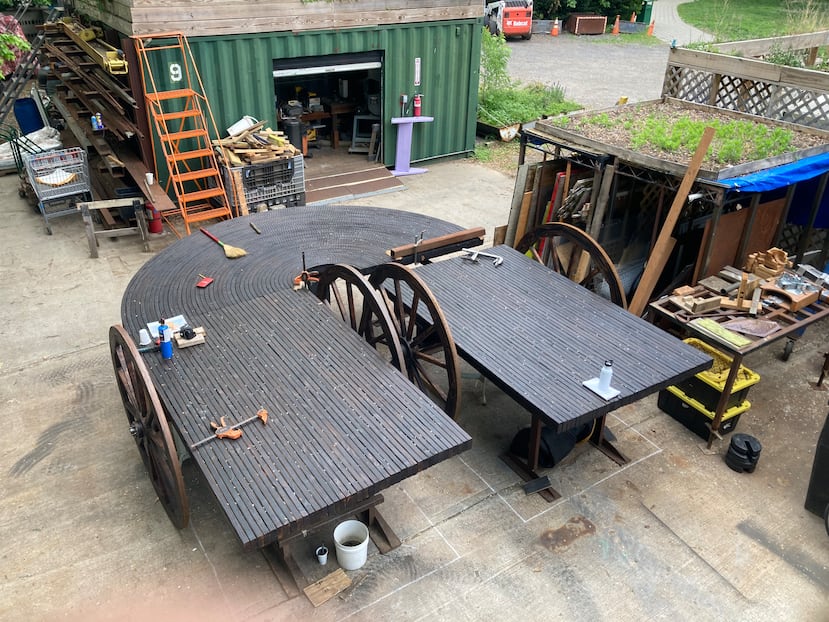
The work, which will remain installed for two years, takes the form of a full-scale “U”-shaped cart. The concept was originally conceived as a space where monologues, readings and conversations about identity could be held, migration and belonging.
“Why do we have to leave one of the most special places on the planet like Puerto Rico? We migrate here, but here they also make us migrate”Guarionex said in a telephone interview with The New Day.
The sculpture is inspired by the playwright’s classic Rene Marques “The Cart” (1953), and in “The Cart Made a U-Turn” (1979) by the “nuyorican” poet, Tato Laviera. From different contexts and generations, both works addressed the tensions of Puerto Rican migration, nostalgia, displacement and the search for belonging.
(Supplied)
For Guarionex, the cart represents a perfect symbol for continuing that conversation decades later. “I want people to see it and wonder, ‘What am I doing here?’ and think about the people who came before us,” he continued.
The idea began to take shape about 10 years ago and, fortunately, he said, he was able to share the idea with the poet (Tato Laviera) before he passed away.
“I told him I had this concept based on his book. He said, ‘I want you to do it, I want to see it.'”
According to the official description of the piece, The “U” shape symbolizes a physical or symbolic return to the origin, but also suggests that the journey never ends and that identity is in constant transformation. The sculpture does not have a defined front or back. Neither end is complete like a traditional wagon. That decision was intentional.
“As much as you want to return to the point of origin, that original point does not exist. Along the way you are loaded with experiences, friendships and new ways of seeing the world. You never return being the same person”held.
Born and raised in MorovisGuarionex grew up in a family where art was part of everyday life. His mother studied fashion design and his father was a cabinetmaker and luthier, an experience that would later influence his relationship with wood, a material that remains central to his artistic work.
Reflection is not foreign to the artist’s own experience. Guarionex moved to New York in 2000, later returned to Puerto Rico and settled in the city again in 2011.
“Migration hurts. There are people who migrate because they have no other option. There are those who come looking for economic stability or a different opportunity. That continues to happen today”he stated.
The installation reaches, precisely, one of the main centers of the Puerto Rican diaspora. Data of the Hunter College Center for Puerto Rican Studies They estimated in 2021 that there were 1,008,909 Puerto Ricans in the state.
It is no coincidence that the piece was built in the district of Queens. For Guarionex, the work dialogues with generations of Puerto Ricans who have arrived in New York, but also with those who continue to question what it means to simultaneously belong to the island and to the diaspora.
“Although we have American citizenship, I walk down the street and feel like a migrant too”he expressed when reflecting on the current political context and the debate around immigration in USA.
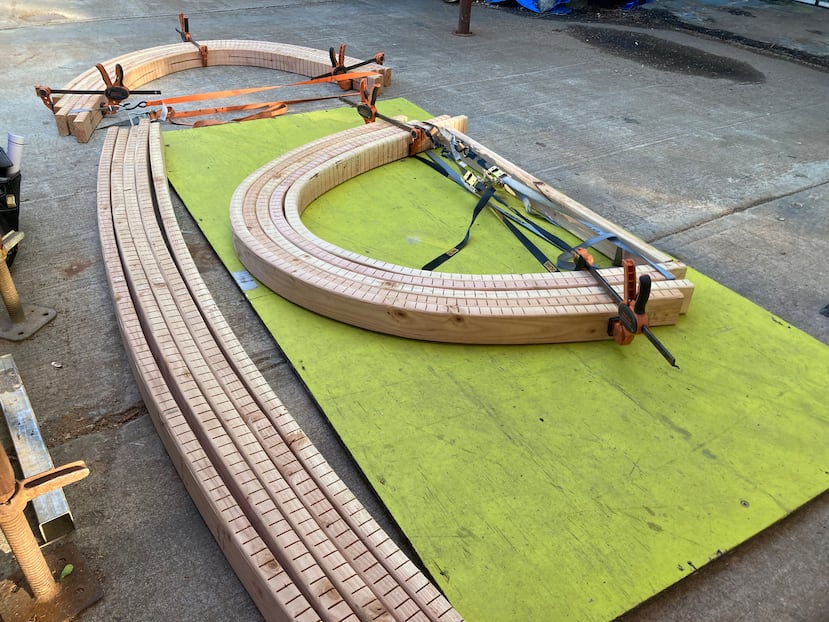
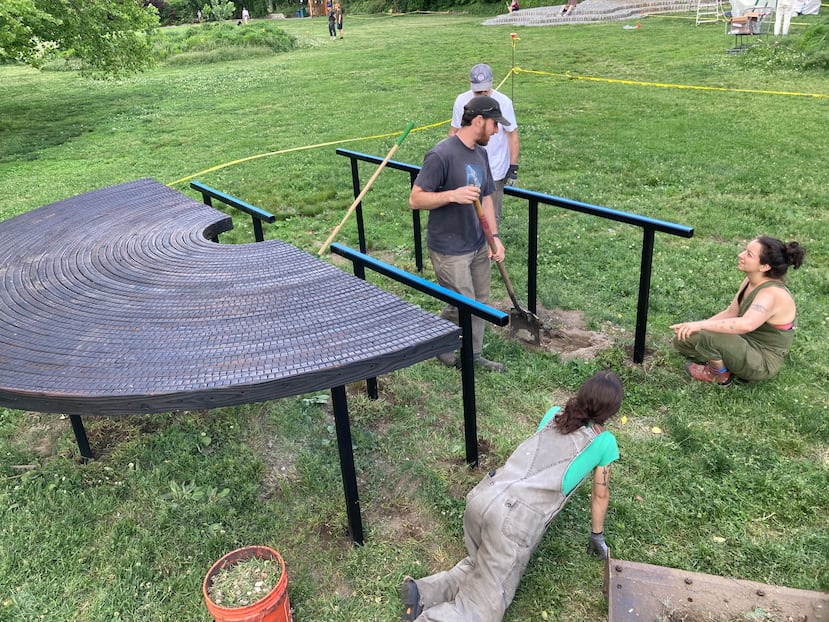
The cart is made of wood and iron. It measures 14 feet wide and 14 feet long, weighs over 1,600 pounds and was built using approximately 150 2×4 lumber planks.

To make the curved structure, Guarionex made nearly 6,000 individual cuts (visible in the “U”) and built a steam box that allowed him to moisten and bend the wood.
The process took eight weeks of uninterrupted work. Furthermore, he was the only one of the selected artists who manufactured his project within the park itself.
The experience accumulated over years was key to achieving this. Before dedicating himself fully to sculpture, he founded his furniture design studio on the island. Guarionex Designwith some of its manufactured parts installed, even, in the Tapia Theater in it Old San Juan.
The inauguration of “La Carreta Made a U-Turn” and other works will be on Sunday, June 21 from 5:00 pm to 8:30 pm as part of the park’s summer solstice celebration.

There will be various cultural presentationsincluding the participation of the cultural producer Christian Martirthe Nuyorican poet Charity of Lightknown as “The Witch”, and the Bomba musician and educator Juan Usera.
He annual scholarship program by Socrates Sculpture Park is one of the leading platforms for the creation of contemporary public art in New York.
The park, which celebrates its 40th anniversary this year, occupies land that previously served as an abandoned landfill. This year also marks 30 years of the program, which supports artists in the development of these experimental works.
For the first time, the selection process was carried out through nominations from alumni of the program. More than 100 artists participated and recommended candidates and, finally, 10 artists were selected for the 2026-2028 cycle.
Guarionex was nominated by the Puerto Rican artist Melissa Calderon. However, institutional recognition is not the most important aspect for him, but rather it generates mixed feelings.
“Because the work is not only about the return, it is about everything that happens along the way”he finished.
Guarionex is currently an artist in residence at Loisaida Center Inc.a Puerto Rican cultural institution in New York with more than 50 years of history.

