


A forest fire that spread rapidly in Utah It devastated the landscape overnight, fueled by heat and dry wind, forcing more communities to evacuate, authorities reported this Saturday.
Air tankers and helicopters were grounded Friday due to increased wind intensity on the Cottonwood Fire, the largest currently burning in the state. USA Wind gusts of 45 mph were recorded and humidity levels were in the single digits, leaving crews with few options to stop the flames, especially as they moved at high speed through the treetops.
He Federal Forest Service (USFS, in English) has indicated in a statement published on Facebook that weather conditions are expected to improve slightly, although not significantly.
“Weather conditions today are slightly more favorable for the evolution of the fire, but extreme events could occur in the afternoon as temperatures and wind speeds increase,” the USFS said Saturday in a statement posted on Facebook.
“There have been no injuries or deaths reported,” said Jaclynn Swope, spokesperson for the intervention team.
He National Weather Service (SNM) reported in March that Salt Lake City, Utah’s capital, had recorded its warmest winter ever, with an average temperature of 40.7 degrees Fahrenheit, nearly 8 degrees above usual. Many other areas of Utah also experienced a warmer-than-usual winter.
The Cottonwood Fire, raging in a sparsely populated area of southern Utah, spread Saturday to more than 144 square miles.
This fire, one of several large wildfires ravaging Utah, caused severe damage to the Eagle Point ski resort in Beaver County and forced the closure of campgrounds in the Fishlake National Forest.
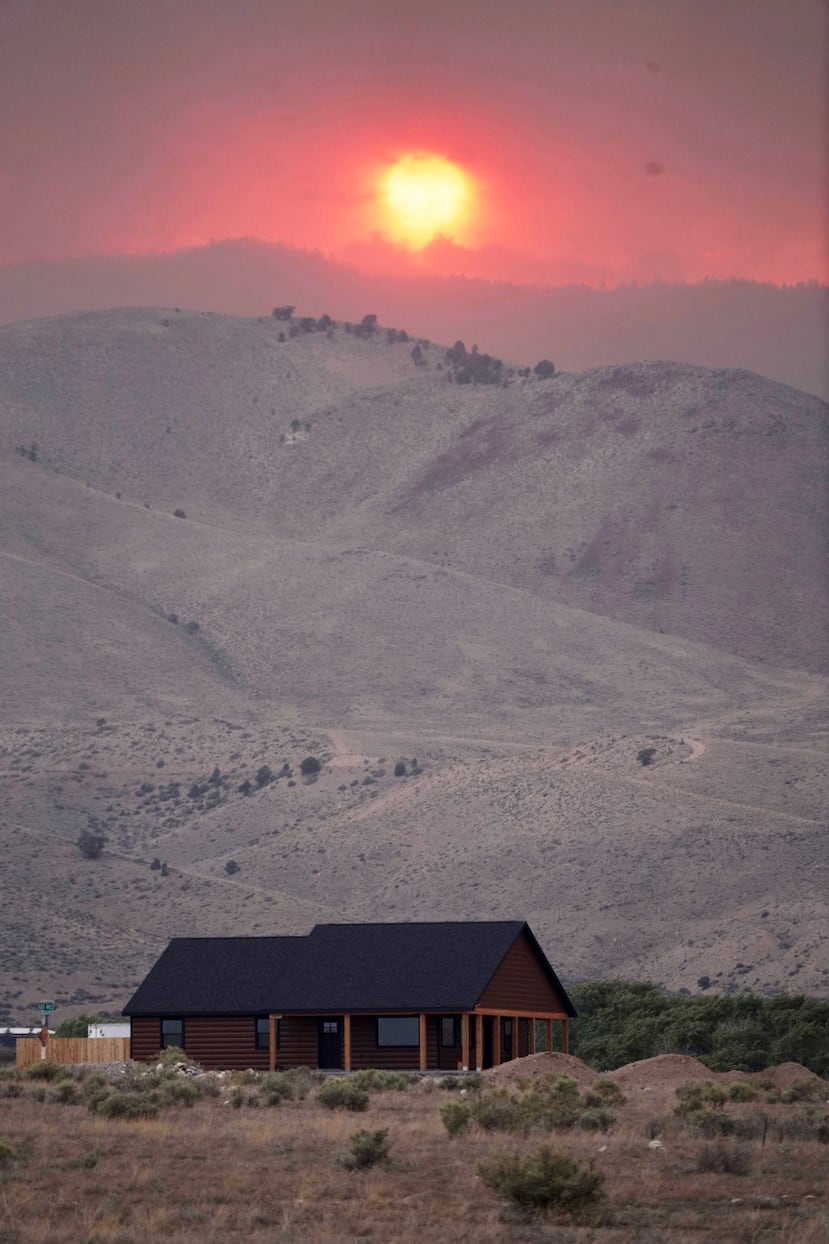
In the town of Marysvale, smoke blotted out the sun Friday as a rain of ash fell. Authorities warned that air quality was harmful to health there and elsewhere.
“We are facing a full 48 hours of extreme weather not seen in Utah in the last five years,” meteorologist Jason Straub declared at a community meeting in Beaver County on Friday afternoon.
Elsewhere in Utah, evacuations were ordered Friday in several small towns southwest of Salt Lake City, including Eureka, with fewer than 1,000 residents, and the Vernon Reservoir area, officials said. Highways through the area have been closed.
Two wildfires in that area — the “Iron” and “Cherry” fires — coalesced overnight and, according to firefighting authorities, are 38% contained. Together, both fires cover an area of about 91 square miles.
The smoke has moved primarily eastward, meaning that air quality in popular tourist destinations such as Zion and Bryce Canyon national parks — located far south of the flames — has not been significantly affected, except for some haze in the Bryce area.
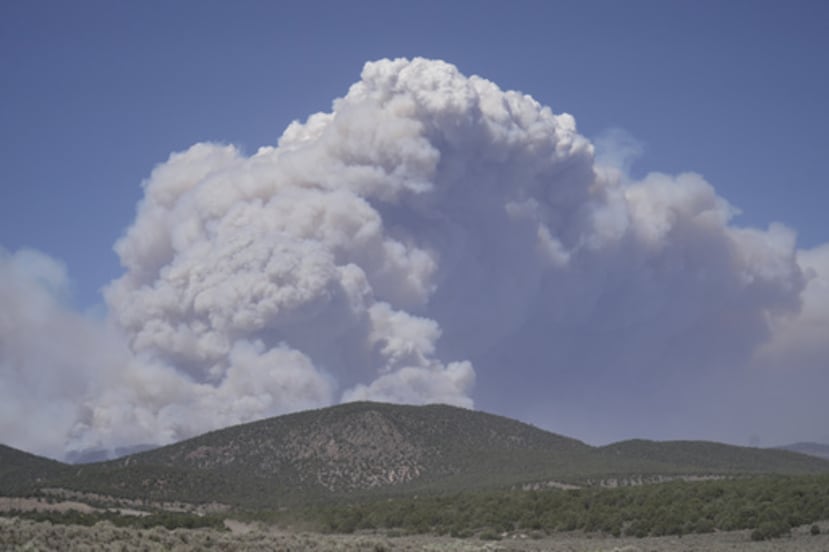
Still, the plume of smoke was visible for miles, even from Colorado.
“It’s something we haven’t seen in recent memory,” Utah state forestry official Jamie Barnes said earlier this week. He acknowledged that the fires are spreading farther and faster “in conditions that defy historical forecasts.”
Nationwide, nearly 3 million acres have burned since the beginning of the yearwhich places the United States above the average of the last ten years.
Alerts spread throughout the west
The weather conditions, including low humidity and strong winds, have prompted red flag alerts across a wide swath stretching from California to southern Mexico. Arizona and New Mexico. Some forecasts called for winds of between 25 and 35 miles per hour, with the most adverse conditions expected to be from northern Arizona to central and southern Utah.
In it Grand Canyon National Parkin Arizona, authorities were preparing for a power outage on Saturday. The electricity company that supplies the area had warned that it would probably carry out a preventive cut in order to reduce the risk of forest fires in the area.
Visitors will be able to purchase tickets to the park at the entrance ticket offices as long as the backup power systems remain functional, but park officials have indicated that visitors should come well prepared. This means downloading maps and other important information before you arrive and making sure phones and other electronic devices are fully charged.
Power outages have become more common in the West as the risk of wildfires has increased. It is typically a last resort after utility experts evaluate factors such as sustained wind speed and gusts, available fuels, and topography.
As extreme fire hazard conditions persist, Rocky Mountain Power has issued a public safety power outage warning and alert for areas of central, southern and eastern Utah throughout the weekend.
The risk will remain high
Tim Brown, research professor and director of the Western Regional Climate Center, said the risk of extreme fire behavior will continue to exist as long as the weather is hot, dry and windy. He pointed to some areas of the West that have been affected by persistent drought, including Utah, Colorado, Arizona and New Mexico.
“I wouldn’t be surprised if a lot of restrictions are imposed as we get closer to the Fourth of July weekend,” he said. “People need to be very aware of their surroundings if they are going to spend time in wooded camping areas and grasslands.”
Governor Spencer Cox has placed temporary restrictions on the use of fireworks until July 5, as the country prepares to celebrate its 250th anniversary, saying that “this year is different.”
Although the cause of the Cottonwood Fire was unknown, the governor’s order indicated that most of the state’s fires so far this year have been human-caused.

