


Mario Cepeda Brenesmusician, craftsman and bearer of the tradition of the Puerto Rican bomb, recognized as one of the heirs of the legacy of the emblematic Cepeda Familydied at 73 years old. This has been reported by the family itself through their social networks.
“With deep regret, the Cepeda and Febres family reports the death of our beloved father, Mario Cepeda. Today his voice rises to heaven to continue singing bomb, while the sound of his maracas and the echo of his legacy will remain alive in every barrel, in every song and in the hearts of our people. Mario Cepeda dedicated his life to our culture, leaving an indelible mark on the Puerto Rican bombshell and on all those who had the privilege of knowing him. “His legacy will live on for generations.”read the statement.
1 / 29 | The faces and rhythms of the Puerto Rican bomb. Labomba is characterized as the first indigenous musical genre of Puerto Rico. Created on sugar estates by enslaved Africans, the bomb served as an expression of lament among plantation workers. – Supplied
The family thanked the prayers, expressions of affection and support that have been given to them and asked that prayers continue to be raised for the repose of Cepeda Brenes and for the strength of all those who today feel his departure.
Considered one of the most important cultural institutions in the preservation and dissemination of thebomba and plena in Puerto Ricothe Cepeda Family has been a true bastion of Puerto Rican culture. Cepeda Brenes was the son of teachers Rafael Cepeda Atiles and Caridad Brenes Caballero, fundamental figures in the revitalization of these Afro-Boricua expressions during the 20th century.
Since he was a child, he was trained within the family musical environment, learning to play traditional percussion instruments and participating in artistic activities promoted by his father. As a member of the Cepeda Family, he contributed for decades to keeping alive a tradition that has been passed down from generation to generation for more than eight consecutive generations.
In addition to his role as a musician, Cepeda Brenes stood out as an artisan specialized in making maracas, an essential instrument in traditional Puerto Rican music. Their craftsmanship is part of the family’s effort to preserve not only the performance of the bomba and plena, but also the knowledge related to the construction of the instruments that support these genres.
In the year 2025, El Nuevo Dia conducted an interview with Mario and his brother, Jesus, about the art of making instruments for the bomb. Although Mario’s intervention was limited, he did not need words to express what the Puerto Rican bomb represents and makes people feel.
In the middle of the Ballaja Barracks, as if moved by an invisible force, he began to play the cua, another important percussion instrument in the bomb, and with his lungs full of air, his voice began to chant: ““San Sebastian, San Sebastian Street!”, to the sound of a sica. People began to approach and surround them quickly and it did not take them long to join their voices in the chorus, until their brother Jesus began to beat the leather of his drum, while looking with satisfaction at his brother and the people who stopped to listen to them.
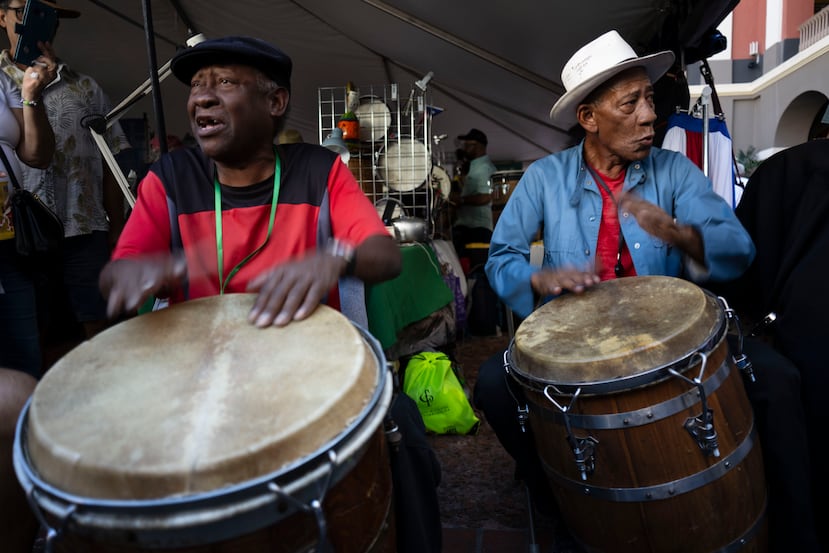
Collecting scenes like that in words is an effort that falls far short of describing the ancestral magic that the Cepeda transmit.
Cepeda Brenes’ career is part of the extraordinary cultural legacy of the Cepedas, whose work has been recognized both in Puerto Rico and internationally. His father, Rafael Cepeda Atiles, received the National Heritage Fellowship from the National Endowment for the Arts in 1983, the highest recognition that the United States grants to artists of popular traditions, while his brother Modesto Cepeda obtained the same distinction in 2017 for his work as an educator, musician and promoter of thebomba and plena.
Although Cepeda Brenes maintained a more discreet public profile than other members of the family, his work as a musician and artisan constitutes an essential contribution to the continuity of a cultural heritage declared a fundamental part of the Puerto Rican identity, transmitting the knowledge of the bomb both from musical interpretation and from the manufacture of the instruments that give it life.
The family added that they will soon announce the date, time and place of their wake and funeral, so that all people who wish to accompany them at this time can say their last goodbye.
