

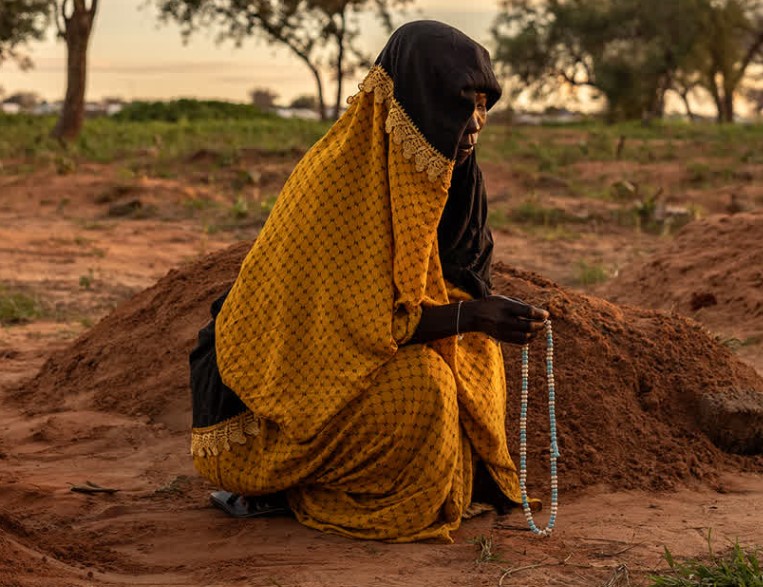
Adré, Chad — During the last year of her life, 10-year-old Naimat Ahmed survived the horrors of war in Sudan — among them, waves of ethnic attacks on her Masalit community in the country’s Darfur region.
In one of those attacks, Naimat’s grandmother was fatally shot and her older sister was wounded.
Naimat, along with her mother and nine siblings, would eventually escape Sudan along a road where members of the paramilitary Rapid Support Forces (RSF) manned roadblocks and ambushed, robbed, raped and killed fleeing civilians. The route was littered with bodies.
Naimat and her family made it across the border to Adré, in eastern Chad, where they joined more than 900,000 others who have fled violence and hunger in Sudan since fighting erupted between the country’s military and the RSF in April 2023. More than 13 million Sudanese have fled their homes because of violence and hunger, creating the world’s largest displacement crisis.
At a makeshift camp in Adré, Naimat’s family and 200,000 other Sudanese refugees endure harsh living conditions, chronic hunger and thirst, according to aid agencies operating in the area.
When Naimat fell ill in early August, her mother, Khadija Ishag Abdullah, was away for several days tilling millet fields to earn money to support her 10 children. Abdullah says when she returned to their shelter made from sticks and plastic sheeting, she found Naimat unable to walk or talk. Her daughter hadn’t eaten or had much to drink in days.
Heavy rains meant she had to wait another day to take Naimat to a nearby clinic run by the medical charity Médecins Sans Frontières, also known as Doctors Without Borders. When they arrived, Naimat could barely walk and she was struggling to breathe. Doctors found she had diphtheria and an infected abscess in her throat. She was also severely dehydrated. Abdullah watched in shock as doctors fought to save her daughter’s life.
Naimat died an hour before sunset on August 5. She was buried that evening in a sandy plot near a grove of wispy trees.

