

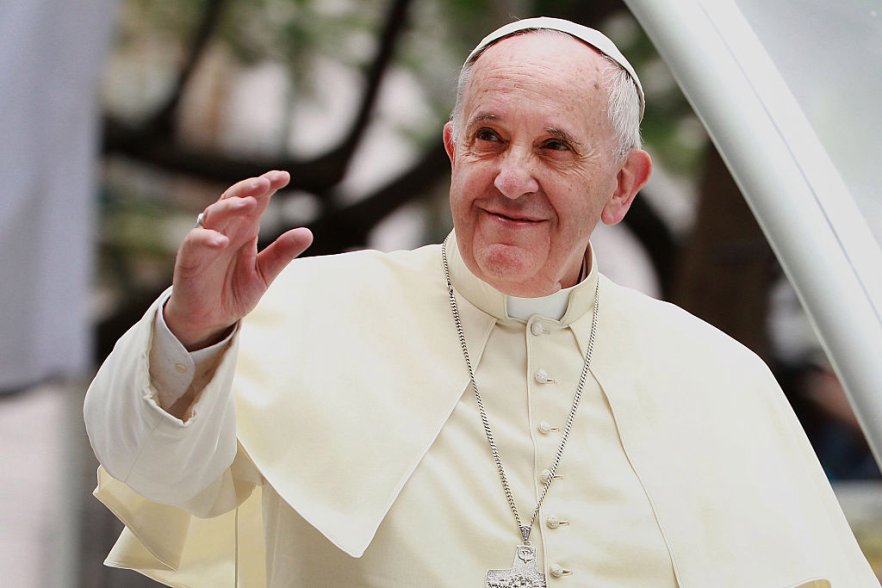
Pope from Slovakia appeals for a Church that allows more freedom to attract “new generations”
The Pope has appealed in his meeting with bishops and religious men and women of Slovakia to a Church that is less rigid, more humble and that leaves more freedom to “attract the new generations” in the face of secularization, a phenomenon that also plagues the European country where Catholics represent 62%.
“A Church that leaves no room for the adventure of freedom, even in the spiritual life, runs the risk of becoming a rigid and closed place,” the Pope pointed out. Perhaps some are accustomed to this; but many others, especially the new generations, are not attracted to a faith proposal that does not allow them their inner freedom, a Church in which it is necessary for everyone to think the same way and obey blindly”.
Francis, who arrived in Slovakia on Sunday after a fleeting visit to Budapest (Hungary), met with Slovak Catholic representatives in the Cathedral of St. Martin in the historic center of Bratislava. He asked them to be a “source” of hope in people’s lives. “I encourage them to make them grow free from a rigid religiosity,” he said.
For the Pontiff, evangelization is “never a simple repetition of the past”. For this reason, he stressed the need to “share, to walk together, to welcome the questions and expectations of the people”. In this sense, he asked for a Church that flees from “self-referentiality” because, he said, “the center of the Church is not the Church”. The Bishop of Rome thus invited to get out of “the excessive preoccupation” for the ecclesial structures and “how society looks” at the Church. And he urged to ask: “What are the spiritual needs and expectations of our people? What is expected of the Church?”.
The Pope will visit this Tuesday the Lunik IX neighborhood in Kosice, the largest city in Slovakia after the capital Bratislava. It is the largest Gypsy ghetto in Europe, made up of some 600 slums where the poorest sectors of the Gypsy community of some 400,000 people live. Most of them lack running water or sewage systems, gas and electricity.

