

The Illusion of Victory: Echoes of Vietnam in Trump’s Iran Strategy A Historical Precedent Repeats
In 1964, the U.S. Military Assistance Command, Vietnam (MAC-V) began holding daily press briefings at Saigon’s Rex Hotel. As the war devolved into a bloody stalemate, officials recited precise metrics — enemy soldiers killed, targets bombed, sorties flown — with unwavering confidence. Journalists covering these briefings, which they derisively called the “Five O’Clock Follies,” quickly recognized the disconnect.
“They seldom bore any resemblance whatever to the facts in the field,” wrote Keyes Beech of the Chicago Daily News.
No matter how military leadership manipulated the numbers, the math never added up to victory. Yet the public, observing the widening gap between official narratives and on-the-ground reality, grew increasingly disillusioned. Media coverage fueled anti-war sentiment that fundamentally reshaped American society.
A Familiar Pattern in Iran
Half a century later, the United States finds itself in another conflict rich with statistics but devoid of coherent strategy. The pattern is familiar: when hard questions arise about objectives and endgames, the administration responds with a flood of numbers that signify little.
Defense Secretary Pete Hegseth appears focused not on strategic outcomes but on controlling the narrative. Testifying before Congress on Wednesday, he identified the administration’s primary challenge not as Iran’s military but as critics at home.
“The biggest challenge, the biggest adversary we face at this point are the reckless, feckless and defeatist words of congressional Democrats and some Republicans,” Hegseth said.
This framing is striking: the nation’s top defense official believes Washington — not Tehran — is the principal adversary in an ongoing conflict.
The Numbers Game
Over three months of undeclared war, the U.S. and Israel have undeniably inflicted significant damage on Iranian military assets. Pentagon spokesperson Sean Parnell reports:
- More than 13,000 strikes conducted
- 158 Iranian ships destroyed
- 90 percent of weapons factories hit
- Iranian leadership casualties, including the country’s 86-year-old cleric
Assessment figures vary depending on who is asked — Iran’s military is described as 92 percent destroyed, or 100 percent, or some other confident-sounding round number.
Strategy vs. War: A Critical Distinction
The fundamental problem, analysts argue, is that the Trump administration never developed a plan for victory — only a plan for war. These are not the same thing.
Israeli Prime Minister Benjamin Netanyahu reportedly convinced Trump to join Israel’s attack on Iran by promising a swift, easy regime change. It was a seductive pitch to an administration with little appetite for patient, long-term strategy. Hegseth and his cohort embody swagger without prudence, while Trump — his age and cognitive decline increasingly apparent — has shown little capacity for sustained, thoughtful engagement with complex problems.
After the kidnapping of Venezuelan President Nicolás Maduro, Trump believed he had discovered a formula for cutting through intractable challenges. But as one observer put it, “Roy Cohn was no Aristotle, and Trump is no Alexander.” The Persian knot has not been severed — the administration has become entangled in it.
A President Wants Out
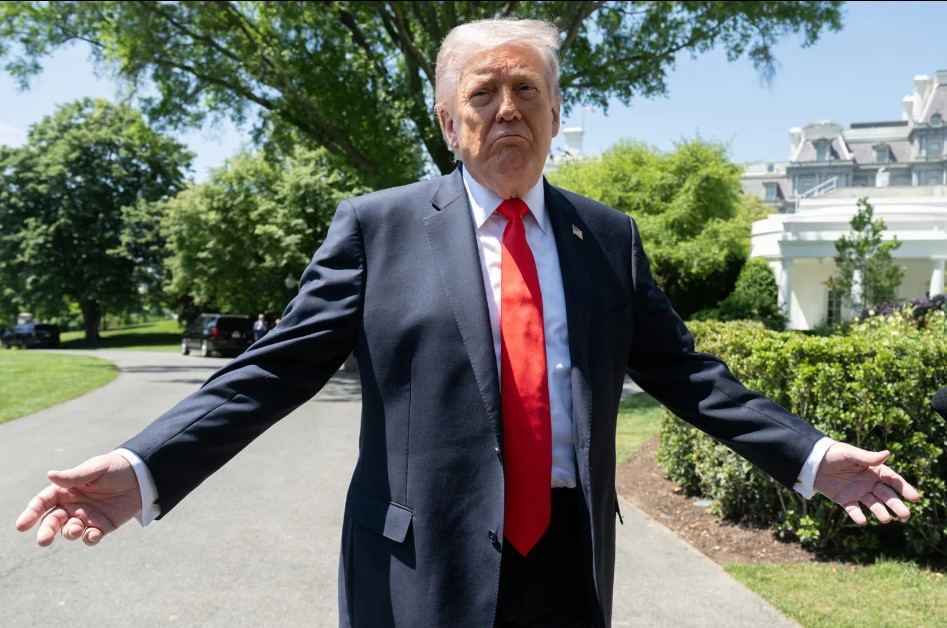
The president now appears eager to disengage. “Maybe we’re better off not making a deal at all,” Trump said Friday. “We can’t let this thing go on, you know, it’s going on too long.”
The irony is that the administration built a narrative of decisive victory, then discovered — as America has before — that wars are not won by press releases, statistics, or declarations of success. They are won, when they are won at all, by strategy, patience, and a clear-eyed understanding of the battlefield. None of those appear to be in abundant supply.

