

France and Saudi Arabia are spearheading efforts starting this Monday to renew negotiations towards a two-state solution for Palestinians at a United Nations conference in New York.
It has been widely reported that the United States and Israel plan to boycott the meeting, which is scheduled to run from Monday through Wednesday.
Originally set for June, the conference was postponed after Israel and the United States launched attacks on Iran, triggering a 12-day conflict.
Last week, French President Emmanuel Macron announced that France would officially recognize the State of Palestine in September, urging other nations to follow suit. Palestinian President Mahmoud Abbas welcomed Macron’s announcement, describing it as “a victory for the Palestinian cause.”
Jasim Husain, a Gulf analyst and former Bahraini parliament member, told China Daily that the joint actions of Saudi Arabia and France mark a “historic moment” — describing it as “a significant step by France and a demonstration of strong resolve by Saudi Arabia.”
Ahead of the conference, Saudi Foreign Minister Prince Faisal Bin Farhan issued a statement reaffirming Saudi Arabia’s commitment to efforts aimed at establishing a just and lasting peace in the Middle East. The foreign minister also reiterated that Saudi Arabia continues to link normalization of relations with Israel to the creation of a Palestinian state.
Husain noted that this push adds pressure on other European countries, as well as the UK, Canada, and Australia, potentially unsettling Israel and the US.
However, Husain also pointed out some unusual developments ahead of the conference. He mentioned that the US abruptly withdrew from talks with Hamas in Doha, Qatar, accusing Hamas of not cooperating. There are also reports that the US might be considering applying extraordinary pressure on Hamas — reminiscent of strategies used during past conflicts such as World War II — possibly aiming to dismantle the group altogether.
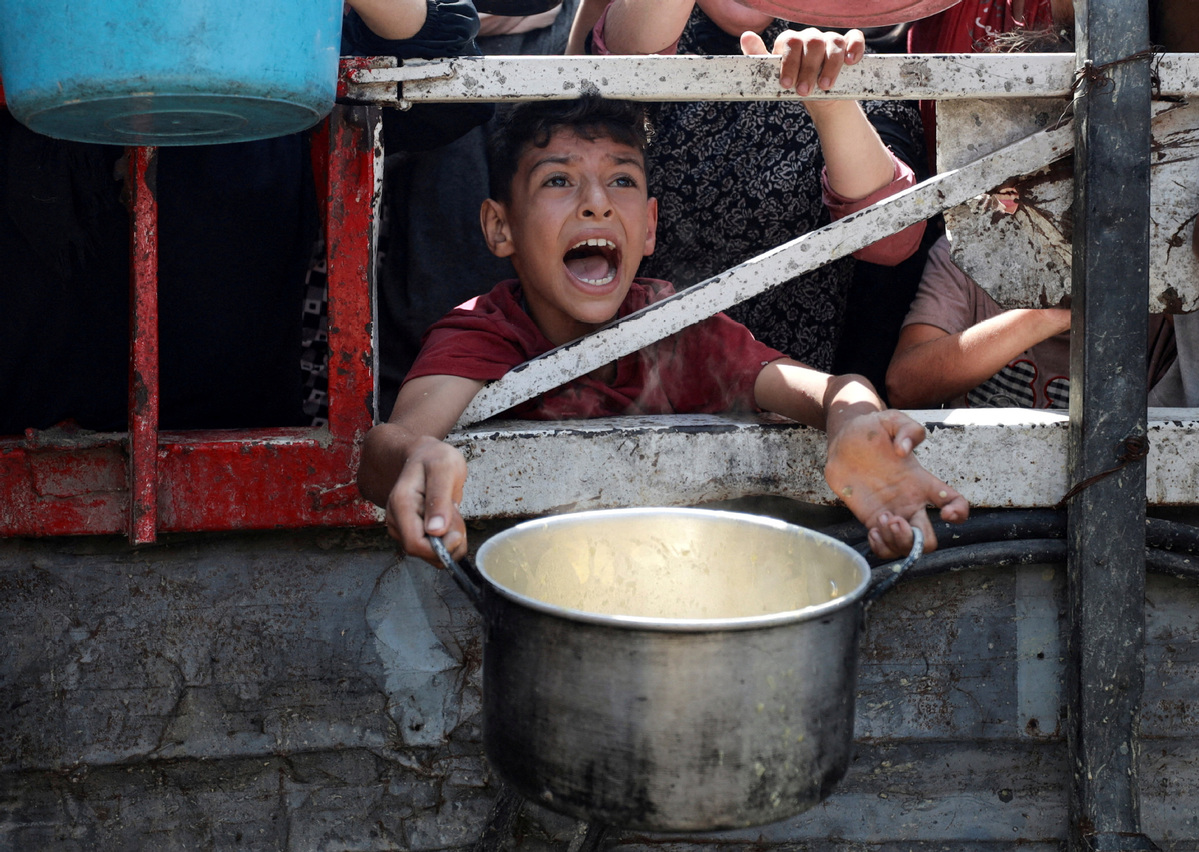
Meanwhile, Israel, which recently halted ceasefire negotiations, blamed Hamas for the lack of progress but announced it would allow more aid into Gaza. On Sunday, the Israel Defense Forces declared a “tactical pause” in military operations to increase humanitarian assistance amid international calls to address Gaza’s worsening hunger crisis.
On Monday, more than 120 truckloads of food aid were distributed in Gaza through the UN and other aid agencies during the partial pause.
Gokhan Batu, an Israel studies analyst at the Center for Middle Eastern Studies in Turkey, told China Daily that Israel’s decision to ease aid access appears to be motivated by increasing international pressure and a declining global image.
He explained, “The humanitarian crisis in Gaza has reached a point where restricting aid is now more costly than any strategic gains Israel might have sought. This move seems to be a calculated, strategic response.”
Batu also pointed out that the 28 countries that issued a joint call for ending Israel’s military campaign in Gaza on July 21 reflect growing frustration among governments, many of whom are dealing with protests at home.

