

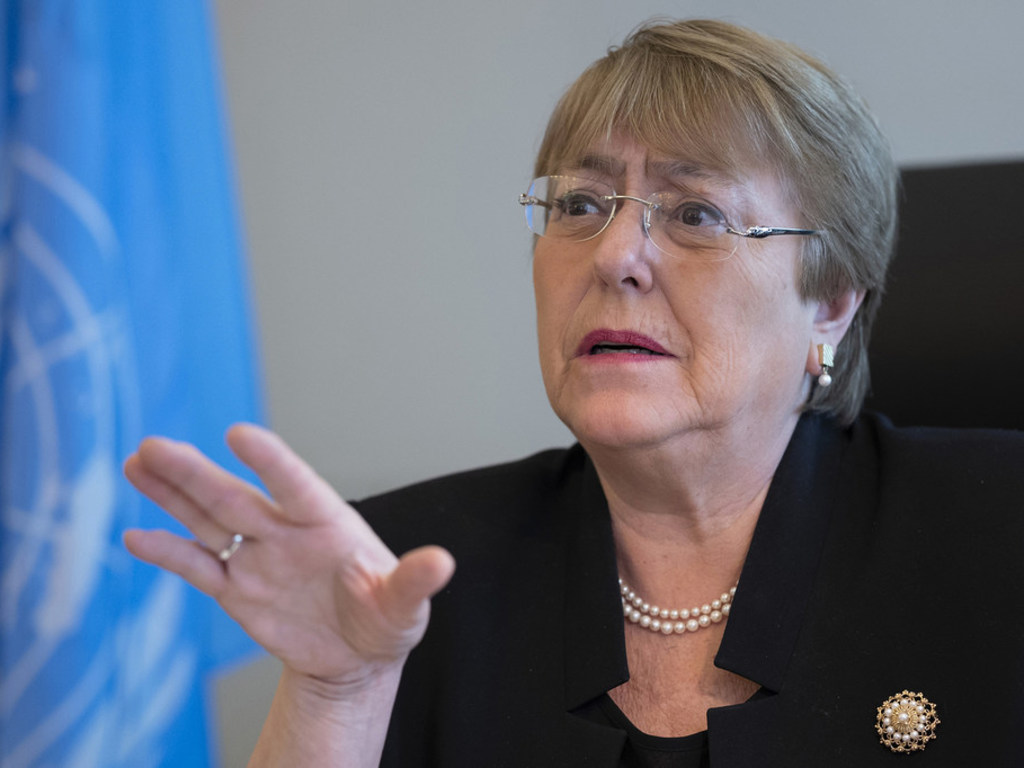
In a major report commissioned in the wake of the murder of George Floyd in the United States, the United Nations human rights chief urged countries around the world to do more to end discrimination, violence and systemic racism against people of African descent, and to redress the harm, including compensation.
The report by Michelle Bachelet, UN High Commissioner for Human Rights, offers a comprehensive look at the origins of centuries of mistreatment suffered by Africans and people of African descent, especially stemming from the transatlantic slave trade. The document seeks a transformative strategy to address an impact that has continued to this day.
The year-long report aims to reinforce the trend toward greater scrutiny worldwide of the scourge of racism and its impact on people of African descent, as shown by the publicized deaths of unarmed black people in the United States and elsewhere.
Today there is a great opportunity to reach a turning point for racial equality and justice, the report states.
The text seeks to accelerate action by countries to end racial injustice: ending impunity for police violations of rights, ensuring that the voices of people of African descent and those who speak out against racism are heard, and addressing past wrongdoing with processes that address accountability and provide redress.
I call on all states to stop denying – and start dismantling – racism, to end impunity and build trust, to listen to the voices of people of African descent, and to address the legacy of the past and offer redress, Bachelet said in a video statement.
The commissioner made her most explicit statements to date on the issue of reparations and suggested that financial compensation alone is not enough and should be part of a range of measures to help rectify or compensate for injustices.
Reparations should not be equated with financial compensation alone, he wrote in the report, adding that they should include restitution, rehabilitation, admission of wrongs, apologies, recognition, educational reforms and guarantees that such injustices will not recur.
The United Nations-backed Human Rights Council commissioned the report last year during a special session following the murder of Floyd, an African-American who was killed by a white police officer in Minneapolis, Minnesota, in May 2020. The officer, Derek Chauvin, was sentenced last week to 22 and a half years in prison.
Protests over the crime erupted after a harrowing video recorded by a bystander was released showing Floyd repeating I can’t breathe! as witnesses shouted at Chauvin to stop pressing his knee on Floyd’s neck.
The protests against Floyd’s murder and the verdict against Chauvin mark a momentous moment in the fight against racism, the report said.
The report was based on conversations with more than 340 people, mostly of African descent, and experts. More than 100 people worked on its drafting, including members of governments, as well as reviewing public materials, according to the rights office.
The document analyzed 190 deaths, mostly in the United States, to show how security forces are rarely held accountable for their human rights violations and crimes against people of African descent, and identified similar patterns of police mistreatment in many countries.
The goal of the report is to transform those opportunities into a more systematic response by governments to combat racism, and not just in the United States, although the injustices and legacy of slavery, racism and violence faced by African Americans was clearly a major theme of the document.
It also collected cases, concerns and the situation in some 60 countries, including Belgium, Brazil, Great Britain, Canada, Colombia and France, among others.
We could not find a single example of a country that has fully acknowledged the past or thoroughly documented the impact on the lives of people of African descent today, Mona Rishmawi, who leads an anti-discrimination team at the UN human rights office, told a press conference. Our message, therefore, is that this situation is unsustainable.
Redress must be considered at the collective and individual level, she added, a process that begins with the recognition of past grievances and is not one-size-fits-all. Each country, he said, must consider its past and its practices to determine how to proceed.
The report called on countries to repair the damage of centuries of violence and discrimination, for example through formal acknowledgments and apologies, truth commissions and various forms of reparations.
It also denounced the dehumanization of people of African descent, which was rooted in false social constructs about race to justify slavery, racial stereotypes and harmful practices, as well as tolerance of racial discrimination, inequality and violence.
The document pointed to the inequality suffered by people of African descent and to the widespread political and socioeconomic marginalization they experience in many countries, including unfair access to education, health care, jobs, housing and clean water.

