


Caracas, Venezuela— Doctors expressed this Wednesday their fear that the aftermath of the devastating double earthquake that shook Venezuela could trigger an increasingly serious health crisis, characterized by untreated injuries, infectious diseases and a health system that is already stretched to its limits.
Thousands of displaced Venezuelans sleep in overcrowded shelters or outdoors, without access to drinking water and in terrible sanitary conditions.following the June 24 earthquakes that, according to authorities, claimed the lives of at least 2,295 people and left more than 11,000 injured.
Aid workers said the aftermath of the earthquakes has become a serious health crisis which, unless quickly brought under control, will claim more lives in the coming days and weeks. The emergency has highlighted the chronic shortage of doctors in Venezuela, a consequence of years of economic crisis, lack of financing and emigration.
“The problem that we foresee looming are the infections that could be transmitted by patients who have been exposed to the catastrophe for the longest time,” said Eugenio Cova, head of the trauma unit at Hospital del Oeste. Dr. Jose Gregorio Hernandez, in Caracas, the capital. “We have already gone through a period of complex trauma – which will continue to occur – but now the situation is complicated by infections.”
Aid workers also warn that severe damage to infrastructure could lead to disease outbreaks in the most affected communities.
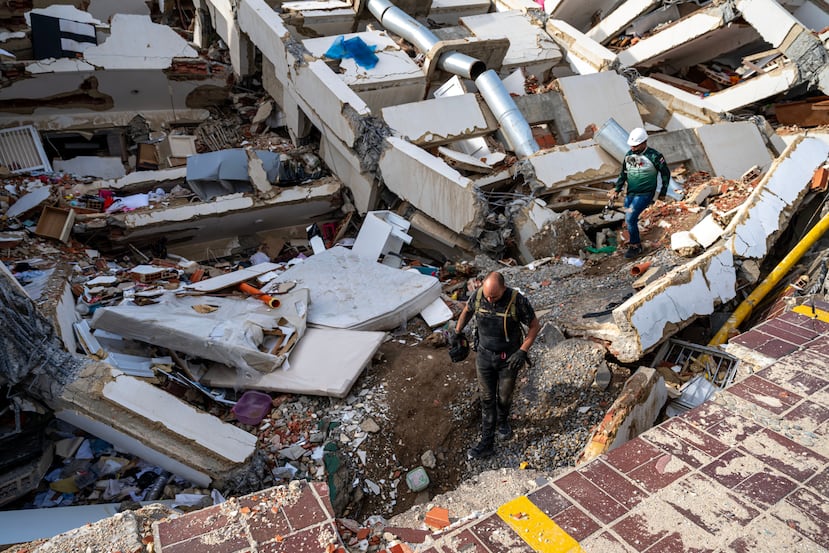
“It is very hot and there is great concern about possible vector-borne diseases,” said Veronique Durroux, spokesperson for the UN humanitarian agency for Latin America and the Caribbean. “Waste management is a problem. The management of debris, when you see the magnitude of the devastation, is very worrying.”
United States deploys 900
As of Wednesday, there were 900 US military personnel on the ground to support relief and rescue operations, Steven McLoud, a spokesman for the US Southern Command, told The Associated Press.
The United States Armed Forces have repaired a runway damaged by the earthquake at the country’s main international airport, which serves Caracasto allow the arrival of humanitarian aid, and have deployed Navy ships off the coast to receive survivors transported by air. Another 100 people have been sent from United States Department of State to collaborate in these tasks, as stated by McLoud.
So far, the Trump Administration has offered Venezuela $300 million in aid, channeled through humanitarian organizations and the United Nations. But that is only a small part of the help the country needs after the earthquakes: the material damage caused by the earthquakes is estimated at more than 6.7 billion dollars, according to a satellite analysis carried out by the United Nations Program. United Nations for Development.
In recent days, fifty other international teams have arrived to collaborate in search and rescue operations, including some from countries such as Ecuador and Israel, which do not maintain diplomatic relations with Venezuela. Against all odds, rescue teams continue to find a small number of survivors; On Tuesday, for example, they rescued a little boy who had been trapped for six days.
1 / 20 | In images: hospitals to the limit and outbreaks of infectious diseases in Venezuela. Humanitarian organizations warned this Tuesday that Venezuela’s fragile health system is at the limit of its capacity almost a week after two powerful earthquakes. While residents, like Kerli Faria, continue searching for relatives in the rubble of La Guaira. – Ariana Cubillos
Hospitals take another hit
Long before the earthquakes, Venezuela’s public hospitals were already under great pressure due to shortages of water, energy, essential medical equipment and highly qualified personnel.
More than 7.7 million Venezuelans have left the country since 2013, when Nicolas Maduro he took office and the economy collapsed as a result of mismanagement, corruption and falling oil prices.
Among those who fled were many specialized doctors and nurses.
The Venezuelan College of Physicians has estimated that approximately one-third of its 60,000 registered doctors have left the country since the economic crisis began. Dr. Huniades Urbina, member of the board of directors of the Association of Pediatricians of Venezuela, stated that the number of doctors remaining is approximately half of the 84,000 that the country needs according to the standards of the World Health Organization.
Urbina added that a national survey conducted in 2025 in public hospitals revealed that more than 30% of emergency supplies and more than 70% of operating room supplies were missing. The laboratories are “practically all closed or only performing basic tasks,” he said.
“The earthquakes reveal, once again, the inability of the Venezuelan Government to offer an adequate health system that meets the needs of the Venezuelan people,” he stated.
Sudden increase in cases
Those still there now face the daunting task of caring for thousands of serious injuries caused by crushed and collapsed concrete structures.
The Hospital del Oeste, Dr. Jose Gregorio Hernandez, in Caracas, lacks the screws and plates necessary for orthopedic surgery, as well as medicated gauze to prevent infections, according to Cova, who performs surgeries on crushed limbs in improvised operating rooms, as possible damage caused by the earthquake has left some parts of the building inaccessible. Doctors have even gone so far as to post on social media what medical supplies they need, requesting donations.
According to the Government, The earthquakes caused damage or otherwise affected 38 hospitals across the country.
There is also a shortage of ambulances across the country, forcing many injured Venezuelans to arrive at hospitals in the back of vans, said Jaime Lorenzo, director of Medicos Unidos de Venezuela, a nonprofit network of health professionals. That is just one of the ways in which ordinary citizens, who feel abandoned by the Government, say they have been forced to take on much of the rescue work.
When the chaos and trauma caused by the earthquakes begin to subside, Lorenzo fears that a new wave of patients will flood the hospitals: these are Venezuelans who, suddenly left homeless after the earthquakes, have been without medication for chronic diseases such as asthma, diabetes and hypertension all week.
Doubts about the government’s response
The Government of the acting president Delcy Rodriguez —who served as Maduro’s vice president until he was overthrown by USA in January and who assumed interim leadership with the backing of the Trump Administration — has faced intensifying criticism for his handling of the disaster.
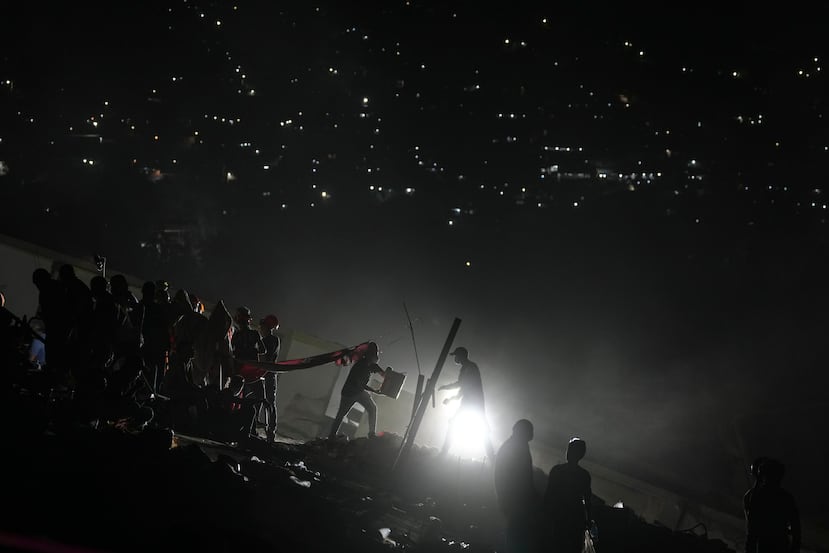
Videos circulating on social media for a few days appear to show security agents rummaging through the rubble of collapsed buildings and taking US dollars, appliances and other personal belongings, sparking widespread outrage among Venezuelans. The AP has not been able to verify these videos.
In response to the videos, the Interior Ministry announced on Wednesday that it had dismissed and detained four police officers for “failing to fulfill their duties and taking advantage of rescue and humanitarian aid efforts.”
Thousands of people remain missing, adding uncertainty to the total casualty count and leaving families in agonizing uncertainty as they wait for days next to collapsed buildings, hoping for the bodies of their loved ones to turn up. A non-governmental digital database where families can register missing loved ones indicated that as of Wednesday, more than 40,600 people remained unaccounted for.
On Wednesday, U.S. officials rejected accusations that Rodriguez was politicizing response measures and downplayed widespread criticism of the Venezuelan government’s shortcomings in dealing with the crisis. Gen. Francis Donovan, head of Southern Command, blamed decades of neglect in Venezuela, which he said “made this even more complicated for the current administration.”
“For any leader, facing a challenge of this magnitude is a big problem,” Donovan said.
