


Editor’s note: visit our special place to see the match schedule, standings, statistics and information about the 2026 World Cup teams.
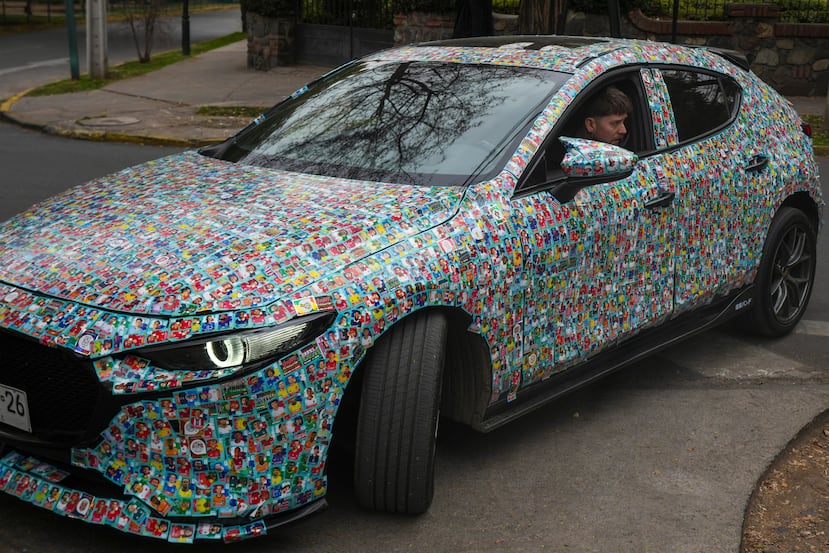
Curious children come to look at the thousands of figurines that cover the car. Some look for Lionel Messi. Others to Cristiano Ronaldo. Pedestrians stop to take photos. At traffic lights, drivers honk their horns in approval.
In Chile, a country that failed to qualify for the Soccer World Cup 2026For the third consecutive edition, the so-called “FIFA Mobile” keeps the World Cup fever alive.
Ariel Osses, a 33-year-old content creator, covered his Mazda 3 Sport with almost 11,000 figurines from the official 2026 World Cup album, who entered the quarterfinal round. Osses tours different Chilean cities where his vehicle became an attraction for soccer fans of all ages.
“Just because Chile has not qualified does not mean that we have to experience the World Cup in a different way. This World Cup fever is for everyone,” Osses told The Associated Press.
The idea was born from a thorn that has been with us since childhood. Osses remembers that, when he was a child, his family did not have the money to buy him the album or the figurines.
“The idea came from that boy, Ariel, who never had the opportunity to have an album because my family did not have the resources to buy it for me. I was never able to complete one. I always had that bug of filling it out,” Osses said.
Now he tries to ensure that other kids don’t go through the same experience. Thanks to an agreement with Panini, the company that produces the official World Cup album, Osses received albums and packages of figurines to distribute to children throughout Chile. They stick some on the car and take the rest to complete their own collections.
“Today, as an adult and working, I have the opportunity not only to fill a car with figurines, but also to visit different places giving albums and figurines to children,” he said.
Osses, who lives in Santiago with his wife, bought the Mazda during the first week of June. Shortly after, when the World Cup began, he took on the task of covering it with the first figurines. His wife doubted whether it was a good idea to stick thousands of stamps on a newly purchased car, but she finally agreed.
“I told him: ‘Think about everything we can achieve, about the children we can help and the people we can make happy with this,’” he recalled.
A football fan and follower of international tournaments throughout the year, Osses assures that this World Cup has a special meaning because it will probably be the last of figures like Messi and Cristiano Ronaldo.
The figurines of Messi, Ronaldo and other big stars occupy a privileged place: the hood of the car, which Osses fans baptized “FIFA Movil” and which is already known on the streets of Santiago.
“It’s crazy. Cars stop. People take photos,” said Osses, who says he now has to calculate extra time to get anywhere because of the attention the car generates.
After the final of the tournament, on July 19, in which Osses hopes to see teams like Morocco or Norway lift the cup, He planned to remove all the figurines from his car. However, as the weeks go by, the idea of laminating it and keeping it as it is is becoming more and more popular.

