

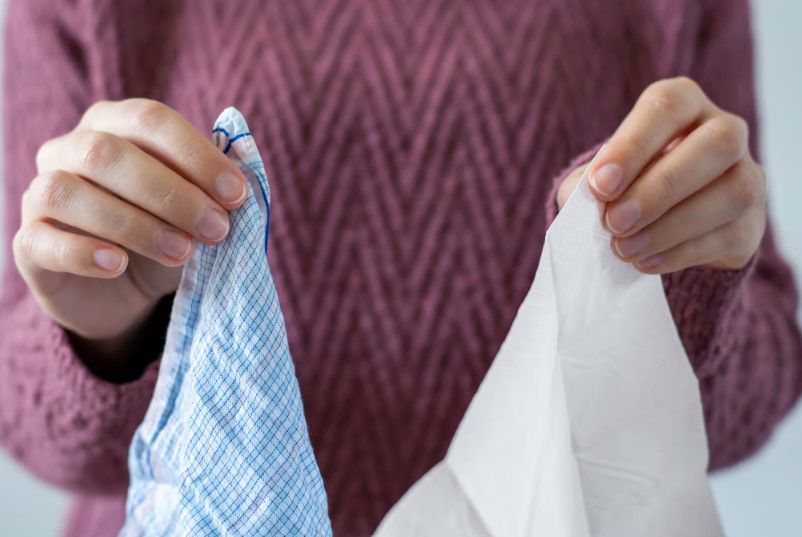
Cloth handkerchiefs are just as hygienic as paper tissues if handled properly, experts say
Cloth handkerchiefs are more sustainable than disposable tissues, although they can harbour germs if not washed or stored properly
Traditional Chinese medicine remedies for colds, coughs, hair and more
Why Chinese Gen Z are getting TCM winter body check-ups
It’s Dry January. How about dry every month? Medical experts weigh in now and stay updated with
How to age well? Celebrity doctor says eat right, stay socially active
World Expo 2025 host city Osaka in Japan bans smoking in public
Health span and how to extend yours: tips for a long, healthy life
Discover news and insights on women trailblazers, social issues and gender diversity in Asia
Cloth handkerchiefs are coming back as people seek more sustainable lifestyles. No longer are they seen as being old-fashioned and unhygienic – as long as they are washed and stored properly, they won’t harbour germs.
Using a cloth handkerchief rather than tissues saves natural resources, as making tissues involves much wood, energy and water, says the German Environment Agency.
And when you throw away disposable tissues, that is a missed opportunity for paper recycling, as they will not be used to make new paper products.
While natural resources are also needed to produce cloth handkerchiefs, which are typically made of cotton, they can be reused many times and take up no room in a washing machine.
Markus Egert, professor of microbiology and hygiene at Furtwangen University, in Germany, says, in principle, “disposable products, while not necessarily more sustainable, are more hygienic”. Photo: Furtwangen University/Britt Schilling
However, a used cloth hanky may lie around for a while in your pocket or laundry basket before being washed. Does that make them less hygienic than tissues?
It’s hard to say, given the lack of dedicated studies focused on hygiene comparisons, says Markus Egert, professor of microbiology and hygiene at Furtwangen University, in Germany.
In principle, “disposable products, while not necessarily more sustainable, are more hygienic”, he says.
If you have a sinus infection, “the concentration of infectious bacteria and viruses in your nasal discharge is definitely very high”, Egert says.
Moisture in your mucus means they survive and stay infectious longer on your handkerchief – certainly for several hours, and maybe days, he says.
Bear in mind it makes a difference whether you throw a used paper tissue away or keep carrying it around with you as you would a cloth one.
You might touch it and then touch surfaces like door handles, which can potentially infect other people.
“If cloth handkerchiefs make sense at all, it’s when you have hay fever so aren’t spreading pathogens,” he says.
Tissues are better if you have a very bad cold, he says. For greater sustainability, he suggests using tissues made of recycled paper, or sustainably sourced fibre.
But if you still want to use a cloth handkerchief, try not to scrunch it up after using it but let it dry out, he says.
Disposable tissues are better than cloth hankies if you have a very bad cold, a scientist says. Photo: Shutterstock
Also, wash your hands after touching a used cloth handkerchief and keep it somewhere separate when you carry it around.
Wash them regularly too, of course. If they have been used by a cold-sufferer, wash them at 60 degrees Celsius (140 Fahrenheit) with a universal washing powder containing bleach, says Bernd Glassl of the German Cosmetic, Toiletry, Perfumery and Detergent Association.
He says the bleach can remove stains, viruses and bacteria, particularly at higher temperatures.
So long as they’re washed at 60 degrees Celsius with a detergent containing bleach, you do not need to put your cloth hankies in a separate wash, he says. Pop them in with other textiles such as white bed-linen.
For greater sustainability, use tissues made of recycled paper or sustainably sourced fibres. Photo: Shutterstock
“If damp, used cloth handkerchiefs are lying around in a laundry basket, they can contaminate other textiles they come into contact with,” says Glassl. Any pathogens might survive if you are doing a wash at a cooler temperature, such as 30 degrees Celsius.
To be on the safe side, keep used cloth handkerchiefs with other textiles you plan to wash at 60 degrees.

