
How a Mississippi election came down to the clerk’s office

How a Mississippi election came down to the clerk’s office

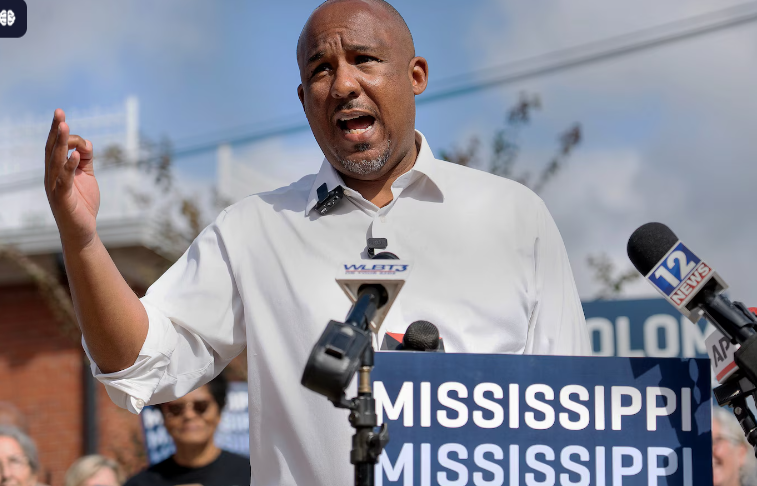
A group of young Black women helped Democrat Scott Colom do the unthinkable, potentially flipping a deep-red Senate seat.

DURANT, Miss. — The ripples of the blue tsunami started in the Delta. Down a tiny road covered in brown leaves from the large oak trees was a house with wood-paneled walls covered with quotes from Maya Angelou and photos of Harriet Tubman. There, Kameisha Smith, 31, sat at a folding table and pressed her long lavender nails on her laptop keyboard, staring at a spreadsheet of people who might solidify a historic change to this country’s political trajectory.

It was 36 hours after a jaw-dropping midterm election, and pundits across the country wondered how this deeply conservative state, with its history of disenfranchisement and disenchantment, ended up with an African American prosecutor named Scott Colom within striking distance of winning election to the U.S. Senate.
“This race has everybody on pins and needles, pins and needles,” Smith said. “This has been the most engagement from young people around here in this election, and everyone wants to know, what’s taking so long? And I’ve got to make sure all their votes count.”

Yes, Colom had zeitgeist-catching commercials and captured the resentment toward Republican Sen. Cindy Hyde-Smith, who had shrugged off worries about the high cost of beef. But there was a more desperate, more granular engine powering record-high turnout and engagement among the state’s Black youth.

Across the Mississippi Delta — poor, Black, rural — there were houses like the one where Smith was busy at work, where organizers spent months figuring out how to get a community of nonvoters excited about reengaging in democracy.

When Colom was trying to figure out the final message for his Senate campaign, he and his team chose to end with a commercial about Medgar Evers, the African American veteran whom white supremacists killed as he was conducting voter registration campaigns.

“We can’t just ask people to vote for me,” Colom said in an interview with The Washington Post on Thursday morning. “We just got to talk about sacrifice. We got to talk about the importance of voting.”
It was also about stressing the idea of what he called “Mississippi Values” — including Evers’s audacious and righteous response to abusive power. Those values were revealed in the work of Fannie Lou Hamer and the Mississippi Freedom Party, and others who worked during the Civil Rights Era to break some of the most racist policies in the South. Still, Colom knew it would take a herculean effort in a place that hadn’t elected a Black politician to statewide office since the fall of Reconstruction.

LEAVE A REPLY

Please enter your comment!
Please enter your name here